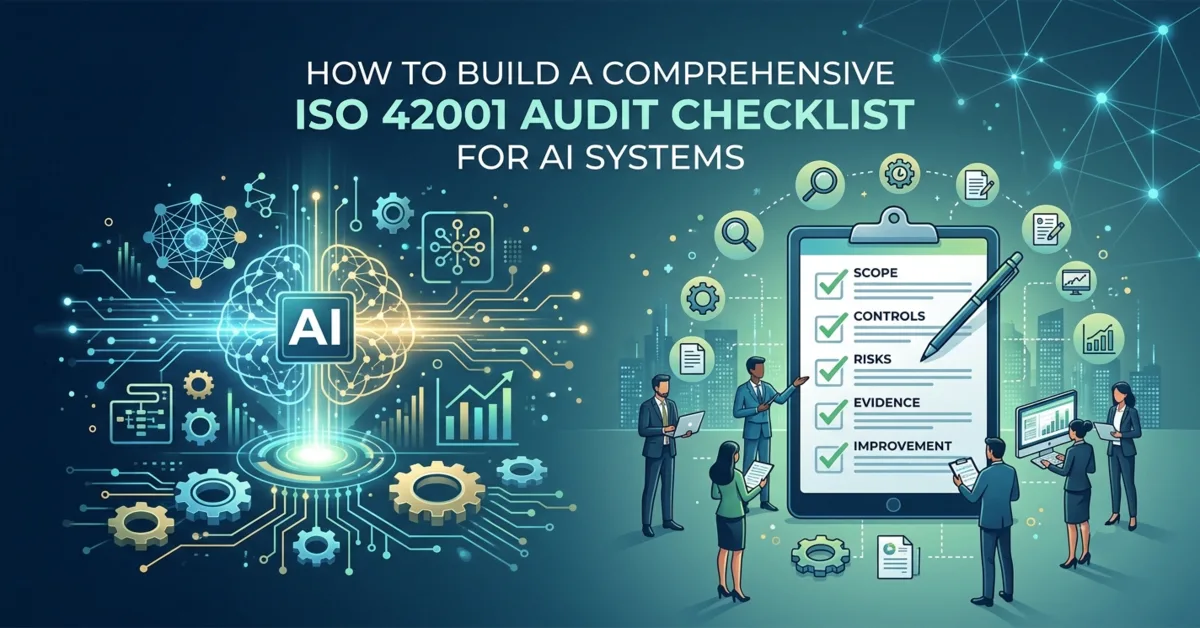
Artificial intelligence is transforming business operations, but it also introduces risks related to data privacy, transparency, accountability, and decision-making. Organizations need a structured approach to manage these challenges and demonstrate responsible AI practices. ISO/IEC 42001 provides an international framework for establishing, implementing, maintaining, and continually improving an Artificial Intelligence Management System (AIMS).
A well-prepared ISO 42001 audit checklist helps organizations evaluate compliance, identify gaps, verify controls, and prepare for internal and certification audits.
1. Understand the Scope of the AI Management System
Before developing an audit checklist, define the scope of your AI management system. Identify the AI systems your organization develops, provides, or uses, along with relevant business processes, interested parties, and applicable legal or regulatory obligations.
The checklist should reflect the organization's actual AI activities, risks, and objectives rather than relying on a generic list of questions.
2. Cover ISO 42001 Requirements and Controls
A comprehensive ISO 42001 internal audit checklist should cover Clauses 4 to 10 of ISO/IEC 42001, including organizational context, leadership, planning, support, operation, performance evaluation, and continual improvement. Auditors should verify whether the organization's Artificial Intelligence Management System (AIMS) meets the applicable requirements and operates effectively.
The checklist should also address relevant Annex A reference controls based on the organization's AI risk assessment and risk treatment process. These controls cover areas such as AI policies, internal responsibilities, resources, data management, AI system development, deployment, and monitoring. Ensure that the checklist aligns with the organization's documented Statement of Applicability and provides a clear basis for evaluating control implementation and effectiveness.
For a more detailed understanding of individual requirements, explore this ISO 42001 audit checklist clause-wise guide to support audit planning and the systematic evaluation of AI management system requirements.
3. Include Practical ISO 42001 Audit Questions
Audit questions should help auditors verify whether requirements are implemented effectively. Examples include:
- Has the organization established and communicated an AI policy?
- Are AI-related risks assessed and documented?
- Are responsibilities for AI governance clearly assigned?
- Are data quality, security, and privacy risks addressed?
- Are AI systems monitored throughout their lifecycle?
- Are human oversight and accountability defined where appropriate?
- Are internal audits, management reviews, and corrective actions documented?
These ISO 42001 audit questions help auditors move beyond document reviews and examine how AI governance works in practice.
4. Verify Documentation and Audit Evidence
An effective AI management system audit requires objective evidence. Review relevant policies, procedures, risk assessments, AI impact assessments, training records, operational documents, monitoring results, and management review records.
Record the applicable requirement, audit question, evidence reviewed, findings, and corrective actions. This approach makes the audit more consistent and helps teams prioritize improvements.
5. Identify Gaps and Drive Continual Improvement
A checklist should support improvement, not simply confirm that documents exist. Compare audit evidence against defined requirements, document nonconformities, assign responsibilities, and establish realistic completion dates.
Follow up on corrective actions to verify that the underlying causes have been addressed and that the changes are effective. Regular audits also help organizations respond to changes in AI systems, business processes, and emerging risks.
Simplify ISO 42001 Audit Preparation with Ready-to-Use Documents
Creating an audit checklist from scratch can require considerable time and effort. A ready-to-use ISO 42001 documentation can help organizations organize their implementation activities and prepare for internal audits more efficiently.
The documentation kit includes editable manuals, procedures, SOPs, forms, risk assessment resources, and audit checklists with audit questions. The templates can be customized in Microsoft Word and Excel to suit the organization's processes, AI systems, and governance requirements.