In today’s fast-evolving digital landscape, chatbots and virtual assistants have become integral to customer engagement, technical support, and everyday convenience. From booking appointments to answering complex queries, these AI-powered tools rely heavily on natural language understanding (NLU) to function efficiently. At the heart of NLU lies text annotation, a critical process that transforms raw text into structured data, enabling AI systems to understand, interpret, and respond accurately to human language.
While text annotation often grabs attention for its applications in computer vision, the role of text annotation in AI-driven communication tools is equally significant. Companies offering text annotation services are expanding into text annotation as well, highlighting the cross-domain importance of high-quality labeled data in AI projects.
What is Text Annotation?
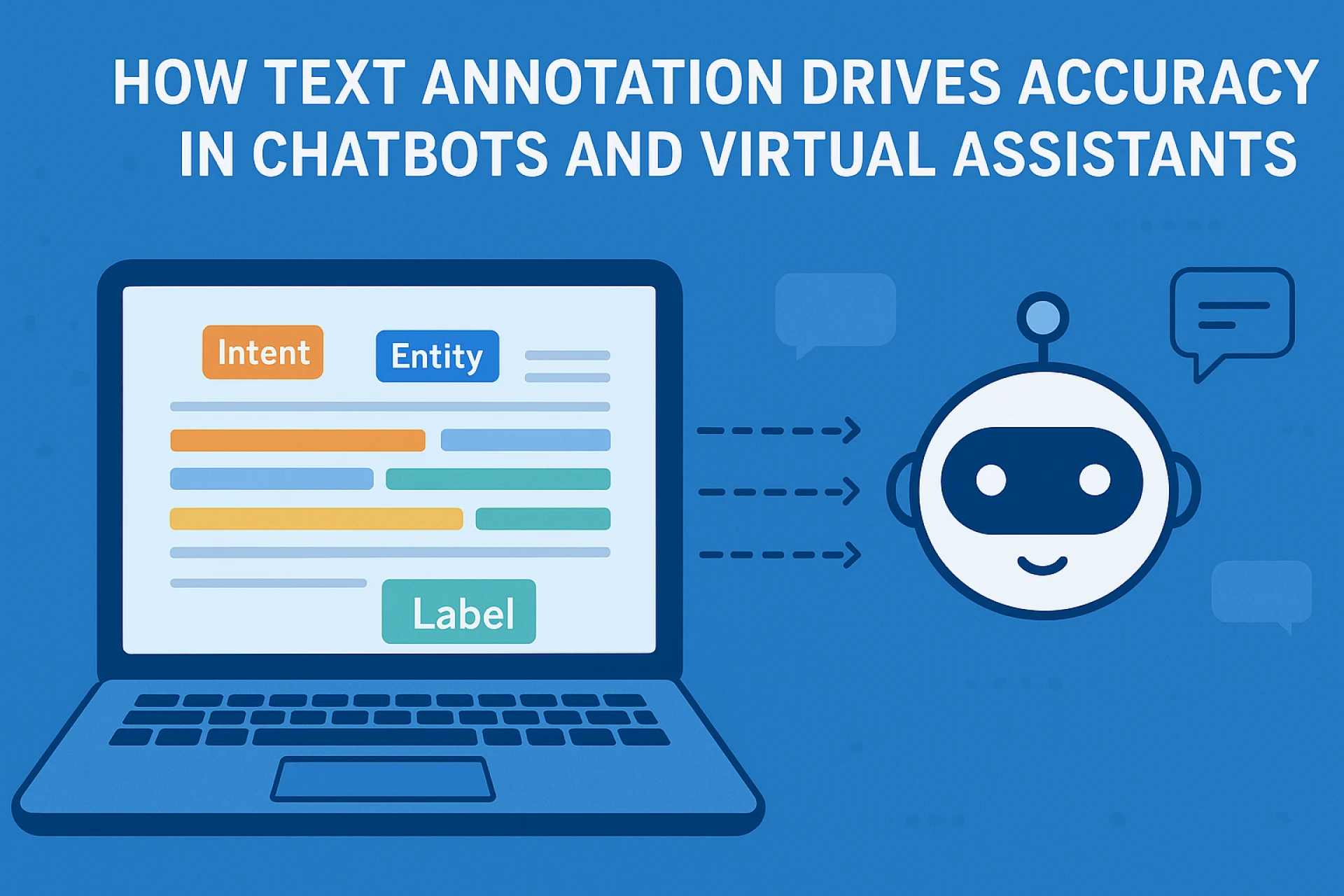
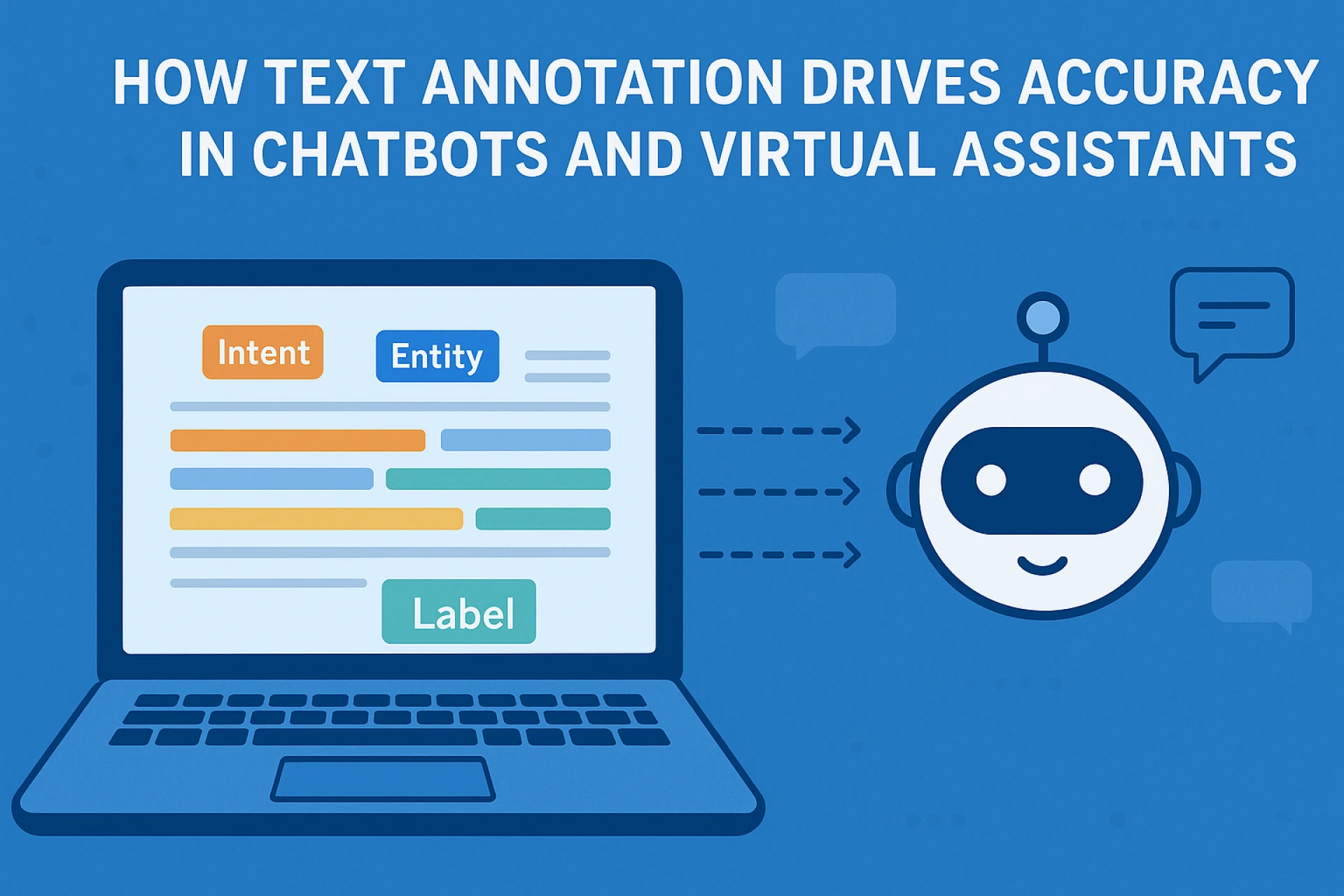
Text annotation is the process of labeling text data to make it understandable for AI algorithms. This can involve tagging entities such as names, dates, locations, sentiments, intents, or any contextual information embedded in text. For example, in a customer support chatbot, recognizing that "refund" indicates a user’s intent to return a product allows the system to provide relevant responses quickly.
Unlike image annotation, which involves marking objects or features in pictures, text annotation deals with unstructured text data. Yet, the fundamental goal is the same: to create high-quality datasets that train AI models to perform with precision and reliability.
Why Text Annotation is Essential for Chatbots and Virtual Assistants
1. Enhances Understanding of User Intent
A chatbot’s performance is only as good as its ability to understand user intent. Text annotation enables the system to recognize nuances in human communication, such as:
- Ambiguous words (e.g., "bank" could mean a financial institution or a riverbank)
- Variations in phrasing (e.g., "I need a cab" vs. "Book me a taxi")
- Contextual meaning based on conversation history
By labeling these intents accurately, developers ensure that chatbots respond appropriately, reducing misunderstandings and improving user satisfaction.
2. Improves Accuracy of Responses
The more structured and accurate the training data, the better the AI performs. Annotated text allows machine learning models to identify patterns, predict user queries, and deliver responses with minimal errors. For instance, a virtual assistant trained on well-annotated customer emails can automatically categorize issues like billing, technical support, or account management, streamlining service efficiency.
3. Supports Multilingual Capabilities
Global businesses require chatbots and virtual assistants that understand multiple languages and cultural contexts. Text annotation helps label multilingual datasets, ensuring that AI systems accurately interpret queries across languages. This is particularly critical for sentiment analysis and intent recognition, where subtle differences in wording can significantly impact AI comprehension.
Types of Text Annotation Used in AI Systems
Several types of text annotation contribute to the accuracy of chatbots and virtual assistants:
- Named Entity Recognition (NER): Identifies proper nouns, such as names of people, companies, or locations.
- Sentiment Annotation: Tags text as positive, negative, or neutral, helping AI gauge user emotions.
- Intent Annotation: Defines the purpose behind user queries, critical for task-oriented chatbots.
- Part-of-Speech Tagging: Labels words as nouns, verbs, adjectives, etc., aiding in grammatical understanding.
- Contextual Annotation: Includes conversation history or surrounding text to enhance AI comprehension.
High-quality annotation is essential; even minor errors in labeling can lead to incorrect responses, undermining user trust in AI systems.
The Role of Human Expertise
While automated tools can assist in annotation, human-in-the-loop (HITL) approaches remain indispensable. Human annotators ensure that context, nuance, and ambiguity are accurately captured, especially in complex or sensitive conversations. Companies that excel in image annotation often expand into human-supervised text annotation, applying the same rigorous quality standards across different AI datasets.
Benefits for Businesses
Investing in high-quality text annotation for chatbots and virtual assistants offers multiple business advantages:
- Enhanced Customer Experience: Accurate, context-aware responses increase user satisfaction and trust.
- Operational Efficiency: Automating responses to routine queries reduces workload on human support teams.
- Scalability: Well-annotated datasets allow AI systems to adapt to new products, services, and markets seamlessly.
- Data-Driven Insights: Text annotations can reveal patterns in customer behavior, informing strategic decisions.
Choosing the Right Annotation Partner
Businesses aiming to develop or improve AI-driven conversational tools should prioritize working with experienced annotation providers. Companies with expertise in image annotation often extend their capabilities to text annotation, offering a one-stop solution for multimodal AI projects. Key factors to consider include:
- Proven experience in both text and image annotation
- Robust quality assurance processes
- Multilingual annotation capabilities
- Human-in-the-loop support for nuanced labeling
A reliable annotation partner ensures datasets are accurate, consistent, and scalable, ultimately improving the performance of chatbots and virtual assistants.
Conclusion
Text annotation is the backbone of effective chatbots and virtual assistants. By converting unstructured text into structured, machine-readable data, annotation empowers AI systems to understand human intent, deliver precise responses, and provide exceptional user experiences.
Choosing the right annotation company, ideally one that excels in text annotation services, ensures high-quality data that fuels AI accuracy and efficiency. In a world increasingly reliant on AI-powered communication, investing in meticulous text annotation is no longer optional—it’s essential for creating chatbots and virtual assistants that truly understand and serve users.