
“Another delayed flight, a hotel 40 minutes from the client office, and an inbox full of urgent follow-ups waiting.”
This is how business travel often feels when trips are planned in isolation. What should support growth ends up draining your energy, time, and even attention. Over time, these small travel challenges convert into missed meetings.
And all these situations result in rising costs and exhausted teams. The difference between smooth travel and constant support lies in how you make your travel decisions.
Why Uncontrolled Travel Decisions Create Hidden Operational Gaps
We all know that unmanaged business travel fails without notice, mostly at the end.
For example, a consulting firm with offices across three countries reviewed its travel data after noticing frequent reimbursement disputes. The analysis showed five employees booking the same London–Munich route at five different prices within one week.
The highest fare was booked 18 hours before departure due to a client reschedule, costing more than the average.
Without a central system:
- No visibility on total travel spend until month-end.
- Senior employees spend time fixing travel issues instead of closing deals
- Emergency changes cost 2–3x the original fare
This is where a corporate travel agency in Delhi becomes valuable for organisations handling frequent international and intercity travel. These agencies provide consistency across bookings.
How Expert Travel Planning Improves Meeting Outcomes
Professional travel management is not about discounts alone. It is about reducing travel challenges.
Predictable Itineraries for Critical Meetings
Sales leaders travelling for back-to-back client meetings cannot afford delays. In such cases, travel experts often block flights with buffer windows and pre-approved alternate routing options.
For example, if you are a global IT firm, you can reduce missed client meetings by planning return flights only at certain times, regardless of meeting end times. This will eliminate last-minute rushes.
Policy-Driven Bookings Without Slowing Teams
Instead of harsh rules, the best travel programmes use smart boundaries. Like:
- They preferred airlines for reliability
- The hotel categories are based on trip duration
- Approval comes only for exceptions
This approach keeps your employees fast while finance teams stay informed.
Travel Risk Management Is Now A Business Responsibility
Business travel also includes geopolitical changes. Which means weather disruptions and health-related advisories. During sudden airport shutdowns last year, many companies with managed travel received rerouting within hours, while unmanaged travellers waited days for refunds.
Travel experts monitor:
- Route-level disruption patterns
- Airline reliability data
- Emergency evacuation protocols
A logistics company operating across Asia mandates live traveller tracking. This ensures leadership always knows where employees are during crises. This level of control cannot be achieved if you do any scattered bookings.
Difference Between Unstructured And Structured Business Travel
When business travel lacks structure, problems always appear randomly. And when it is structured, then outcomes become predictable.
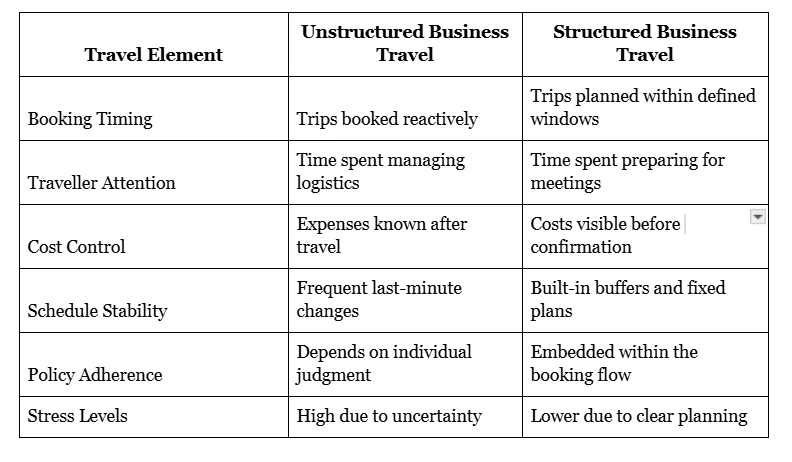
Many organisations start looking for a business travel agency near me after facing repeated travel challenges. Once your travel decisions follow a clear framework, travel no longer competes with business priorities.
Conclusion
Travel exists to increase your company's expansion, partnerships, and revenue. And when managed professionally, it becomes predictable, safe, and measurable.