
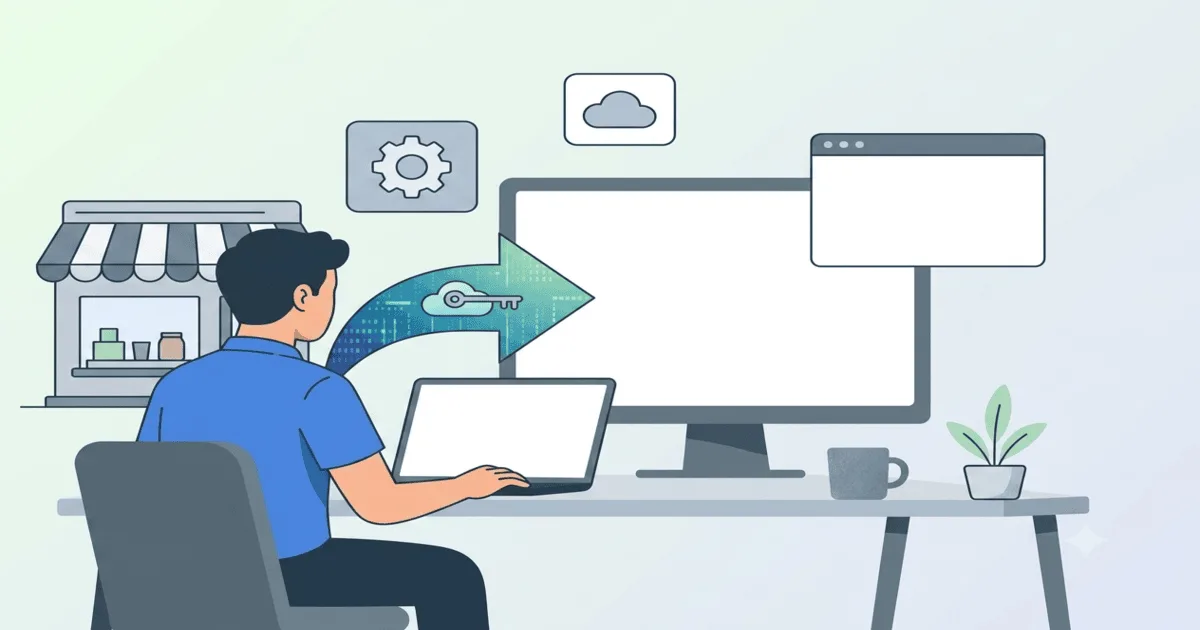
Digital change can feel like a problem meant for large companies with big budgets, dedicated IT teams, and plenty of time to experiment. For a small business, things are different. Owners are often handling customers, finances, hiring, sales, and day-to-day operations all at once.
Still, avoiding new technology is becoming harder. Customers expect faster communication, convenient payments, online information, and quick responses. Competitors are also finding new ways to automate routine work and reach customers.
The good news is that adapting does not mean replacing everything at once. Small businesses can make steady changes that solve specific problems and produce visible results.
Start With the Problem, Not the Technology
One of the easiest mistakes is buying technology simply because it is popular.
A business does not necessarily need every new AI tool, software platform, or automation system. The better question is: what currently wastes time or creates unnecessary work?
For one company, the answer might be manually tracking customer enquiries. For another, it could be sending invoices, managing appointments, updating inventory, or answering the same customer questions repeatedly.
Once the problem is clear, finding an appropriate digital solution becomes much easier.
Recent U.S. Census Bureau research shows that businesses commonly adopt technologies such as cloud systems and specialized software to improve the quality and reliability of their processes.
Keep Up With What Is Happening
Business owners do not need to become technology experts, but they should understand which changes could affect their industry.
Following reliable Business Buzz can help owners keep track of developments in business, markets, technology, startups, and the wider economy without having to spend hours researching every update themselves.
The goal is not to follow every trend. It is to recognize changes that could influence customers, competitors, costs, or the way a business operates.
For example, artificial intelligence has moved from being mainly a technology discussion to something businesses are testing in marketing, customer service, writing, research, and other everyday tasks.
Use AI Where It Actually Helps
AI is one of the biggest changes businesses are currently evaluating, but small companies should approach it practically.
A small retailer might use AI to create first drafts of product descriptions. A service business could use it to organize customer enquiries or prepare routine documents. A marketing team could use it to generate ideas before employees review and refine them.
Research from the U.S. Census Bureau found that small firms have also been adopting AI, although adoption varies considerably by business size and industry.
More recent Census research covering late 2025 and early 2026 found that sales and marketing, strategy and business development, and IT were among the most common business functions where firms using AI applied it.
The important part is keeping a human involved. AI can save time, but business decisions, customer communication, and important information still need proper review.
Move More Work to the Cloud
Cloud-based software can be particularly useful for small businesses because employees can access information without relying on a single office computer.
Accounting, customer management, file storage, project management, and communication can all be handled through cloud services. This can make collaboration easier when employees work from different locations.
It also reduces some of the burden of maintaining local systems.
The U.S. Census Bureau's technology adoption research found that cloud-based technology was among the technologies businesses considered particularly important to their processes.
For a small business, even moving one process to a reliable cloud platform can make everyday work noticeably easier.
Make the Customer Experience Simpler
Digital change is not only about internal operations. Customers notice it too.
A business website should make basic information easy to find. Customers should be able to understand what the company offers, how to contact it, and what happens next.
Online booking, digital payments, automated appointment reminders, customer support tools, and clear social media communication can all reduce friction.
But adding too many digital features can have the opposite effect. A simple system that customers understand is usually more useful than a complicated platform filled with features nobody uses.
Train People Along With the Technology
New software will not solve much if employees do not know how to use it.
Small businesses should give employees enough time to learn new systems and explain why the change is being introduced. This can reduce resistance and help staff identify better ways to use the technology.
Training does not always need to involve expensive courses. Short internal sessions, tutorials, documentation, and practical demonstrations can be enough for many tools.
The 2026 Census research also found that most businesses using AI were using it to augment tasks rather than completely replace workers.
That makes training even more relevant. Employees need to understand how technology fits into their existing responsibilities.
Make Changes in Small Steps
Digital transformation does not have to be a massive project.
A small business could start by improving its website, move its accounting system online, introduce digital payments, automate appointment reminders, or test one AI tool for a specific task.
After a few weeks, the owner can look at the results. Did it save time? Did customers respond better? Did employees find it useful? If the answer is yes, the business can expand from there.
Small, measurable improvements are often easier to manage than trying to modernize the entire company overnight.
Digital change is going to continue, but small businesses do not need to chase every new trend. They need to pay attention, understand where technology can solve real problems, and introduce useful changes at a pace they can manage. The businesses that do this well will not necessarily be the ones using the most technology. They will be the ones using the right technology for the work that actually matters.