Summary
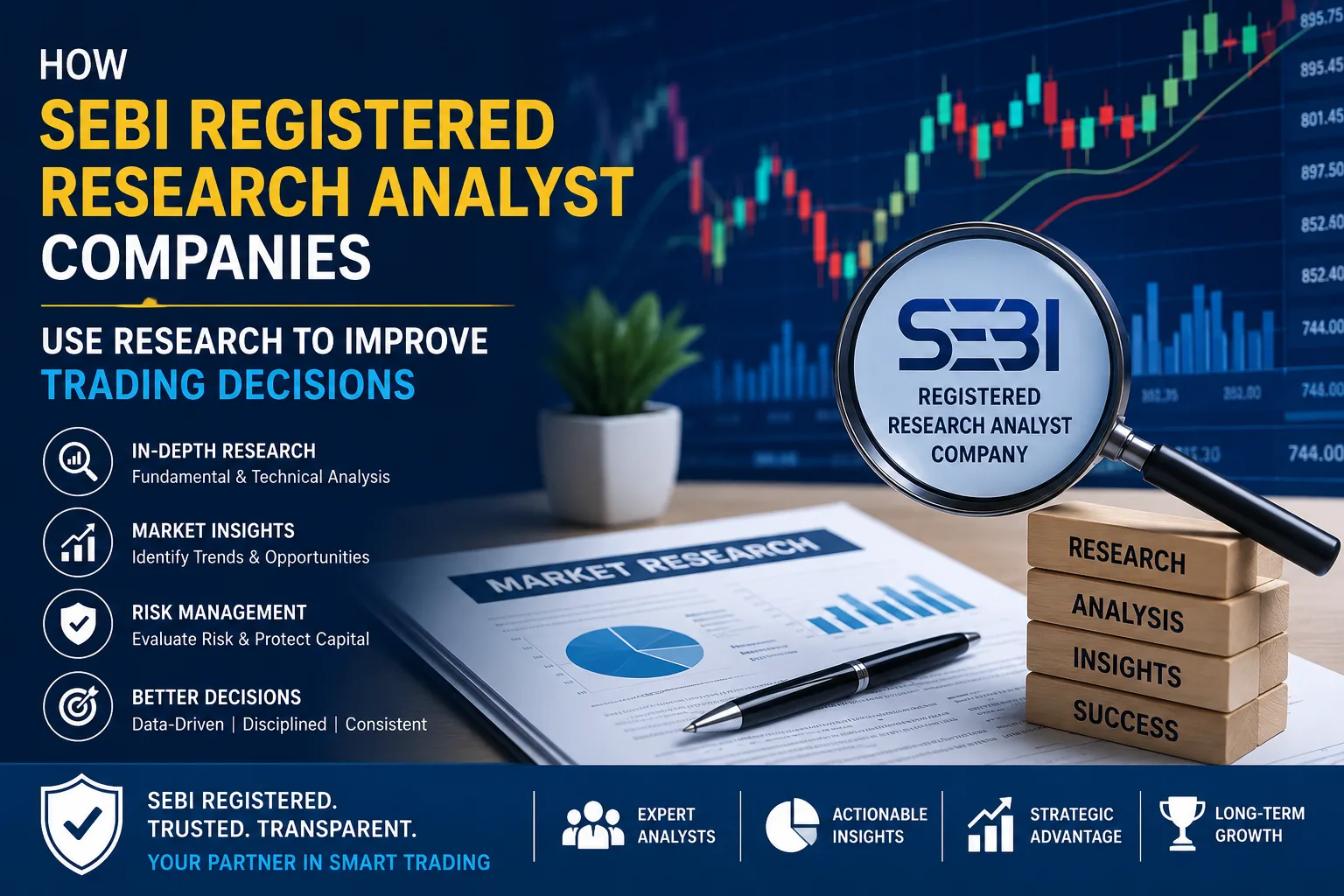
Successful trading is not based on guesswork or market rumors. It is built on research, analysis, and informed decision-making. SEBI Registered Research Analyst Companies play a crucial role in helping traders and investors navigate market complexities by providing data-driven insights and well-researched recommendations. Through fundamental analysis, technical analysis, risk assessment, and market monitoring, these firms enable investors to make more confident and strategic trading decisions. This article explores how research-driven approaches help improve trading outcomes and why choosing a SEBI Registered Research Analyst Company can be beneficial for long-term success.
Introduction
The stock market is influenced by numerous factors, including economic developments, corporate earnings, global events, and investor sentiment. In such a dynamic environment, making trading decisions without proper research can increase the likelihood of costly mistakes.
This is where a SEBI Registered Research Analyst Company adds value. These firms are regulated by the Securities and Exchange Board of India (SEBI) and are committed to providing research-backed recommendations based on thorough analysis rather than speculation. Their objective is to help investors understand market opportunities, manage risks, and make informed decisions.
The Role of Research in Trading
Research serves as the foundation of successful trading and investing. Instead of relying on emotions or market noise, research analysts evaluate relevant data to identify potential opportunities and risks.
Effective research helps traders:
- Understand market trends and sentiment.
- Identify fundamentally strong stocks.
- Determine suitable entry and exit points.
- Manage risk effectively.
- Build disciplined trading strategies.
By focusing on facts and analysis, traders can make decisions based on evidence rather than assumptions.
How SEBI Registered Research Analyst Companies Conduct Research
1. Fundamental Analysis
Fundamental analysis involves evaluating a company's financial health and growth potential.
Research analysts examine:
- Revenue growth
- Profitability
- Earnings reports
- Debt levels
- Cash flow
- Industry performance
- Management quality
This analysis helps determine whether a stock is undervalued, fairly valued, or overvalued, enabling investors to make better long-term investment decisions.
2. Technical Analysis
Technical analysis focuses on price movements and trading volumes to identify market trends.
Analysts use various tools such as:
- Support and resistance levels
- Trend lines
- Moving averages
- Relative Strength Index (RSI)
- MACD indicators
- Chart patterns
These techniques help traders identify potential entry and exit opportunities while improving timing and trade execution.
3. Market Trend Analysis
Markets are constantly influenced by domestic and international developments. Research analyst companies continuously monitor:
- Economic indicators
- Interest rate changes
- Inflation data
- Government policies
- Global market movements
- Sector-specific developments
Understanding these factors allows analysts to assess how broader trends may impact specific stocks and industries.
4. Risk Assessment and Management
One of the most important aspects of research is risk management.
SEBI Registered Research Analyst Companies evaluate:
- Market volatility
- Sector risks
- Company-specific risks
- Liquidity concerns
- Economic uncertainties
Based on this assessment, analysts can recommend strategies that align with different risk profiles and investment objectives.
5. Data-Driven Decision Making
Professional research firms rely on structured methodologies and reliable data sources. Rather than reacting emotionally to short-term market fluctuations, they analyze facts and statistics to support their recommendations.
This disciplined approach helps traders avoid common mistakes such as:
- Panic selling
- Overtrading
- Chasing market rumors
- Emotional decision-making
Benefits of Using Research-Based Trading Strategies
Improved Accuracy
Research-backed analysis provides a clearer understanding of market conditions, increasing the probability of making informed decisions.
Better Risk Control
Proper research helps identify potential risks before entering a trade, allowing investors to protect capital more effectively.
Enhanced Confidence
When decisions are supported by data and analysis, traders can execute their strategies with greater confidence.
Consistent Decision-Making
Research promotes a systematic approach to trading, reducing the impact of emotions and impulsive actions.
Long-Term Success
Sustainable trading performance is often built on disciplined research rather than short-term speculation.
Why Choose a SEBI Registered Research Analyst Company?
Choosing a SEBI Registered Research Analyst Company offers several advantages:
- Compliance with regulatory standards.
- Greater transparency and accountability.
- Research-backed recommendations.
- Professional analytical expertise.
- Structured risk management practices.
- Focus on investor protection.
Working with regulated research professionals provides investors with access to valuable market insights while ensuring adherence to established ethical and compliance standards.
How Invesia Research Supports Better Trading Decisions
At Invesia Research, research forms the foundation of every recommendation and market insight. By combining technical analysis, market research, risk assessment, and continuous market monitoring, the team strives to provide actionable insights that help traders make informed decisions.
The focus remains on delivering research-driven strategies that emphasize discipline, risk management, and market understanding rather than speculation.
Conclusion
Trading success is rarely the result of luck. It is the outcome of careful planning, disciplined execution, and thorough research. SEBI Registered Research Analyst Companies play a vital role in helping investors navigate market uncertainty by providing objective, research-based insights.
By leveraging fundamental analysis, technical analysis, market monitoring, and risk assessment, these firms empower traders to make smarter decisions and build more sustainable trading strategies. For investors seeking a structured and informed approach to the markets, partnering with a research-driven and SEBI-compliant organization can be a valuable step toward achieving their financial goals.
Frequently Asked Questions (FAQs)
1. What is a SEBI Registered Research Analyst Company?
A SEBI Registered Research Analyst Company is a firm authorized by the Securities and Exchange Board of India (SEBI) to provide research-based recommendations and investment insights while adhering to regulatory guidelines.
2. How does research improve trading decisions?
Research helps traders evaluate opportunities, understand risks, identify trends, and make informed decisions based on data rather than speculation.
3. What is the difference between fundamental and technical analysis?
Fundamental analysis focuses on a company's financial performance and intrinsic value, while technical analysis studies price movements and chart patterns to identify trading opportunities.
4. Why is risk management important in trading?
Risk management helps protect capital, minimize losses, and improve long-term trading sustainability by controlling exposure to market uncertainty.
5. How can a SEBI Registered Research Analyst Company help investors?
Such companies provide professional market research, analytical insights, risk assessment, and data-driven recommendations that support informed investment decisions.
6. Why should investors prefer regulated research firms?
Regulated firms operate under SEBI guidelines, ensuring greater transparency, accountability, compliance, and investor protection.