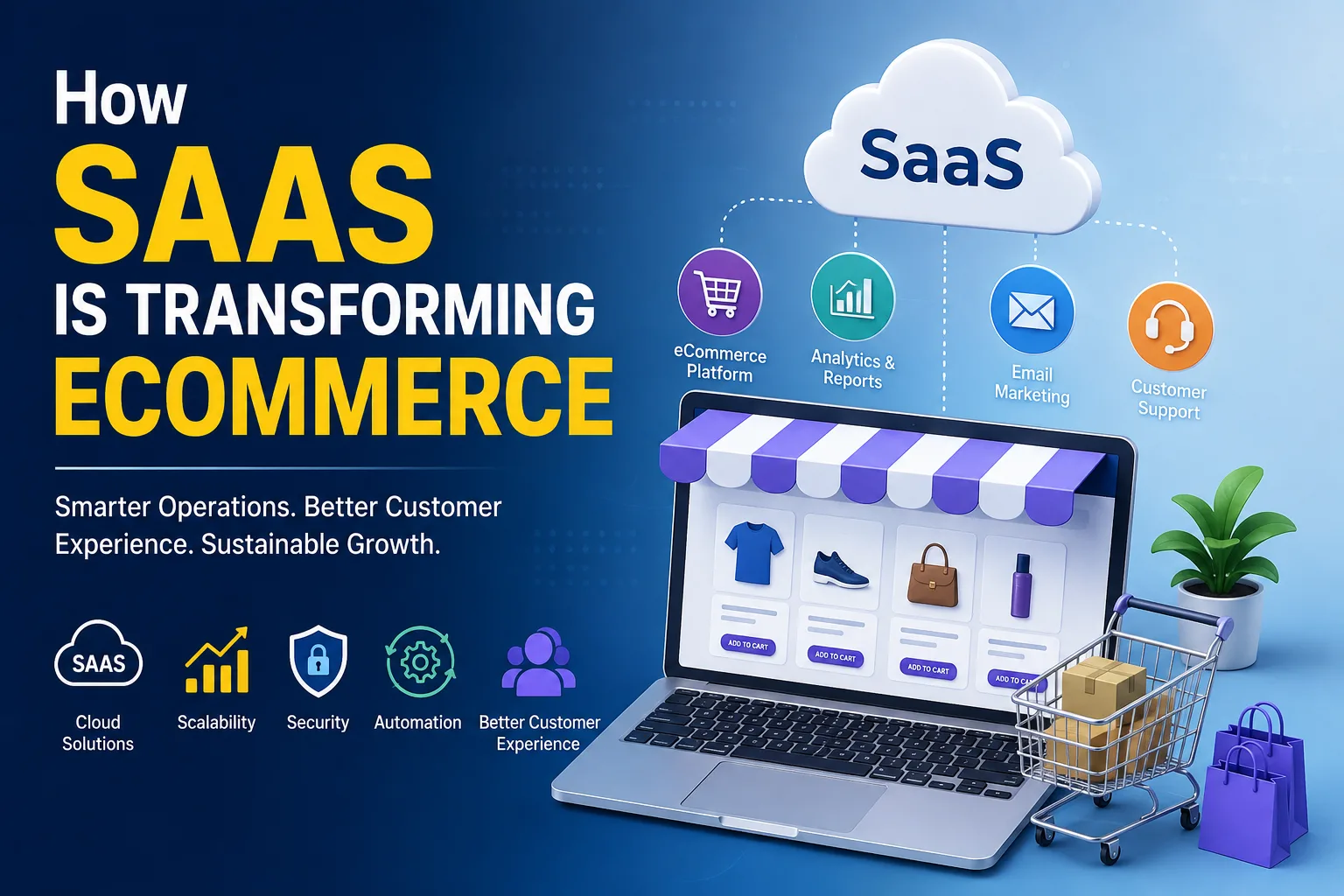
The eCommerce industry has experienced remarkable growth over the past decade. Consumers now expect fast, secure, and personalized shopping experiences regardless of the device they use. At the same time, businesses are under constant pressure to streamline operations, reduce costs, and respond quickly to changing market demands.
This is where Software as a Service (SaaS) has become a game changer. Instead of investing in expensive infrastructure and maintaining complex software systems, businesses can subscribe to cloud-based applications that are accessible from anywhere. SaaS solutions help online retailers automate daily tasks, improve customer experiences, analyze business performance, and scale more efficiently.
Whether you're launching a new online store or expanding an established brand, understanding how SaaS supports eCommerce can help you make smarter technology decisions.
What Is SaaS?
Software as a Service (SaaS) is a cloud-based software delivery model where applications are hosted by a service provider and accessed through a web browser. Instead of purchasing software licenses and installing programs on local computers, businesses pay a subscription fee to use software online.
Popular examples include customer relationship management systems, accounting platforms, email marketing tools, project management software, customer support applications, and eCommerce platforms.
The biggest advantage is that updates, security, backups, and maintenance are handled by the provider, allowing businesses to focus on growth rather than IT management.
Why eCommerce Businesses Prefer SaaS
Running an online business involves managing products, customers, payments, shipping, marketing, inventory, and analytics. Handling all these operations manually becomes difficult as a business grows.
SaaS solutions simplify these processes by offering centralized platforms that integrate multiple business functions.
Some of the major advantages include:
- Lower upfront investment
- Automatic software updates
- Better security management
- Faster deployment
- Easy scalability
- Access from any location
- Reduced maintenance costs
These benefits make SaaS particularly attractive for startups and small businesses that need enterprise-level tools without enterprise-level budgets.
Enhancing Customer Experience
Customer experience is one of the most important factors influencing online sales. SaaS applications provide businesses with powerful tools to improve every stage of the customer journey.
Features such as personalized product recommendations, automated email campaigns, live chat support, customer review systems, and AI-powered search create a smoother shopping experience.
Many SaaS platforms also offer customer behavior analytics, allowing businesses to understand purchasing habits and optimize product pages based on real user data.
Inventory and Order Management
Managing inventory across multiple sales channels can quickly become challenging.
Modern SaaS inventory systems automatically update stock levels whenever products are sold. They can synchronize inventory between online stores, marketplaces, and physical retail locations, reducing the risk of overselling or stock shortages.
Automated order processing also speeds up fulfillment and minimizes manual errors.
Marketing Automation
Digital marketing plays a critical role in eCommerce success. SaaS marketing tools help businesses automate repetitive marketing tasks while improving customer engagement.
Common features include:
- Email marketing automation
- Customer segmentation
- Abandoned cart recovery
- Promotional campaigns
- Social media scheduling
- Customer loyalty programs
- Performance tracking
Automation saves time while delivering more relevant messages to customers.
Secure Payment Processing
Security remains one of the biggest concerns for online shoppers.
Most SaaS eCommerce platforms integrate with trusted payment gateways that support secure online transactions, fraud detection, encryption, and compliance with industry standards.
Offering multiple secure payment options helps improve customer confidence and reduce cart abandonment.
Data Analytics and Business Intelligence
Data-driven decisions often lead to better business outcomes.
SaaS analytics tools provide real-time insights into sales performance, customer behavior, traffic sources, conversion rates, and inventory movement.
Business owners can quickly identify best-selling products, evaluate marketing campaigns, monitor customer retention, and make informed decisions based on measurable results.
Scalability for Growing Businesses
One of SaaS's greatest strengths is scalability.
As businesses expand, they can easily upgrade their subscription plans, add new users, increase storage, or integrate additional features without replacing their existing systems.
This flexibility allows companies to adapt quickly to seasonal demand, business growth, and changing customer expectations.
AI and Automation in SaaS
Artificial intelligence is becoming increasingly integrated into SaaS solutions.
AI-powered applications now help businesses:
- Generate product descriptions
- Predict customer demand
- Recommend products
- Improve customer support through chatbots
- Detect fraudulent transactions
- Personalize shopping experiences
These capabilities improve operational efficiency while enhancing customer satisfaction.
Challenges to Consider
Although SaaS offers many advantages, businesses should evaluate potential challenges before choosing a solution.
These may include:
- Monthly subscription costs
- Dependence on internet connectivity
- Limited customization in some platforms
- Data migration considerations
- Vendor lock-in risks
Choosing a reputable provider with reliable customer support, strong security practices, and flexible integration options can help address these concerns.
Selecting the Right SaaS Platform
When evaluating SaaS solutions for eCommerce, consider the following factors:
- Ease of use
- Security features
- Mobile compatibility
- Third-party integrations
- Performance and reliability
- Customer support
- Pricing transparency
- Scalability
- Reporting capabilities
- User reviews
Selecting software that aligns with your business goals can reduce long-term operational challenges.
Future Trends
The future of eCommerce and SaaS continues to evolve rapidly.
Emerging trends include:
- AI-powered personalization
- Voice commerce integration
- Headless commerce architectures
- Predictive analytics
- Subscription-based business models
- Omnichannel customer experiences
- Advanced cybersecurity
- Low-code and no-code business automation
Businesses that embrace these innovations will be better positioned to remain competitive in a rapidly changing digital marketplace.
Conclusion
SaaS has fundamentally changed how eCommerce businesses operate. From simplifying inventory management and automating marketing to improving customer experiences and enabling data-driven decision-making, cloud-based software provides organizations with the flexibility needed to grow efficiently.
As customer expectations continue to rise, investing in reliable SaaS solutions can help businesses improve productivity, strengthen security, and adapt to future technological advancements. Companies that thoughtfully adopt the right SaaS tools today will be better equipped to deliver exceptional online shopping experiences and achieve sustainable growth in the years ahead.