The financial industry is moving toward a more connected, transparent, and digitally accessible ecosystem. Traditional financial platforms are increasingly exploring blockchain technology to modernize asset management, investment operations, capital formation, and financial services. One of the developments driving this transformation is Real-World Asset (RWA) tokenization.
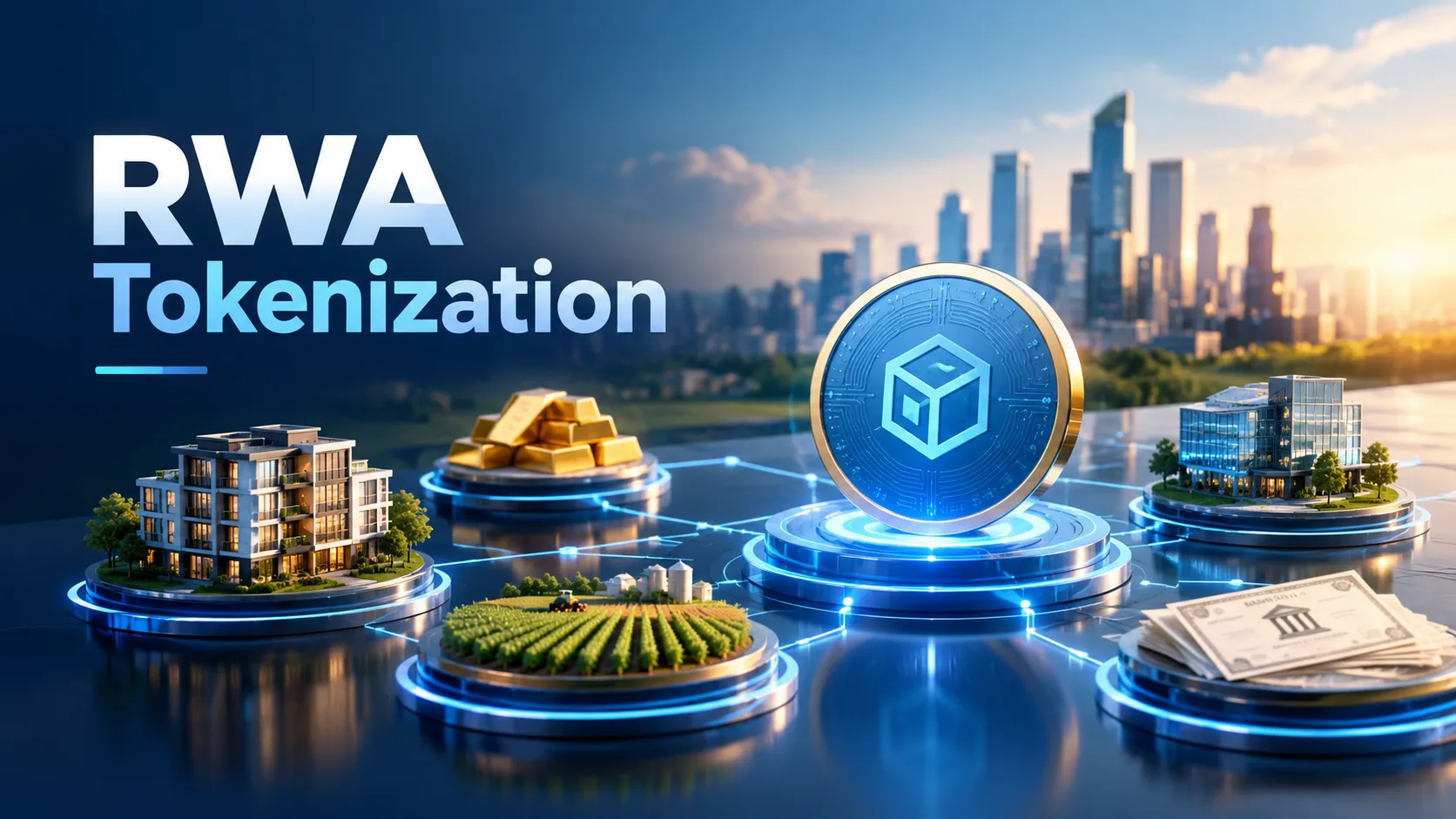
RWA tokenization involves converting ownership rights, financial interests, or economic claims associated with physical and traditional financial assets into digital tokens on a blockchain. These assets can include real estate, commodities, bonds, private credit, infrastructure, equities, and other income-generating investments.
For fintech companies, investment firms, financial institutions, and asset managers, RWA tokenization development offers an opportunity to build next-generation financial platforms that connect traditional assets with blockchain-based infrastructure. By integrating token issuance, investor management, smart contracts, compliance mechanisms, and digital asset administration, businesses can introduce more flexible financial products and investment models.
Rather than simply digitizing existing financial instruments, RWA tokenization can help businesses rethink how assets are structured, distributed, managed, and accessed.
1. Creating New Digital Investment Opportunities
Traditional investment platforms often operate within specific asset categories, geographical markets, and investor networks. These limitations can make it difficult for businesses to introduce new investment products or expand participation across different asset classes.
RWA tokenization development can help overcome some of these limitations by representing eligible asset interests as blockchain-based tokens.
For example, a financial platform could support investment opportunities involving:
- Commercial and residential real estate.
- Government and corporate bonds.
- Gold and other precious metals.
- Private credit and debt instruments.
- Infrastructure and renewable energy projects.
- Revenue-generating business assets.
- Agricultural and industrial commodities.
Each asset can have its own token structure, ownership model, investment conditions, and distribution rules.
This allows financial platforms to introduce diversified investment products within a unified digital environment. Businesses can also develop specialized investment offerings based on asset performance, expected income, investment duration, and investor eligibility.
2. Supporting Fractional Investment Models
High-value assets often require substantial capital, which can restrict participation to institutional investors or high-net-worth individuals. Fractional tokenization provides another approach by dividing eligible asset interests into smaller digital units.
For instance, a commercial property valued at $10 million could be structured into 100,000 tokens, with each token representing a defined economic or ownership interest, depending on the legal structure.
This model can support:
- Smaller investment entry points.
- Broader investor participation.
- Multiple investment tiers.
- Asset-specific investment products.
- More flexible capital allocation.
For next-generation financial platforms, fractional investment capabilities can become an important feature. Instead of offering only traditional financial products, businesses can introduce tokenized investment opportunities connected to different asset categories.
However, fractionalization does not automatically guarantee liquidity or unrestricted ownership transfers. The underlying legal rights, investor eligibility, and applicable securities regulations must be established before launching such models.
3. Automating Financial Operations Through Smart Contracts
Smart Contract Blockchain Revolutionizing Secure Digital Transactions
Financial platforms handle multiple operational processes, including asset issuance, investor allocation, payment distribution, ownership updates, and transaction verification. Managing these activities manually can increase administrative complexity.
Smart contracts can automate predefined operations through blockchain-based execution rules.
In an RWA tokenization platform, smart contracts can support:
- Token issuance and allocation.
- Investor eligibility verification.
- Ownership transfer restrictions.
- Dividend and rental income distribution.
- Interest payment scheduling.
- Redemption and maturity processes.
- Transaction recording and verification.
For example, a tokenized private credit platform can use smart contracts to execute scheduled interest distributions based on predefined contractual conditions.
Similarly, a tokenized real estate platform can automate eligible rental income distributions among investors according to their recorded investment positions.
This automation can reduce repetitive administrative work and improve operational consistency. However, smart contracts must be integrated with reliable off-chain data, payment infrastructure, legal agreements, and appropriate security controls.
4. Improving Transparency and Asset Ownership Tracking
Transparency is an important requirement for modern financial platforms. Investors need reliable information about their holdings, transaction history, asset performance, and ownership rights.
Blockchain technology provides a shared transaction record that can help platforms maintain verifiable records of token issuance and transfers.
RWA tokenization development can introduce transparency through:
- Blockchain-based ownership records.
- Verifiable token supply information.
- Transaction history tracking.
- Investor portfolio records.
- Smart contract execution logs.
- Asset-related reporting and documentation.
For example, an asset management platform supporting multiple tokenized properties can maintain separate digital ownership records for each property. Investors can access information about their token balances and eligible investment rights through a centralized dashboard.
This approach can improve recordkeeping and make certain asset-related activities easier to verify. Nevertheless, blockchain records alone do not establish legal ownership of an underlying physical asset. Legal documentation, custody arrangements, and recognized ownership structures remain essential.
5. Enabling Cross-Border Investment Infrastructure
Traditional cross-border investment operations can involve multiple intermediaries, jurisdiction-specific procedures, currency conversions, and settlement requirements.
RWA tokenization can help financial platforms develop infrastructure for eligible cross-border investment participation.
A tokenization platform can integrate:
- Multi-currency payment support.
- Digital investor onboarding.
- KYC and AML verification.
- Jurisdiction-based investor restrictions.
- Blockchain-based transaction processing.
- Cross-border asset administration.
- Automated compliance checks.
For example, an investment company managing infrastructure projects in multiple countries could develop a platform where eligible investors from different jurisdictions participate in approved asset-backed investment offerings.
The platform can manage investor eligibility, token allocation, transaction records, and investment reporting through a unified system.
However, cross-border token distribution requires careful consideration of local securities laws, foreign investment regulations, taxation, payment restrictions, and transfer requirements.
6. Building Integrated Digital Asset Management Platforms
Next-generation financial platforms need more than token issuance capabilities. They require infrastructure to manage assets throughout their investment lifecycle.
RWA tokenization development can bring different financial operations together through an integrated asset management environment.
Important platform capabilities include:
- Asset onboarding: Register and verify assets before token issuance.
- Token management: Create, issue, distribute, and manage digital tokens.
- Investor dashboards: Provide access to investment portfolios and transaction history.
- Asset performance tracking: Display relevant financial and operational information.
- Distribution management: Manage eligible income, interest, and dividend payments.
- Reporting systems: Generate investment statements and asset performance reports.
- Administrative controls: Manage users, permissions, transactions, and platform activities.
For example, an investment management company handling real estate, private credit, and commodity-backed investments could operate these activities through a single platform.
Instead of developing separate systems for every asset category, businesses can build a modular RWA tokenization platform that supports multiple asset classes and investment structures.
7. Enabling Secondary Market and Liquidity Opportunities
One of the challenges associated with traditional alternative investments is the limited availability of exit opportunities. Investors may need to hold certain investments until maturity or until an approved buyer becomes available.
Tokenization can introduce digital transfer mechanisms that support secondary market infrastructure.
A financial platform can incorporate features such as:
- Investor-to-investor token transfers.
- Approved secondary trading environments.
- Order placement and matching.
- Investor eligibility verification.
- Transfer restrictions and compliance checks.
- Transaction settlement records.
- Trading and portfolio history.
For example, a platform offering tokenized private credit investments could support eligible investors transferring their interests to other approved participants, subject to contractual restrictions.
This can create additional transfer opportunities without changing the underlying investment terms.
However, tokenization does not automatically create market liquidity. Secondary market activity depends on investor demand, regulatory permissions, available buyers, pricing mechanisms, and the characteristics of the underlying asset.
8. Integrating RWA Tokenization With DeFi and Financial Services
Integrating Real World Assets (RWA) in Blockchain & DeFi
cobo.com
Another development opportunity involves connecting tokenized real-world assets with decentralized finance (DeFi) infrastructure.
Eligible tokenized assets can potentially become part of broader financial applications, creating additional utility beyond traditional investment ownership.
Possible integrations include:
Tokenized asset-backed lending: Eligible tokenized assets may serve as collateral for borrowing through approved lending arrangements.
Digital collateral management: Financial institutions can explore using tokenized securities and other eligible assets in collateral workflows.
Automated investment products: Smart contracts can support predefined investment and distribution strategies.
Liquidity management: Tokenized financial instruments can be integrated into suitable liquidity management arrangements.
Portfolio diversification: Financial platforms can combine different tokenized asset categories within investment products.
For example, a platform could offer eligible tokenized treasury instruments alongside tokenized real estate and private credit products.
Such integrations could expand the financial services available through digital asset platforms. However, collateral eligibility, valuation, custody, liquidation rights, and regulatory requirements must be addressed before enabling these use cases.
9. Improving Financial Platform Scalability Through Modular Architecture
As businesses expand their tokenization operations, their technology infrastructure must accommodate additional assets, investors, transactions, and financial products.
A scalable RWA tokenization platform should be designed with a modular architecture that allows individual components to evolve without requiring a complete system redesign.
A typical architecture can include the following layers:
Platform layerKey functionalityFrontend layerInvestor dashboards, asset listings, and administration interfacesBackend layerBusiness logic, APIs, and transaction managementBlockchain layerToken issuance, ownership records, and smart contractsCompliance layerKYC, AML, accreditation, and transfer restrictionsPayment layerFiat and supported digital payment integrationsAsset management layerAsset verification, valuation, and documentationSecurity layerEncryption, access control, and key managementAnalytics layerPortfolio reporting and performance monitoringThis architecture allows businesses to introduce new asset categories and financial products as their requirements change.
For example, a platform initially supporting real estate tokenization could later introduce tokenized bonds, commodities, or private credit without rebuilding its entire infrastructure.
Interoperability with existing financial systems is equally important. Legacy banking infrastructure, custody systems, payment providers, and regulatory reporting tools may need to work alongside blockchain-based components.
OECD+1
10. Strengthening Regulatory Compliance and Investor Protection
Regulatory compliance is a fundamental requirement when developing financial platforms that handle tokenized assets.
Different assets may represent different legal rights and fall under different regulatory frameworks. A token representing a security, a claim against an issuer, or an interest in a property-related structure may require different compliance procedures.
A well-designed RWA tokenization platform should incorporate:
- KYC and AML verification.
- Investor accreditation checks, where applicable.
- Jurisdiction-based access restrictions.
- Securities and offering compliance workflows.
- Permissioned token transfers.
- Transaction monitoring.
- Custody and asset verification mechanisms.
- Audit trails and regulatory reporting.
- Data privacy and protection controls.
Compliance requirements should be considered during platform architecture and smart contract development rather than added after deployment.
For instance, a tokenized investment platform may restrict participation to verified investors from approved jurisdictions. Its smart contracts can enforce eligible transfer rules while its backend manages identity verification and compliance records.
The legal relationship between the token and the underlying asset must also be clearly documented.
The OECD and Financial Stability Board have highlighted challenges involving legal certainty, interoperability, operational risks, and the integration of tokenized assets with existing financial systems.
OECD+1
11. Supporting New Financial Business Models
RWA tokenization development can also help fintech businesses introduce financial products that are difficult to structure through conventional investment platforms.
Rather than focusing exclusively on buying and selling digital assets, businesses can develop specialized platforms around different financial activities.
Some potential business models include:
Business modelPlatform opportunityTokenized investment marketplaceOffer eligible tokenized investment productsReal estate investment platformFacilitate investment in property-related interestsPrivate credit platformStructure and manage tokenized debt investmentsDigital securities platformSupport compliant issuance and administrationCommodity investment platformProvide access to eligible commodity-backed productsAsset management platformManage multiple tokenized asset portfoliosInstitutional tokenization infrastructureProvide issuance and management technology to financial institutionsWhite-label tokenization platformEnable businesses to launch branded investment platformsFor example, a fintech company could develop a white-label RWA tokenization solution and offer it to asset managers, investment firms, and financial institutions.
Similarly, an asset management business could develop a multi-asset investment platform that combines different tokenized financial products within one ecosystem.
These business models create opportunities for companies to expand beyond conventional fintech services and establish specialized digital asset infrastructure.
12. Key Technologies Required for RWA Tokenization Development
Developing a reliable RWA tokenization platform requires the integration of multiple technologies. Each technology contributes to a specific part of the platform's functionality.
TechnologyRole in platform developmentBlockchainMaintains digital asset and transaction recordsSmart contractsAutomates token issuance and financial operationsAPIsConnects external services and financial infrastructureAI and analyticsSupports data analysis, risk monitoring, and reportingDigital identitySupports investor verification and access managementCloud infrastructureProvides scalable platform hostingCryptographic securityProtects transactions and digital assetsOracle integrationsConnects relevant external asset and financial dataChoosing the right technology stack depends on the asset category, transaction volume, investor requirements, regulatory environment, and business model.
For example, platforms designed for institutional financial products may prioritize permissioned access, governance, privacy, and integration with existing financial infrastructure.
On the other hand, investment marketplaces may require broader investor interfaces, multiple asset categories, and secondary transfer functionality.
13. Challenges Businesses Should Consider Before Developing an RWA Platform
Although RWA tokenization offers new opportunities for financial innovation, developing a platform requires careful planning.
Businesses should evaluate several important challenges before beginning development.
Legal ownership and asset rights
The token structure must clearly define what investors actually receive. Token ownership should be supported by enforceable legal agreements and appropriate asset-holding arrangements.
Asset valuation and verification
Platforms need reliable methods to verify underlying assets and maintain accurate valuation information.
Liquidity management
Businesses should avoid presenting tokenized assets as automatically liquid. Investment restrictions, asset maturity, market demand, and redemption conditions must be considered.
Blockchain interoperability
Different blockchain networks and financial systems may use different standards. Interoperability is important for supporting broader adoption.
Cybersecurity
Smart contract vulnerabilities, unauthorized access, private key management, and infrastructure attacks can create significant operational risks.
Regulatory uncertainty
Tokenized financial products may be subject to securities, financial services, custody, taxation, and cross-border regulations.
Addressing these challenges during the planning stage can help businesses build more reliable and sustainable financial platforms.
IMF eLibrary+1
14. How to Choose the Right RWA Tokenization Development Partner
Selecting the right technology partner is an important step for businesses planning to launch an RWA-based financial platform.
The development partner should understand both blockchain infrastructure and the operational requirements of financial products.
Before selecting a development company, businesses should evaluate:
- Blockchain development experience: Check experience with smart contracts, token standards, and blockchain infrastructure.
- Financial platform expertise: Evaluate knowledge of investment platforms, asset management, and digital financial services.
- Tokenization architecture: Ensure the team can design asset-specific tokenization models.
- Compliance integrations: Review experience with KYC, AML, and investor verification systems.
- Security practices: Evaluate smart contract auditing, penetration testing, and infrastructure security.
- Scalability: Check whether the architecture can support multiple assets and increasing transaction volumes.
- Post-launch support: Consider maintenance, upgrades, monitoring, and ongoing technical assistance.
Working with an experienced RWA tokenization development company can help businesses translate their financial business models into functional blockchain-based platforms.
A development partner should also understand that tokenization is not simply about creating digital tokens. It involves connecting asset structures, financial operations, investor management, and regulatory requirements within one technology ecosystem.
Future of RWA Tokenization in Financial Platform Development
The future of financial technology may increasingly involve programmable financial infrastructure, tokenized assets, and integrated settlement systems.
As financial institutions and fintech companies explore these models, RWA tokenization could support new ways of issuing, managing, transferring, and administering financial instruments.
Several developments could influence this transition:
- Integration of tokenized assets with traditional banking infrastructure.
- Expansion of tokenized securities and private market investments.
- Greater use of programmable financial products.
- Improved interoperability between blockchain networks.
- Development of institutional digital asset infrastructure.
- Integration of tokenized collateral into financial markets.
- Expansion of automated settlement and asset management processes.
The direction is not simply toward replacing traditional financial systems with blockchain networks. Instead, it involves exploring how programmable infrastructure can integrate with existing financial institutions, regulatory frameworks, and settlement mechanisms.
The IMF's October 2026 analysis also identifies legal certainty, regulatory clarity, interoperability, and settlement asset availability as important factors influencing the expansion of tokenized finance.
IMF eLibrary+1
Conclusion
RWA tokenization development can play an important role in building next-generation financial platforms by connecting traditional assets with programmable blockchain infrastructure. From fractional investment models and automated financial operations to digital asset management and integrated investment marketplaces, tokenization creates opportunities to rethink how financial products are developed and delivered.
For fintech companies, financial institutions, investment firms, and asset managers, the opportunity lies in developing platforms that support multiple asset categories, efficient investor participation, secure transactions, and compliant financial operations.
Businesses looking to enter this market should focus on selecting the right tokenization model, blockchain architecture, smart contract framework, compliance infrastructure, and technology development partner.
Inoru, a tokenization development company, helps businesses explore and develop blockchain-based tokenization platforms designed around their asset categories and business requirements. With capabilities focused on RWA tokenization and real estate tokenization development, businesses can explore custom platform solutions for building their digital asset ecosystems.