

Home efficiency depends on a careful balance between holding heat and moving air. A house that is too tight can trap moisture, while a house that is too leaky wastes money. High quality Insulation helps keep the indoor temperature steady only when the air can also move through the right paths.
This approach ensures the air inside a home remains fresh and dry year-round. Professionals look at how air enters and exits a building to find the sweet spot for comfort. They focus on practical ways to reduce heat loss without compromising air quality for the family.
By using the right materials and air paths, property owners can lower energy costs by 15 percent or more. This information comes from years of testing home performance in the variable Illinois climate. Experts specializing in air infiltration help homeowners understand this delicate balance between sealing and breathing.
The Balance Between Airtightness and Fresh Air
A tight building envelope stops wind from blowing through the walls and floors. This thermal layer is what keeps the furnace from running every few minutes in the winter. However, people and pets inside create moisture and carbon dioxide that must go somewhere.
Modern buildings need a plan to replace old, stale air with fresh, dry air from outside. This is often done with small vents or machines that pull air through the house slowly. This prevents the air from feeling heavy or smelling like old food and dust.
Why Houses Need to Breathe
If a house cannot breathe, water vapor from showers and cooking stays trapped in the wood. This can lead to mold growth in the corners of rooms or inside the attic. Proper air flow carries this wet air out before it can cause any long term trouble.
Managing Internal Air Pressure
Air pressure changes when the wind blows or when the kitchen fan runs. If the house is sealed well, the pressure needs to stay even to keep the air moving right. This stops the house from sucking in cold air through tiny gaps in the foundation.
Bonus Tip for Draft DetectionUse a small stick of incense near windows and doors to see which way the smoke moves. If the smoke pulls toward a gap, it means air is leaking out of the house. This is a simple way to find spots that need more sealing.
Monitoring Relative Humidity LevelsKeep a small meter in the living room to track the amount of water in the air. A healthy home usually has humidity between 30 and 50 percent. If it exceeds that, the ventilation system might need to work harder.
Preventing Moisture Buildup and Structural Damage
When warm air hits a cold surface, it turns into liquid water. This happens a lot in attics that have plenty of heat but not enough air flow. Keeping the roof deck cool with good air movement stops this water from rotting the wood.

Proper airflow also prevents ice dams from forming at the edge of the roof. When the roof temperature matches the outside air temperature, snow melts evenly. This saves the owner from expensive roof repairs and interior water stains.
The Role of Attic Ventilation
The attic is the main area where air flow and heat barriers meet. Vents at the bottom and top of the roof allow air to wash over the underside of the deck. This keeps the wood dry and prevents the shingles from getting too hot in the summer.
- Soffit vents pull cool air in from the bottom of the roof edge.
- Ridge vents let hot, wet air escape from the very top of the house.
- Baffles prevent the heat barrier material from blocking the airflow.
- Fans can help move air if the natural wind is not strong enough.
Baffles and Soffit Vents
Baffles are plastic or foam channels that hold the insulation away from the roof wood. They create a clear tunnel for air to move from the soffits up to the ridge. Without these, the heat barrier would act like a dam and stop the air from moving.
Bonus Tip for Baffle InstallationMake sure the baffles are stapled tightly so they do not fall over time. A loose baffle can block the air flow and cause a hot spot on the roof. Check them every few years to ensure they remain free of dust and debris.
Understanding the Roles of Air Control
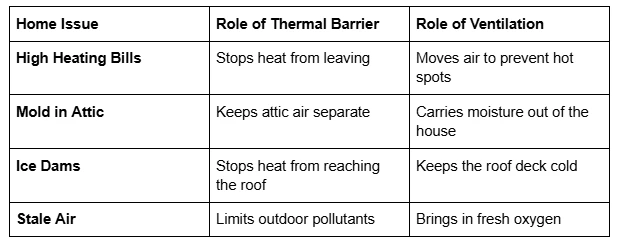
Both parts of the system must work together to keep the building healthy. One blocks the heat while the other manages the air quality and moisture. The table below shows how these two parts handle different home issues.
Things to Consider Before Making a Decision
Before adding more material to a home, an owner should check the current air flow. Adding too much sealing without enough vents can lead to wet walls and windows. It is best to have a pro look at the whole house to see what it needs.
Consider the home's age and any past issues with mold or ice. Older homes often have plenty of vents but not enough heat protection. Newer homes might be the opposite and need more ways to bring in fresh air.
The local climate in Illinois means the system must handle both deep freezes and humid summers. A plan that works in a dry place might not work well in a place with a lot of rain. Always pick a solution that is built for the Midwest weather.
Summary of Efficient Home Design
A healthy home uses a strong heat barrier and a clear path for air. This combination stops energy waste while protecting the wood and the air quality. Property owners should look for signs of moisture or high bills to see if their balance is off.
Consult with an expert to find the right mix for your specific building. Every home is different and needs a custom plan to work at its best. Taking these steps leads to a more durable building and a more comfortable life for the family.
Get Expert Advice for Your Property
The team at South Chicago Insulation helps property owners find the perfect balance for their homes. They specialize in fixing moisture issues and stopping air leaks in complex buildings. For a professional review of your home, you can contact them at [email protected] or call (779) 803-8025 to speak with a pro. They provide clear advice on how to improve efficiency while keeping the air inside healthy and dry. Their staff can help you decide which upgrades will offer the most value for your specific budget and goals.
Questions About Airflow and Sealing
How do I know if my house is too tight?
If the windows are always foggy in the winter, the house might need more air flow. This fog is water vapor that has nowhere to go. A professional can run a test to see exactly how much air is moving through the house.
Should I close my roof vents in the winter?
No, roof vents should stay open all year to keep the attic dry. Closing them traps moisture that comes up from the living space. This moisture can freeze on the wood and cause rot when it melts in the spring.
Does a bathroom fan count as ventilation?
Yes, it helps remove wet air from a specific room, but it is not enough for the whole house. A total plan uses many paths to keep all the air in the house fresh. Make sure bathroom fans vent all the way to the outside, not just into the attic.
Can I add more insulation without adding vents?
It is risky to add more material if the vents are already small or blocked. The extra heat protection might trap more moisture than the current vents can handle. It is usually best to upgrade both at the same time for the best results.
Why does my upstairs stay hotter than my downstairs?
This often happens when the attic is not venting the hot air out fast enough. The heat sits on top of the house and bakes the rooms below it. Improving the air flow in the attic can make the upstairs much more comfortable in July.
Author: Bob Gasca attended his first spray foam training in 2007 and pursues yearly training to stay current. He is a certified Spray Foam Master Installer and a Spray Foam Worldwide Ambassador.
Reviewer: Noah Gonzalez reviewed this article and drew on 9 years of experience to offer suggestions for insulation contractors.