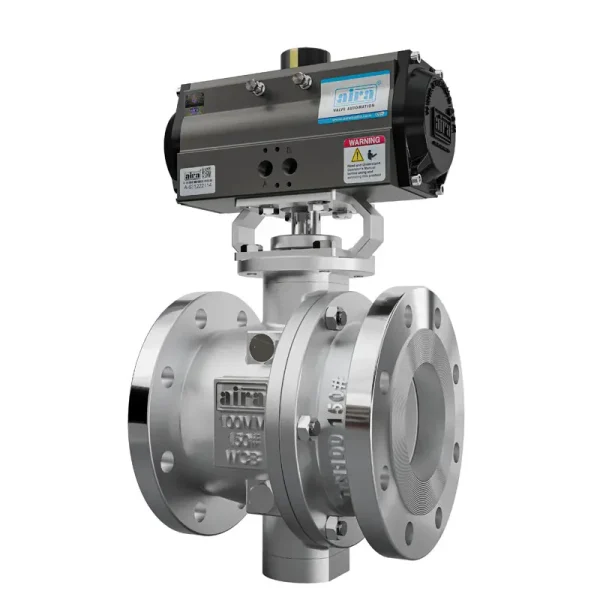
In modern industrial environments, efficiency, safety, and reliability are critical for maintaining competitive and cost-effective operations. Flow control systems play a major role in achieving these goals, and valve automation has become a standard practice across industries such as oil & gas, chemicals, water treatment, power generation, and manufacturing. One of the most effective solutions in automated flow control is the pneumatic actuated ball valve, which combines the tight shut-off of a ball valve with the speed and power of pneumatic actuation.
Faster and More Reliable Valve Operation
A key advantage of a pneumatic actuated ball valve is its rapid response time. Unlike manual valves, pneumatic actuation allows quick opening and closing using compressed air. This fast operation improves cycle times, enhances process control, and ensures consistent system performance, especially in high-speed or high-frequency applications.
The quarter-turn design of ball valves further contributes to efficiency by enabling swift and precise valve positioning with minimal effort.
Enhanced Automation and Process Control
Pneumatic actuated ball valves integrate seamlessly with automated control systems such as PLCs, DCS, and SCADA platforms. This integration allows operators to control valves remotely, monitor valve status in real time, and make rapid adjustments based on process demands.
By automating valve operation, human error is minimized, manual intervention is reduced, and process consistency is improved—leading to higher overall efficiency.
Improved Safety and Reduced Downtime
In many industrial applications, manual valve operation can pose safety risks, especially in hazardous or high-pressure environments. A pneumatic actuated ball valve enables remote operation, keeping operators away from dangerous areas.
Additionally, pneumatic actuators are known for their durability and reliability. Their robust design reduces the risk of mechanical failure, minimizing unplanned downtime and maintenance-related production losses.
Energy-Efficient and Cost-Effective Operation
Pneumatic systems are energy-efficient and cost-effective, particularly in facilities where compressed air is already available. Pneumatic actuated ball valves consume energy only during actuation, making them an efficient choice for on/off and control applications.
Their long service life and low maintenance requirements further reduce operational costs, contributing to improved process efficiency over time.
Suitable for Harsh and Demanding Environments
Pneumatic actuated ball valves perform reliably in harsh conditions, including high temperatures, corrosive media, dusty environments, and explosive atmospheres. Unlike electric actuators, pneumatic systems are less sensitive to heat and moisture, making them ideal for challenging industrial settings.
This reliability ensures uninterrupted operation and consistent flow control even in demanding process conditions.
Versatility Across Industries
The pneumatic actuated ball valve is highly versatile and can be used for isolation, flow control, and emergency shut-off applications. It is compatible with a wide range of media, including gases, liquids, slurries, and aggressive chemicals.
Its adaptability makes it a preferred choice for industries seeking efficient and flexible valve automation solutions.
Conclusion
The pneumatic actuated ball valve plays a crucial role in improving process efficiency by enabling fast operation, precise automation, enhanced safety, and reliable performance. By reducing manual intervention, minimizing downtime, and ensuring consistent flow control, these valves help industries optimize productivity and maintain high operational standards. For organizations aiming to enhance efficiency and modernize their flow control systems, pneumatic actuated ball valves offer a proven and practical solution.