
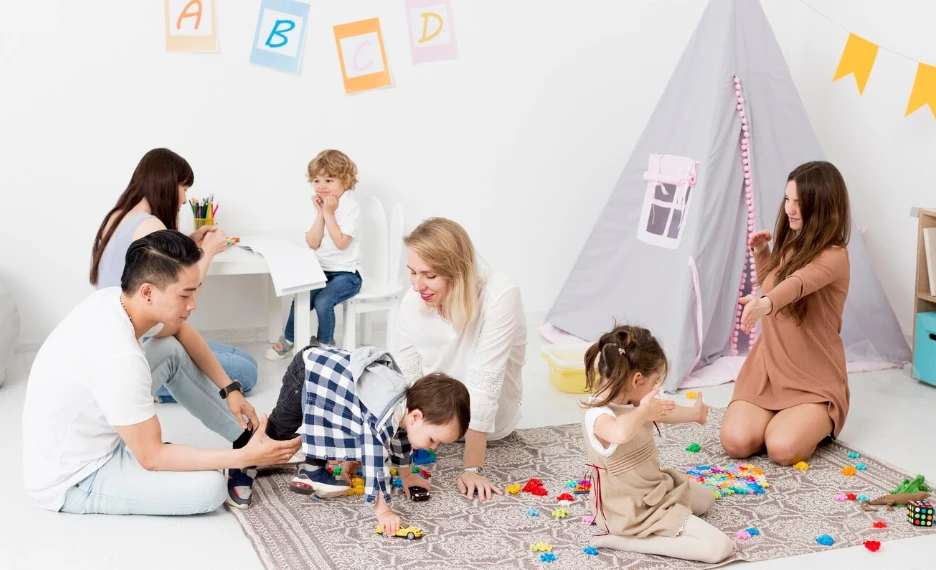
When parents think of daycare, they often picture children playing — building blocks, painting, pretending to cook, or running outdoors. And while it might look like “just play,” those playful moments are actually the building blocks of learning and growth.
At quality daycare settings, play isn’t a break from learning — it is the learning. Through play, children discover new ideas, build relationships, and develop essential life skills that shape their confidence and curiosity for years to come.
Let’s explore how playtime at daycare supports every area of your child’s early development.
The Magic of Play in Early Childhood
Children are naturally curious. They learn best when they are free to explore, create, and test their ideas in a safe and supportive environment. Play allows them to do just that.
Through play, children:
- Develop communication and language skills
- Learn to express emotions and solve problems
- Strengthen coordination and fine motor skills
- Build friendships and empathy
- Grow in independence and confidence
In early childhood, play is not a distraction from academics — it’s the foundation of real, meaningful learning.
Learning Through Different Types of Play
A good daycare environment offers a mix of structured and free play, each with unique benefits.
1. Creative Play
When children draw, paint, or build, they’re not just being artistic — they’re developing fine motor control, planning skills, and imagination. Whether it’s crafting a paper house or creating a story with playdough figures, creative play encourages children to think outside the box.
2. Pretend Play (Role Play)
This kind of play is magical for young minds. When children pretend to be doctors, shopkeepers, or parents, they practice empathy, problem-solving, and communication. It helps them understand the world around them and learn how to interact within it.
3. Outdoor Play
Running, climbing, or digging in the sand builds coordination, balance, and strength. Outdoor play also supports emotional wellbeing — children release energy, explore nature, and gain confidence as they take small, safe risks.
4. Group Play
When children play together — building a tower, sharing toys, or joining a game — they learn to cooperate, share, and resolve conflicts. Group play builds social awareness and teaches kindness and patience.
5. Exploratory Play
Children love to experiment — pouring water, mixing colours, or stacking objects. These playful experiments teach cause and effect, concentration, and scientific thinking. It’s the foundation of early problem-solving skills.
How Educators Support Learning Through Play
In a high-quality daycare, playtime isn’t random or unsupervised. Trained educators carefully plan the environment, choosing materials and activities that support different areas of development.
Here’s how they make playtime a rich learning experience:
- Observation: Teachers watch how children play, noticing their interests and progress.
- Encouragement: They ask open-ended questions like “What do you think will happen next?” to spark deeper thinking.
- Guidance: Without interrupting, educators gently guide children to try new challenges and explore new ideas.
- Variety: A balance of indoor and outdoor, quiet and active, individual and group play keeps learning exciting.
This thoughtful approach helps children develop independence while feeling supported and understood.
Emotional and Social Growth Through Play
Playtime is also where emotional growth blossoms. When children take turns, solve disagreements, or comfort a friend, they’re learning essential life skills that shape their personality and confidence.
Through play, they discover how to:
- Express feelings in healthy ways
- Handle disappointment and try again
- Listen and cooperate
- Celebrate small wins and teamwork
These social-emotional skills are just as important as academics. They prepare children not just for school, but for lifelong relationships and self-understanding.
The Role of the Environment
A nurturing daycare environment makes all the difference. Child-friendly spaces that are colourful, safe, and filled with inviting materials naturally encourage exploration.
A well-designed play area includes:
- Quiet corners for reading or reflection
- Activity zones for building and creative art
- Outdoor spaces for free movement and discovery
- Natural elements like plants, water, and sand that connect children to the world around them
This thoughtful setup allows children to make choices, develop independence, and learn responsibility while having fun.
Building Confidence and Independence
One of the most powerful outcomes of playtime at daycare is growing confidence. When children pour their own water, build something new, or solve a puzzle on their own, they learn to trust their abilities.
These small victories teach them persistence, patience, and problem-solving — all essential life skills. Over time, they begin to approach challenges with curiosity rather than fear.
Why Play-Based Learning Matters for the Future
Play may seem simple, but it lays the groundwork for future academic success. Research consistently shows that children who engage in quality play-based learning:
- Develop stronger language and math skills
- Have better focus and memory
- Show more creativity and imagination
- Display stronger emotional regulation
In other words, play builds the foundation for both intellectual and emotional intelligence — qualities that last well beyond the early years.
When you choose the right daycare in Pinner, you’re not just choosing a place for your child to spend the day — you’re choosing a space where play, learning, and growth come together beautifully.
A well-balanced daycare gives children the freedom to explore, the guidance to grow, and the confidence to believe in themselves.
Because when children play with purpose and joy, they’re not only learning about the world they’re learning how to thrive in it.