Unveiling the Invisible: The Ever-Expanding Reach of Physics
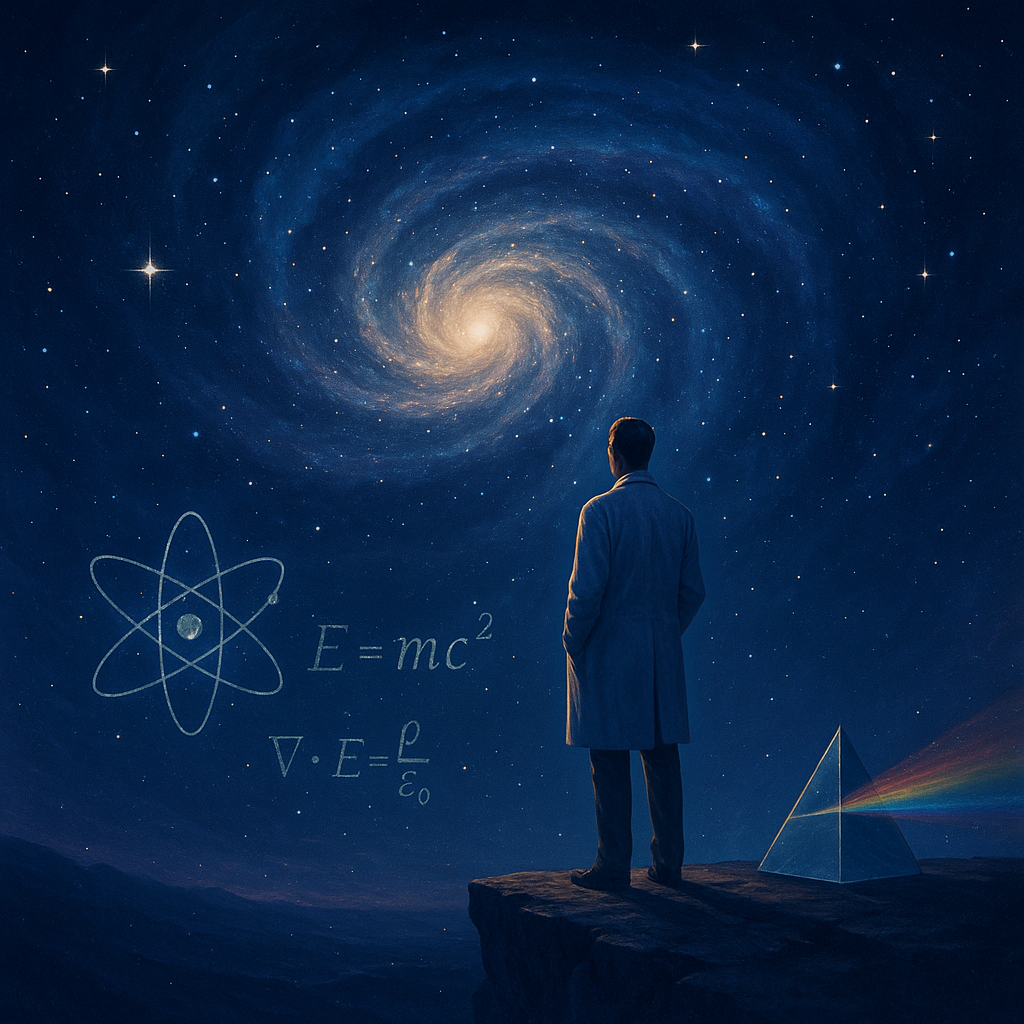
Imagine standing at the edge of a vast cosmic ocean, where every wave represents a fundamental force shaping the universe. This metaphor captures the essence of physics in 2026—an expansive discipline probing the invisible threads binding reality. From the subatomic realm to the vastness of cosmic phenomena, physics continues to challenge our intuition and technological prowess. Recent advancements have pushed the boundaries of knowledge, bringing humanity closer to answering questions that have puzzled minds for centuries.
One striking example is the progress in quantum entanglement experiments, where researchers have now managed to entangle particles over unprecedented distances exceeding 1,000 kilometers using satellite-based platforms. This breakthrough not only demonstrates the nonlocal nature of quantum mechanics but also paves the way for secure quantum communication networks, a frontier with enormous implications for cybersecurity and information technology. According to leading physicists, these advances mark a pivotal moment in our capacity to harness the fundamental laws of nature for practical applications.
“Physics is no longer just a pursuit of abstract principles; it is the toolkit for innovating tomorrow’s technologies and unraveling the cosmos,” said Dr. Elena Marquez, a quantum physicist at the International Institute of Advanced Studies.
Such developments invite a deeper exploration of how physics has evolved to its current state. To fully appreciate this trajectory, one must trace the historical context and the conceptual breakthroughs that have shaped modern physics.
Tracing the Threads: A Historical Context of Physics Milestones
The journey of physics from ancient philosophy to a rigorous scientific discipline reveals a fascinating narrative of human curiosity and intellectual evolution. The foundations were laid by classical mechanics, with luminaries such as Galileo and Newton formalizing laws that described motion and gravity. These principles held sway for centuries, successfully explaining phenomena from planetary orbits to everyday mechanics.
The 20th century heralded revolutionary shifts with the advent of relativity and quantum mechanics. Einstein’s theories of special and general relativity redefined space, time, and gravity, while quantum theory unveiled the discrete, probabilistic fabric of matter and energy. These frameworks, once seen as conflicting, are today the pillars guiding physicists' efforts to formulate a unified theory.
In the decades following, particle physics flourished with the development of the Standard Model, mapping out fundamental particles and forces. Yet, mysteries remained—dark matter, dark energy, and the reconciliation of gravity with quantum mechanics eluded complete understanding. The last two decades have witnessed a surge in experimental and theoretical work aimed at bridging these gaps.
- 1905: Einstein publishes papers on special relativity and the photoelectric effect.
- 1920s: Development of quantum mechanics by Heisenberg, Schrödinger, and Dirac.
- 1960s-70s: Formulation and confirmation of the Standard Model of particle physics.
- 1998: Discovery of dark energy’s accelerating effect on the universe’s expansion.
- 2020s: Advances in quantum computing and gravitational wave detection.
This timeline contextualizes the ongoing quest in physics: a relentless pursuit to decode the fundamental nature of reality. The current decade is witnessing a confluence of disciplines and technologies that enhance this endeavor.
Core Insights: Data, Theories, and Comparisons Shaping Modern Physics
Physics today stands at a crossroads where theory meets computation and experiment at scales both infinitesimal and cosmic. Central to this are the dual pillars of quantum mechanics and general relativity, each profoundly tested yet stubbornly incompatible in their current forms. Efforts to unify them have spawned numerous hypotheses, such as string theory, loop quantum gravity, and emergent spacetime models.
Data-driven research is pivotal in this landscape. The Large Hadron Collider (LHC) at CERN continues to deliver high-precision measurements of fundamental particles. After its 2025 upgrade, the LHC has increased collision energies to 20 TeV, enabling searches for particles beyond the Standard Model, such as candidates for dark matter.
Meanwhile, gravitational wave observatories like LIGO and VIRGO have expanded their detection catalog, confirming mergers of black holes and neutron stars with exquisite precision. These observations allow physicists to test Einstein’s theory under extreme conditions and explore the properties of dense matter.
Comparatively, the advent of quantum simulation platforms using ultracold atoms and superconducting qubits has provided new arenas to test quantum field theories experimentally. These platforms simulate complex interactions that are analytically intractable, offering insights into condensed matter, high energy physics, and emergent phenomena.
“Our ability to simulate quantum systems in the lab is transforming theoretical physics from a largely pen-and-paper discipline into an empirical science,” remarked Professor Hiroshi Tanaka from the Quantum Simulation Consortium.
To appreciate the current state, consider the following data points illustrating the intersection of theory and experiment:
- Over 300 gravitational wave events cataloged since 2015, revealing details about black hole populations.
- Quantum computers have reached over 1,000 logical qubits with error-correction protocols, enabling complex simulations.
- Particle physics experiments have placed stringent bounds on supersymmetric particles, constraining theoretical models.
- Advances in neutrino detection have refined mass hierarchy measurements, impacting cosmological models.
This synergy of data informs cutting-edge physics research and technological innovation.
Physics in 2026: Breakthroughs and Transformations
The year 2026 marks a remarkable phase in physics, characterized by breakthroughs that not only deepen theoretical understanding but also translate into transformative technologies. Quantum technologies stand out, with practical quantum networks now operational in several countries, leveraging satellite and fiber-optic components to achieve secure communication over thousands of kilometers.
In cosmology, the launch of the Deep Space Observatory in late 2025 has begun to deliver unprecedentedly detailed maps of cosmic microwave background fluctuations, shedding light on the inflationary epoch of the early universe. These observations constrain competing models of cosmic origin, narrowing the field significantly.
Simultaneously, progress in materials physics has enabled the creation of room-temperature superconductors that operate under ambient pressure, a feat once thought decades away. This breakthrough promises to revolutionize energy transmission, magnetic levitation transport, and quantum devices.
Moreover, multidisciplinary collaborations are flourishing. Physicists are partnering with biologists, chemists, and engineers to explore quantum effects in biological systems, potentially unlocking new paradigms in understanding life processes and developing novel medical technologies.
- Operational quantum internet nodes in Asia and Europe.
- First empirical evidence supporting certain quantum gravity models reported.
- Global deployment of room-temperature superconducting cables underway.
- Enhanced neutrino observatories providing clues on cosmic ray origins.
These developments underscore the pivotal role physics plays in shaping the technological and scientific landscape of 2026.
For readers seeking a deeper dive into how these breakthroughs interplay, this comprehensive update offers an in-depth exploration.
Expert Perspectives and Industry Implications
Leading physicists and industry leaders alike recognize that physics is driving a paradigm shift across multiple sectors. Dr. Amina Yusuf, director at the Quantum Innovation Hub, emphasizes how quantum computing and materials science are redefining industries: “The ripple effects of physics research extend beyond academic circles. They enable smarter energy grids, more efficient pharmaceuticals, and novel sensors that transform data collection.”
Industry giants such as QuantumX and SuperMaterials Inc. have invested billions in developing commercial applications of physics breakthroughs, accelerating the transition from lab prototypes to market-ready technologies. The defense sector is also heavily engaged, exploring quantum radar and secure communication systems.
Education and workforce development have responded accordingly. Universities and research institutions are introducing interdisciplinary curricula that blend physics with computer science, engineering, and data analytics. This equips the next generation of scientists and engineers with skills to address complex challenges.
At the policy level, governments worldwide have increased funding for fundamental physics research, recognizing its role in economic competitiveness and national security. Collaborative international projects are expanding, reflecting physics’ inherently global nature.
“Physics research is the seedbed for tomorrow’s innovation ecosystem,” stated Dr. Jonas Becker, policy advisor for the European Science Foundation.
Such expert insights highlight the multifaceted impact of physics beyond pure science, influencing economic and societal trajectories.
Looking Ahead: Trends and Takeaways for the Physics Frontier
As physics ventures further into the 21st century, several key trends signal the future trajectory of the field. One prominent trend is the increasing integration of artificial intelligence and machine learning techniques to analyze vast datasets from experiments and simulations. These tools accelerate discovery by identifying patterns and optimizing experimental design.
Another trend is the convergence of physics with other disciplines, fostering innovative research areas such as quantum biology, quantum chemistry, and emergent phenomena in complex systems. This interdisciplinarity expands the scope and relevance of physics.
Moreover, addressing fundamental questions about dark matter, dark energy, and the quantum nature of gravity remains a central focus. Upcoming projects like the next-generation space telescopes and underground particle detectors promise to provide critical data.
For practitioners and enthusiasts, the following takeaways summarize the evolving physics landscape:
- Embrace interdisciplinary collaboration to tackle complex scientific problems.
- Invest in quantum technologies as both a research tool and application domain.
- Leverage computational advances to enhance theoretical and experimental studies.
- Support fundamental research as a cornerstone of technological innovation.
- Prepare for ethical and societal implications of emerging physics technologies.
For those interested in mastering the nuances of physics and its methodologies, this expert guide offers valuable strategies and insights.
Physics continues to be a dynamic and transformative field, redefining our understanding of nature’s deepest secrets and opening new horizons for science and technology.