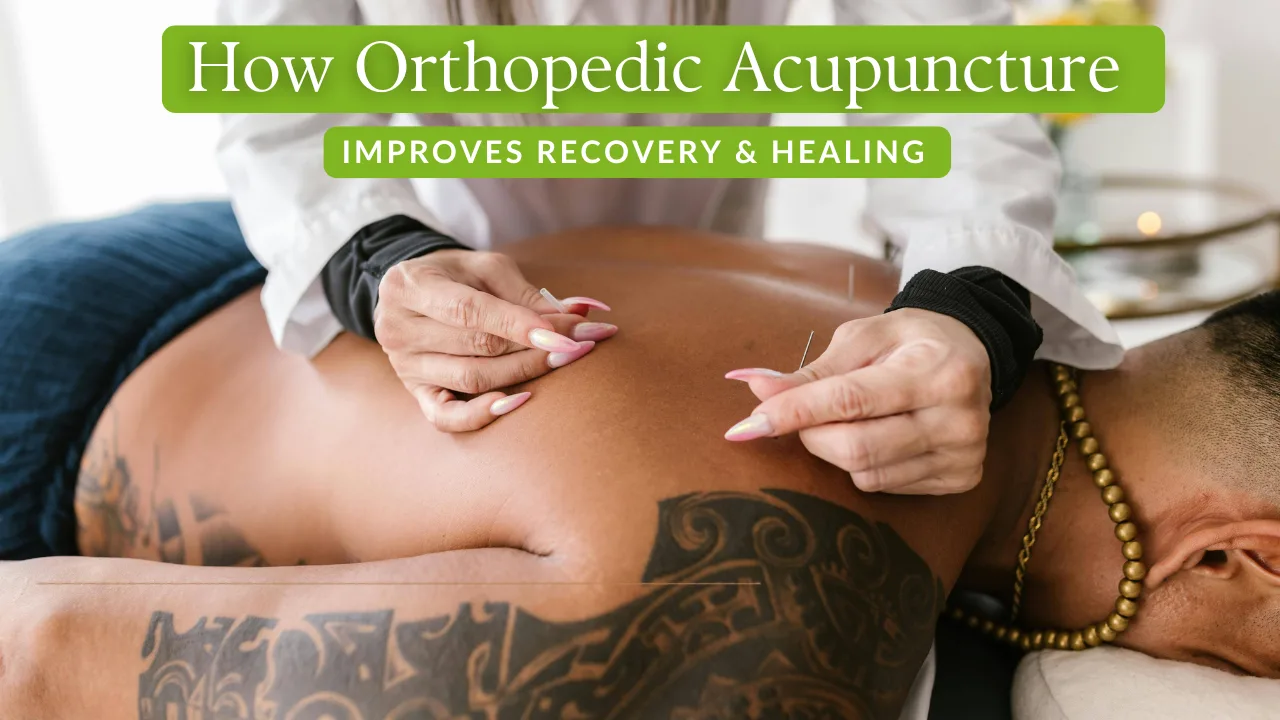
Chronic pain, post-surgical recovery, hormonal imbalance, complex internal conditions: these are the kinds of health challenges that conventional medicine often manages rather than resolves. Medications control symptoms. Rest buys time. But the underlying dysfunction frequently remains untouched. That is why more people are turning to orthopedic acupuncture and personalised acupuncture care as part of their long-term health strategy. These are not fringe approaches. They are evidence-informed, clinically applied disciplines that work with the body's own healing systems to produce results that last well beyond the treatment room.
This guide brings together the most important things to know about both approaches, from identifying whether you are a good candidate to understanding what personalised care actually looks like in practice.
What Makes Orthopedic Acupuncture Different from General Acupuncture
Most people who have tried acupuncture have experienced its general form: a relaxing session aimed at overall energy balance and stress reduction. Orthopedic acupuncture operates differently. It applies the needle-based principles of traditional Chinese medicine through a clinical, anatomy-focused lens. Practitioners assess joint mechanics, test range of motion, identify trigger points, and locate dysfunctional tissue before a single needle is placed. The result is a targeted intervention that addresses the specific structural issue causing your pain rather than offering a broad systemic response.
A detailed look at the top benefits of orthopedic acupuncture for chronic pain confirms that the treatment consistently delivers pain reduction, improved mobility, reduced inflammation, and faster tissue repair across a wide range of musculoskeletal conditions. Back pain, neck stiffness, shoulder injuries, sciatica, knee pain, and sports-related soft tissue damage all respond well. The mechanism is well understood: acupuncture stimulates local blood flow, prompts the release of natural pain-relieving endorphins, and interrupts the inflammatory cycle that keeps damaged tissue from healing properly.
How to Know If Orthopedic Acupuncture Is Right for You
Not everyone immediately recognises that their symptoms are suitable for this type of treatment. Many people assume acupuncture is only for back pain or stress and do not realise how broadly it applies. There are 5 signs you might benefit from orthopedic acupuncture that are worth knowing. These include chronic pain that has not responded to medication or physiotherapy, recurring tension in specific muscle groups, joint stiffness that limits daily movement, pain that worsens with certain postures or activities, and slow recovery from sports injuries or physical strain. If any of these sound familiar, orthopedic acupuncture deserves serious consideration as part of your care plan.
Post-Surgical Recovery: An Often Overlooked Application
One of the most powerful and least discussed applications of orthopedic acupuncture is its role in supporting recovery after surgery. Surgery creates controlled trauma in the body. While necessary, it disrupts circulation, irritates nerves, causes muscle guarding, and slows natural tissue repair. Standard post-surgical care addresses some of these issues, but there is often a gap between what medication and physiotherapy can achieve and what the body actually needs to restore full function.
The research and clinical experience around how orthopedic acupuncture boosts post-surgical healing shows that it fills that gap in meaningful ways. By improving circulation directly around the surgical site, reducing pain signals without increasing medication load, releasing the muscle tension that develops protectively around wounds, and supporting scar tissue management, acupuncture helps patients move through recovery faster and with better long-term mobility outcomes. It is particularly valuable after procedures on the knee, shoulder, hip, and spine, where soft tissue function is critical to full rehabilitation.
Personalised Acupuncture Plans and Why They Matter
One of the core strengths of acupuncture as a discipline is its capacity for personalisation. No two bodies carry the same history, the same tension patterns, the same combination of physical and systemic conditions. A treatment protocol that works well for one person may be entirely wrong for another. This is why how personalised acupuncture plans improve long-term health is such an important topic for anyone thinking about making acupuncture a sustained part of their wellness routine.
A well-designed personal plan takes into account your current symptoms, medical history, lifestyle, sleep quality, stress levels, and any medications you are taking. It sets clear goals, adjusts needle placement and technique session by session based on how your body is responding, and evolves over time as your condition improves. This is not a one-size-fits-all protocol. It is a living treatment plan built around you specifically.
The conversation around acupuncture for holistic wellness and long-term health support reinforces why this approach produces more durable results than isolated sessions. Consistency and personalisation together create conditions where the body can make and maintain genuine structural and systemic changes rather than experiencing temporary relief that fades within days.
Internal Medicine Acupuncture for Complex Cases
Beyond musculoskeletal pain, acupuncture has a well-developed internal medicine branch that addresses systemic and chronic conditions. This is where personalised internal medicine acupuncture treatments for complex cases come into their own. Conditions such as hormonal imbalance, digestive dysfunction, chronic fatigue, autoimmune disorders, and anxiety-driven physical symptoms all fall within this scope.
Internal medicine acupuncture works by regulating the autonomic nervous system, supporting organ function, and restoring the systemic balance that chronic illness disrupts. Practitioners in this area combine diagnostic assessment with highly targeted needling and often work in coordination with conventional medical providers to complement rather than replace standard care. For people managing complex conditions that have proved resistant to pharmaceutical approaches alone, this collaboration model frequently produces the breakthrough that standard medicine has not been able to deliver.
A broader perspective on internal medicine acupuncture for holistic healing highlights how this branch of practice treats the person as a whole rather than addressing a single system in isolation. Digestive health, hormonal rhythms, sleep patterns, and emotional regulation are all interconnected, and acupuncture works across all of them simultaneously in a way that targeted drug therapy typically cannot.
Bringing the Full Picture Together
What orthopedic acupuncture and personalised acupuncture care share is a commitment to working with the body rather than overriding it. The treatments discussed throughout this guide, from post-surgical recovery support to internal medicine applications to chronic pain management, all operate through the same fundamental principle: creating the right stimulus for the body's own repair and regulatory systems to perform at a higher level.
For anyone exploring acupuncture for natural pain relief and ongoing recovery, the most important first step is finding a practitioner who conducts a thorough intake assessment and builds a treatment plan based on your specific situation. The skill of the practitioner matters as much as the modality itself. When both are right, the results speak for themselves.