
A peanut processing plant in Georgia used to pay $18,000 a year to have its shells hauled away. The shells piled up in a shed behind the facility, attracting dust and complaints from neighbors. The plant manager, a practical man named Dale, had tried selling them as mulch, but the market was thin and the price barely covered loading. He had tried burning them in an open pit, but the smoke drew attention from the county. What he had not tried was pelleting.
Dale started by calling equipment suppliers. Most of them pitched a generic press, promising that it would handle peanut shells with a simple die change. The first machine he bought was exactly that: a wood pellet press with a different die. It ran for three days before the die clogged with an oily residue and the pellets came out soft and smoky. The problem, as Dale soon learned, was the oil. Peanut shells retain a small amount of residual oil from the shelling process, and that oil acts as a lubricant inside the die. Too much lubrication and the particles never bind. The machine was not defective. It was simply built for a different material.
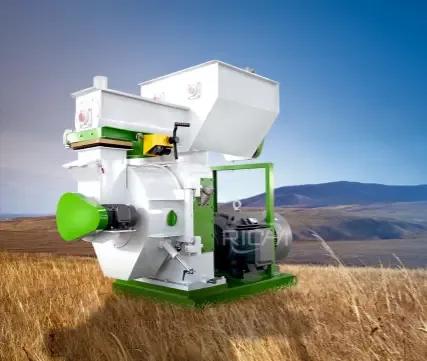
Dale replaced it with a peanut shell pellet maker designed specifically for oily, abrasive feedstocks. The die had a compression ratio tuned to the shells, and the conditioning system managed the oil rather than fighting it. The new machine also used hardened rollers and a forced feeding system that handled the light, dusty material without bridging. The difference was immediate. The pellets came out dense and uniform, with a clean burn and low ash. The plant stopped paying hauling fees and started selling pellets to a local greenhouse and a small heating cooperative.
But Dale learned that the press was only part of the answer. The second problem was moisture. Peanut shells absorb and release water depending on storage conditions, and they often arrived at the press with inconsistent moisture. Dale added a dryer and a cooler to the line, and he learned to test every incoming load before it entered the grinder. That step eliminated most of the jams and rejects. The line ran steadily, and the pellets held together through storage and shipping.
The third lesson was about scale. Dale started with a modest line, but as demand grew, he needed more output. He upgraded to a larger pellet maker machine with automated controls that monitored moisture and pressure in real time. That upgrade allowed one operator to oversee the line instead of babysitting a single press. The plant now runs two shifts during the peanut harvest and sells pellets year-round.
Dale’s advice to other processors is simple. Peanut shells are not wood or straw. They are oily, abrasive, and variable. A generic press will fail. A purpose-built machine will succeed. But the machine alone is not enough. The dryer, grinder, cooler, and screener must be sized to match, or the bottleneck simply moves. The plant that treats the line as a system turns a disposal cost into a product with a market. The plant that buys on price alone spends its first year learning expensive lessons.
Related articles:https://pelletizerextruder.com/biomass-pellet-machine/
The pile behind Dale’s plant is gone. The shed is now a pellet storage area, and the neighbors have stopped complaining. The shells that once cost money to remove are now a fuel that pays for itself.