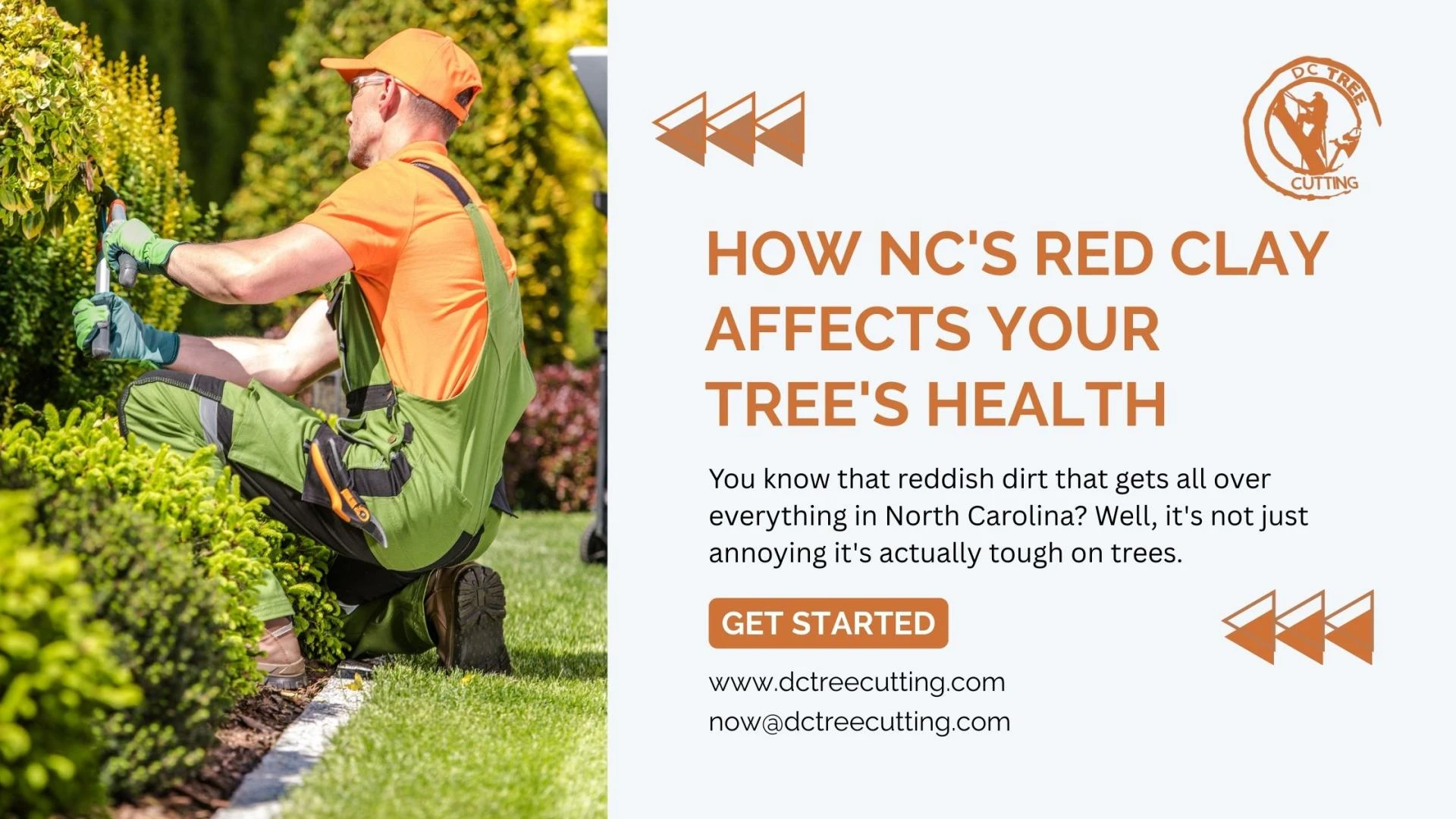
You know that reddish dirt that gets all over everything in North Carolina? Well, it's not just annoying, it's actually tough on trees. This red clay soil causes real problems for trees all across the state. When you understand what it does to tree roots, you can make smarter choices about your yard.
What Makes Red Clay So Tricky
Red clay gets its rusty color from iron oxide. Think of it as rust mixed right into the dirt. This stuff covers most of the Piedmont area and chunks of the coastal plain, too.
Here's the main issue: water can't get through it. Clay particles stick together so tightly that water sits on top when it rains. Then, when it's dry, the clay turns hard as a rock.
How Poor Drainage Hurts Trees
Trees need air around their roots to stay alive. But soggy clay soil does the opposite. When there's too much water sitting around for too long, tree roots basically can't breathe.
You'll see these warning signs:
- Leaves turn yellow and fall off early
- Trees don't grow much during the growing season
- Branches start dying from the top down
- Fungus shows up around the bottom of the tree
Some trees handle wet spots better than others. But even our native trees struggle when clay stays waterlogged for weeks.
Root Problems in Hard-Packed Clay
Dense clay stops roots from spreading out. Instead of growing deep and wide like they should, roots end up growing in circles near the surface. This makes trees wobbly and more likely to fall over during storms.
Shallow roots also mean trees can't reach water when it's dry. The same clay that traps water during rainy times becomes impossible to dig through when it dries out.
Tree trimming services in North Carolina see this stuff all the time. Stressed trees require additional care and can pose a safety risk.
Common Tree Problems in Red Clay Areas
Different trees react to clay soil in their own ways. Oak trees might get crown rot. Maples often get brown, crispy leaves in summer. Pine trees frequently develop root rot.
New trees have it the worst. Their small root systems can't adapt fast enough to clay conditions. Many don't make it past their second year without help.
But older trees aren't safe either. Years of dealing with clay make them weaker overall. They're more likely to get damaged in storms because their roots stay shallow.
When Trees Become Dangerous
Clay soil leads to tree emergencies throughout North Carolina. Shallow roots mean trees tip over more easily when it's windy. And when clay gets soaked, it gives even less support during bad weather.
Watch out for these red flags:
- Trees leaning after storms
- Roots showing above ground
- Dead branches all through the tree
- Mushrooms growing around the base
Tree emergency services in North Carolina frequently deal with clay-related tree failures. It's way better to prevent problems than clean up after a tree falls.
Solutions That Actually Work
Better drainage around trees helps right away. You can install drainage pipes or gravel trenches to move water away from tree roots.
Soil improvements make a bigger difference over time. Adding compost or other organic matter loosens up clay. Sand can help with drainag,e too, but you need to mix it right or you'll end up with something like concrete.
For new trees, try raised beds. Build up the planting area six to twelve inches, and the roots get better growing conditions.
Sometimes, tree removal services in North Carolina recommend completely removing struggling trees. Planting trees that can handle clay makes more sense than fighting a losing battle.
Final Words
Red clay soil is hard on trees throughout North Carolina. Poor drainage, packed dirt, and shallow roots create ongoing headaches for homeowners. Keep an eye on your trees to catch problems early. Professional tree services are familiar with these local soil issues and can suggest the best solution for each situation.