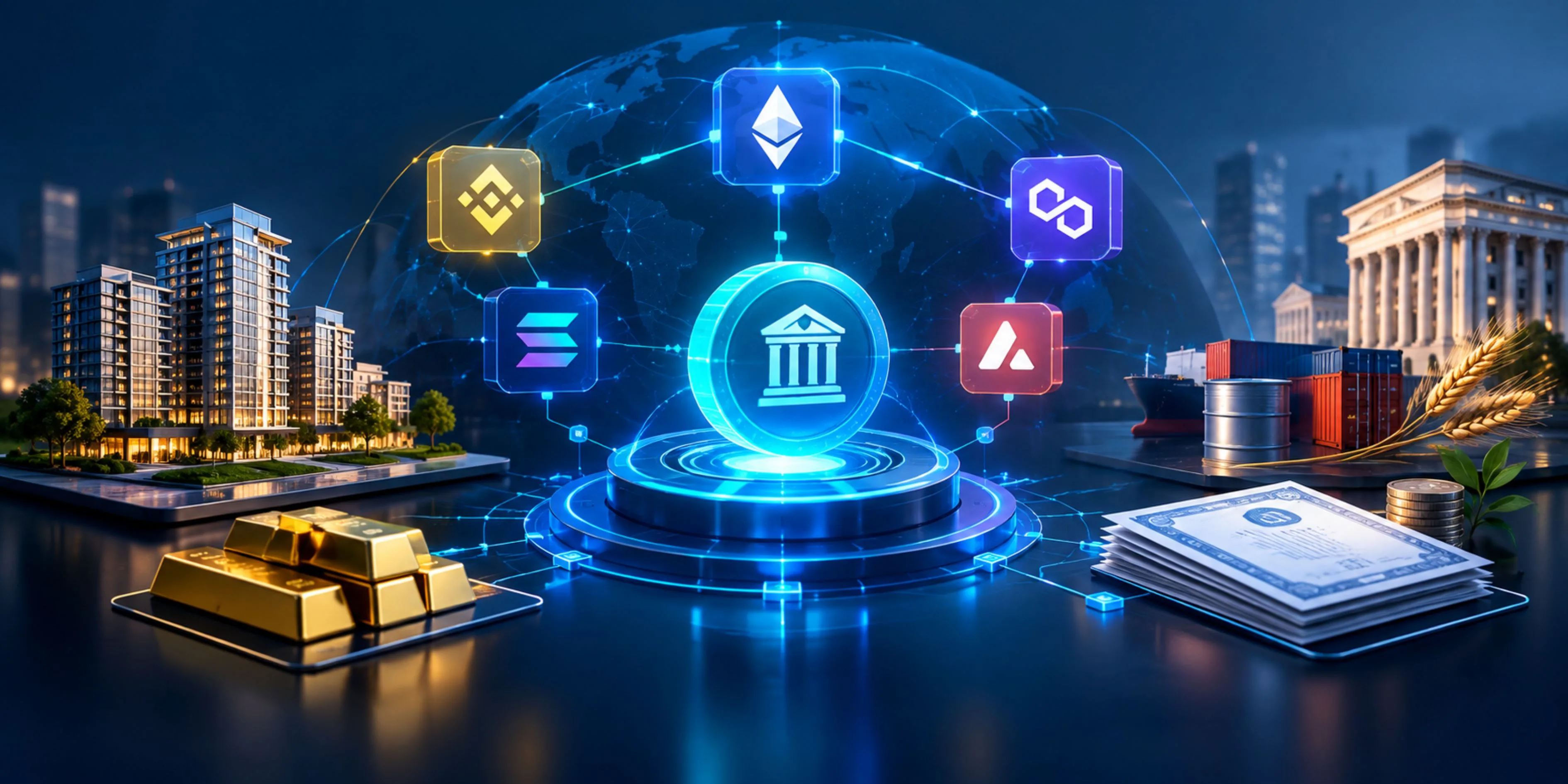
Building a real-world asset (RWA) tokenization platform in 2027 may require an estimated $35,000 to $500,000 or more, depending on asset complexity, blockchain infrastructure, compliance requirements, and trading capabilities. A basic MVP can cost considerably less than an enterprise platform supporting multiple asset classes, institutional custody, and secondary-market transactions.
Growing institutional interest in tokenized real estate, private credit, commodities, and financial securities is increasing demand for reliable tokenization infrastructure. However, businesses must budget for more than smart contract development. Legal structuring, investor verification, asset custody, security audits, and ongoing operations also influence the total investment.
RWA Tokenization Platform Development Cost in 2027
The following estimates provide a practical starting point for 2027 project planning, based on development pricing published by industry providers in 2026. They are indicative software development budgets, not guaranteed quotations or complete business-launch costs.
Platform typeEstimated development costBasic RWA MVP35,000–80,000Mid-level platform80,000–200,000Advanced custom platform150,000–300,000+Enterprise-grade platform200,000–500,000+A basic MVP generally supports one asset class, a single blockchain, investor onboarding, KYC integration, and token issuance. Enterprise solutions require more sophisticated infrastructure, including multi-chain compatibility, institutional custody, automated compliance, and secondary trading.
These ranges are consistent with published estimates from WisewayTec and HyprForge, although actual pricing depends on project scope.
Key Factors That Influence RWA Tokenization Platform Costs
Several technical and operational decisions determine the final development budget.
1. Asset Type and Tokenization Complexity
The underlying asset directly influences development requirements.
For example:
- Real estate: Requires property verification, ownership documentation, valuation, fractional ownership, and rental distribution.
- Commodities: Requires asset verification, custody records, and proof-of-reserve integrations.
- Private credit: Requires borrower records, repayment schedules, interest calculations, and investor reporting.
- Fine art: Requires provenance verification, valuation records, and ownership transfer mechanisms.
Tokenizing a commercial property with rental distributions generally requires more complex workflows than issuing tokens representing standardized commodity units.
2. Blockchain and Smart Contract Development
Blockchain selection affects transaction fees, scalability, interoperability, and integration expenses.
Businesses may consider Ethereum, Polygon, or other EVM-compatible networks based on their requirements.
Smart contracts manage essential operations such as:
- Token issuance and burning.
- Fractional ownership.
- Dividend and interest distributions.
- Automated transfer restrictions.
- Redemption and ownership records.
For regulated assets, standards such as ERC-3643 provide permissioned token transfers, identity verification, and configurable compliance controls. Implementing these capabilities requires additional development and testing.
3. Regulatory Compliance and Investor Verification
Compliance is one of the most important considerations when estimating RWA tokenization costs.
Depending on the asset and operating jurisdiction, platforms may require:
- Know Your Customer (KYC) verification.
- Anti-Money Laundering (AML) screening.
- Investor accreditation checks.
- Sanctions screening.
- Geographic transfer restrictions.
- Regulatory reporting and audit trails.
These requirements should be incorporated into the original architecture rather than added after development.
4. Wallets, Custody, and Security
RWA platforms handle assets representing real financial or physical value. Consequently, wallet security and custody infrastructure require careful planning.
Multi-signature wallets, institutional custodians, private-key recovery, role-based access, and smart contract audits can increase initial expenses.
Businesses should also budget for recurring security reviews and infrastructure monitoring rather than treating security as a one-time development activity.
Additional Expenses Beyond Development
The initial software budget does not represent the complete cost of launching an RWA tokenization business.
Other expenses include:
Cost categoryTypical requirementsLegal structuringSPV formation, agreements, regulatory adviceAsset verificationAppraisals, ownership checks, documentationCompliance servicesKYC/AML providers and monitoringCustodyDigital asset safekeeping and insuranceSecurity auditsSmart contract and infrastructure reviewsMaintenanceHosting, monitoring, upgrades, and supportFor example, a platform tokenizing commercial property may need legal ownership structuring and independent property valuation before issuing tokens. These expenses are separate from blockchain development.
HyprForge estimates ongoing platform operations at approximately 3,000–25,000+ monthly, depending on compliance, custody, and audit requirements.
How 2026 Industry Developments Could Influence 2027 Costs
Institutional adoption is becoming an important driver of RWA infrastructure development. EY's 2026 survey found that 63% of institutional respondents were very interested in tokenized assets.
However, regulatory uncertainty, integration challenges, and limited secondary-market liquidity remain significant barriers.
These developments have several implications for businesses planning platforms in 2027:
- Compliance-first architecture: More sophisticated investor eligibility and transfer controls will be important for regulated offerings.
- Interoperability: Businesses may need integrations across blockchains, custodians, and financial systems.
- Institutional-grade security: Secure custody, transaction monitoring, and independently audited smart contracts will become essential design considerations.
- Secondary-market infrastructure: Trading capabilities may require additional order management, liquidity integrations, and settlement workflows.
Businesses considering cryptocurrency exchange development alongside RWA tokenization should distinguish between a conventional crypto trading engine and a permissioned securities marketplace. The latter must enforce asset-specific investor eligibility and transfer restrictions.
How to Optimize Your RWA Tokenization Development Budget
Businesses can control development expenses without compromising essential security or compliance requirements.
- Start with one asset class: Validate the business model before supporting multiple asset categories.
- Choose an appropriate blockchain: Evaluate transaction costs, ecosystem maturity, security, and integration requirements.
- Use established frameworks: Reusable smart contract components can reduce unnecessary engineering work.
- Integrate existing compliance providers: Avoid developing identity verification systems from scratch.
- Introduce secondary trading later: Launch issuance and investor management first, then expand marketplace functionality when commercially justified.
Final Thoughts
The cost of building an RWA tokenization platform in 2027 will depend on the relationship between asset complexity, regulatory obligations, blockchain architecture, and investor requirements. A focused MVP may be sufficient to validate an initial offering, while institutional platforms require significantly greater investment in security, custody, compliance, and integrations.
Working with an experienced blockchain development partner such as Debut Infotech can help businesses evaluate architecture choices, smart contract requirements, and integration priorities before committing to a development budget. The most effective approach is to build around a clearly defined asset and compliance model, then expand the platform as business requirements evolve.