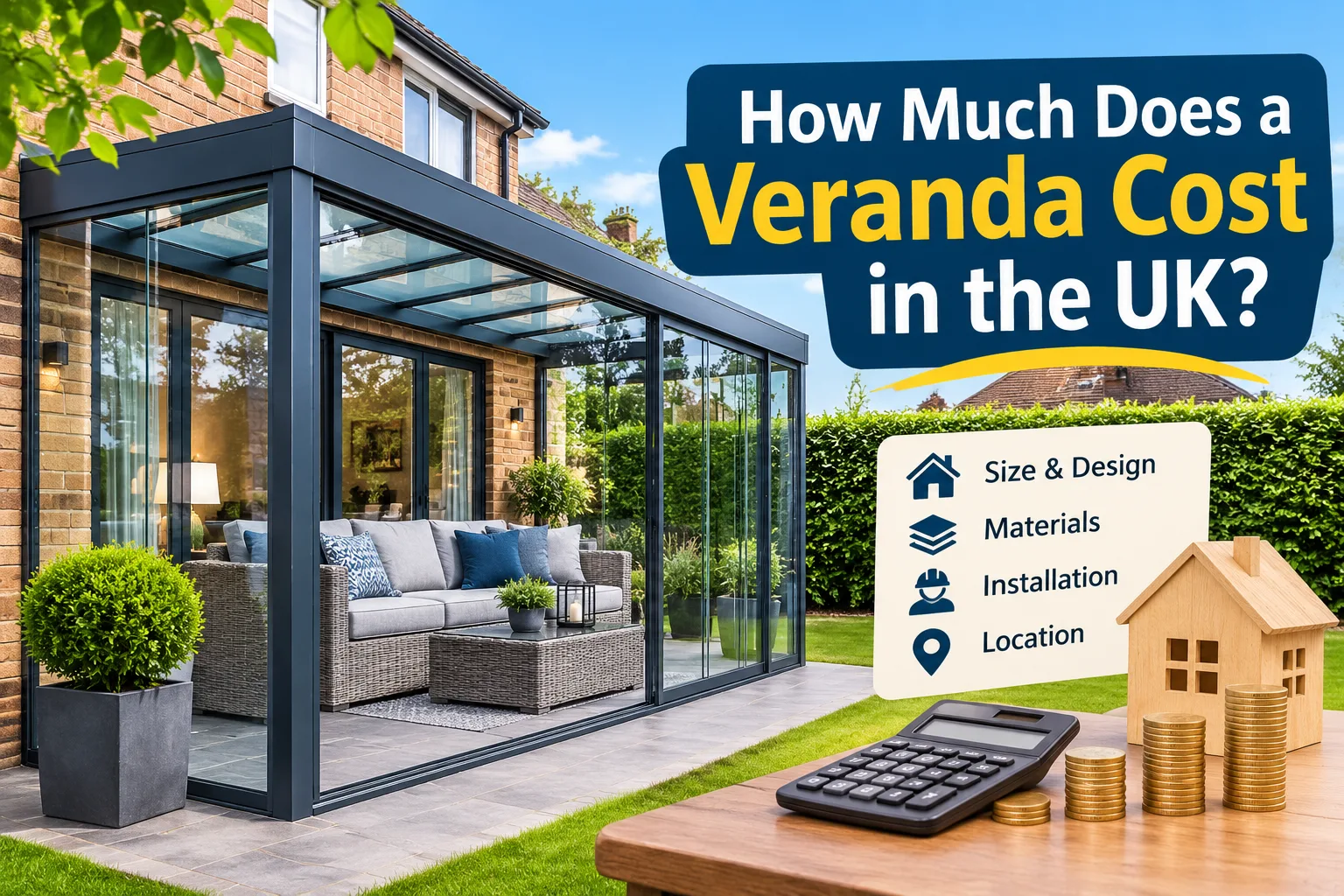
“How much is a veranda?” is the first question almost every homeowner asks, and the hardest to answer in a single line. Two quotes for what looks like the same structure can differ by thousands of pounds, and the reasons are rarely obvious from the headline figure.
This guide covers typical UK prices, what pushes them up or down, and how to compare quotes properly. It’s based on our experience at SunSpaces, where we’ve been designing and installing garden verandas and glass rooms since 2004.
Typical veranda and glass room prices
Prices vary by supplier, specification, and location, but as a rough guide for fitted structures of around 4m x 3m:
| Structure | Typical fitted price |
|---|---|
| Open-sided aluminium veranda, polycarbonate roof | from around £3,000 to £4,000 |
| Aluminium veranda with a glass roof | around £4,500 to £8,000+ |
| Fully enclosed glass room (glass roof, sliding or bifold glass walls) | from around £12,000 to £15,000, and can exceed £25,000 for larger or more complex designs |
Common extras add to these figures:
| Extra | Typical starting price |
|---|---|
| Integrated LED lighting | around £500 to £1,000+, depending on the number of spots or strips |
| Infrared heating | around £300 to £800+ per heater, plus electrical work |
| Sliding glass walls to enclose a veranda | around £4,000 to £8,000+ for a full set |
Treat these as starting points, not quotes. The seven factors below explain why your own price will land where it does.
The seven things that move the price
1. Size
Width and projection (how far the structure extends from your house) are the biggest cost drivers. More area means more aluminium, more glazing or roofing, and more installation time. Decide what you’ll actually use. A slightly smaller structure you use all year is often better value than a large one you rarely fill.
2. Roof type
Your roof changes both the price and how the space feels:
- Polycarbonate is lighter and cheaper to manufacture, so it’s the more budget-friendly choice.
- Glass costs more but gives a premium look, better sound dampening, and more natural light.
- Louvred and sliding roofs let you adjust shade, ventilation, and rain cover, and sit at the higher end of the price range.
A south-facing garden has different needs from a shaded one, so choose with your aspect in mind.
3. Open sides or fully enclosed
Adding glass walls or sliding doors makes the space more sheltered and comfortable, but it adds cost. It’s worth knowing what that protection really means. Side walls and doors are an effective barrier against British weather, but they aren’t designed to be fully watertight in heavy rain. A fully enclosed glass room is a different build and a different budget.
4. Lighting, heating, and extras
Heating, lighting, and shading are usually easier and cheaper to include at the design stage than to retrofit, especially where electrics are involved. Many accessories can be added later, but planning them upfront means a tidier result and less disruption.
5. Frame quality and finish
Powder-coated aluminium is popular because it’s strong and needs little upkeep, typically just an occasional wash with mild soapy water. Frame thickness, finish, and colour options all affect price and long-term performance, so ask exactly what’s in the specification.
6. Groundwork and site conditions
This is where unexpected costs often appear. The surface under the posts must be solid and level. An existing patio, concrete base, or reinforced decking may be fine, but if not, you may need new footings or a base. A proper survey should identify this before you’re given a fixed price.
7. Electrical work and installation
Connecting lights or heaters to your mains supply often needs a certified electrician, and it may not be included in the structure price. Always check whether electrics and groundwork are in the quote, and who’s responsible for installation.
How to compare quotes properly
When you have two or more quotes, don’t just compare the totals. Line them up on these points:
- Dimensions: Are the width and projection the same?
- Roof and glazing: Are the type and specification the same?
- Frame: Is the material, finish, and colour the same?
- Extras: Are lighting, heating, doors, and shading included or optional?
- Groundwork and electrics: Are they in the price?
- Fixed or estimated: Will the price change after the survey?
- Warranty: How long does it last, and what does it cover? Frame, glass, and electrical components may carry different terms.
- Aftercare: Who do you call if you notice a leak after installation?
If anything is unclear, ask. A trustworthy supplier will explain.
Planning permission and building regulations
Most verandas and glass rooms fall under permitted development, but not all do. You’re more likely to need permission if your home is listed or in a conservation area, if the structure exceeds height or size limits, or if it would cover too much of the land around the original house. Fully enclosed rooms can also raise building-regulations questions that open structures usually don’t.
Always check with your local council or the Planning Portal before you commit.
Is it worth the investment?
That depends on how much you’ll use it. A veranda that extends your living space through most of the year is a different proposition from one used a handful of weekends. Be honest about your habits, then design around them. Spending a little more on the features you’ll rely on, like a glass roof or heating, often matters more than spending more on size.
Frequently asked questions
Is polycarbonate or glass roofing cheaper?
Polycarbonate is the more budget-friendly option. Glass costs more, but it’s favoured for its look, sound dampening, and extra natural light.
Are there hidden costs I should watch for?
Ask whether groundwork (if your base isn’t level or stable) and electrical work are included. A fixed-price quote after a site survey should state these upfront.
Can I add heating and lighting later?
Often, yes. LED strips and infrared heaters can usually be retrofitted, but it’s cleaner and often cheaper to include them in the original design.
Are finance options available?
Many suppliers offer interest-free or low-rate credit, subject to status. Ask for full details with your quote.
How much maintenance does a veranda need?
Very little. Wash the frame with warm soapy water, clean the glass with standard window cleaner, and check the gutters for debris once a year.
Get a price that’s actually yours
Guide prices only go so far. The most reliable way to know what your project will cost is a proper survey, where someone measures your space, checks the ground, and talks through your options before giving you a fixed price.
At SunSpaces, that starts with a free, no-obligation visit. Request your free home survey and we’ll give you a clear, fixed-price quote for your home.
About the author: SunSpaces has been designing, supplying, and installing garden verandas and glass sunrooms across the UK since 2004.