Picking a career is a big deal. People want work they enjoy. But money matters too. A steady paycheck can make life easier. Still, some folks prefer creative jobs, even if the income shifts a bit.
One question often comes up during career planning: how much do teachers make? Looking at salary data gives a clearer picture. It also helps compare teaching with creative work like video editing in New York. Both careers have their perks. Yet their earning patterns look quite different.
Teacher Salaries in New York
Teaching is known as a steady profession. Schools need teachers every year. Students keep coming through the doors, so the demand stays strong. Salary reports show a wide range across New York. A media teacher can earn around $45,000 to $75,000 each year. Experience plays a big role in this.
Several things affect teacher pay.
● Experience: New teachers start lower. Pay grows with time in the classroom.
● Education: Teachers with higher degrees often earn more.
● School district: Some districts offer better pay than others.
● Union contracts: These agreements usually set yearly raises.
Because of these factors, how much teachers make can vary from one district to another. Teachers with long careers may earn more than $80,000 a year.
Benefits also sweeten the deal. Health insurance, retirement plans, and paid breaks add extra value. So while the pay may grow slowly, the full package can look pretty good.
Earnings for Video Editors in New York
Now let’s talk about video editing. This career sits in the world of media and digital content. Think films, ads, YouTube videos, and social media clips. Demand keeps rising. Because of this, earnings for video editors in New York remain strong. Entry-level editors usually earn around $45,000 to $55,000 per year. With more experience, income may reach $70,000 or higher.
A few things shape earnings in this field.
● Industry type: Film and television projects often pay more.
● Freelance work: Some editors work project by project.
● Software skills: Editors who know modern tools often earn more.
● Portfolio strength: A strong body of work attracts bigger jobs.
Creative careers sometimes feel like a roller coaster. One month may bring several projects. Another month may slow down. Still, digital content keeps growing.
Comparing the Two Careers
Let’s put the two side by side.
Teaching follows a structured pay scale. Salaries rise step by step. Over time, it becomes easier to estimate how much teachers make during a long career.
Video editing works a bit differently. Some editors hold full-time studio jobs. Others freelance and pick up projects along the way. Because of this, earnings for video editors in New York may change from year to year.
Here is a quick snapshot.
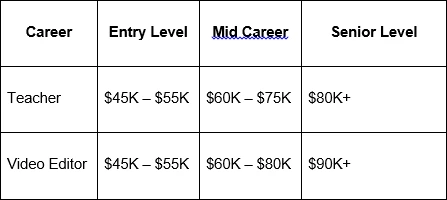
So here’s the deal. Teaching offers steady growth. Video editing may bring higher pay at the top.
Job Stability and Future Outlook
Stability often matters just as much as salary. Teaching usually provides long-term job security. Schools hire new educators every year. Because of this, predicting how much teachers make after several years becomes easier.
Creative jobs move faster. Video editors may jump from project to project. Still, online content keeps expanding. Streaming platforms and digital marketing drive demand. Editors who keep learning new software and trends usually stay ahead of the curve.
Skills and Education Paths
The path into each career looks quite different. Teachers usually need:
● A bachelor’s degree in education
● State teaching certification
● Classroom training or internships
Video editors often focus on skills and experience. Typical paths include:
● Film or media training
● Editing software knowledge
● A strong portfolio of projects
Some editors attend film school. Others learn through real-world work. In this field, skill often speaks louder than formal education.
Using Salary Research Before Choosing a Career
Before choosing a career, good research helps a lot. Salary data gives a realistic picture of what to expect. Sites like HowMuchCanIMake.info gather pay data across industries. Readers can compare professions and see how earnings stack up. This kind of information helps people make smarter career choices.
Final Thoughts
Teaching and video editing follow very different paths. Teaching focuses on education and stability. Video editing revolves around creativity and digital media. Research on how much teachers make shows steady pay and reliable benefits over time. At the same time, reports on earnings for video editors in New York highlight strong opportunities in a growing media industry.
Both careers have their strengths. Teaching offers structure and security. Video editing offers creative freedom and higher income potential in top roles. In the end, the right choice depends on personal goals and interests. Knowing the numbers simply helps people make better decisions about their future.