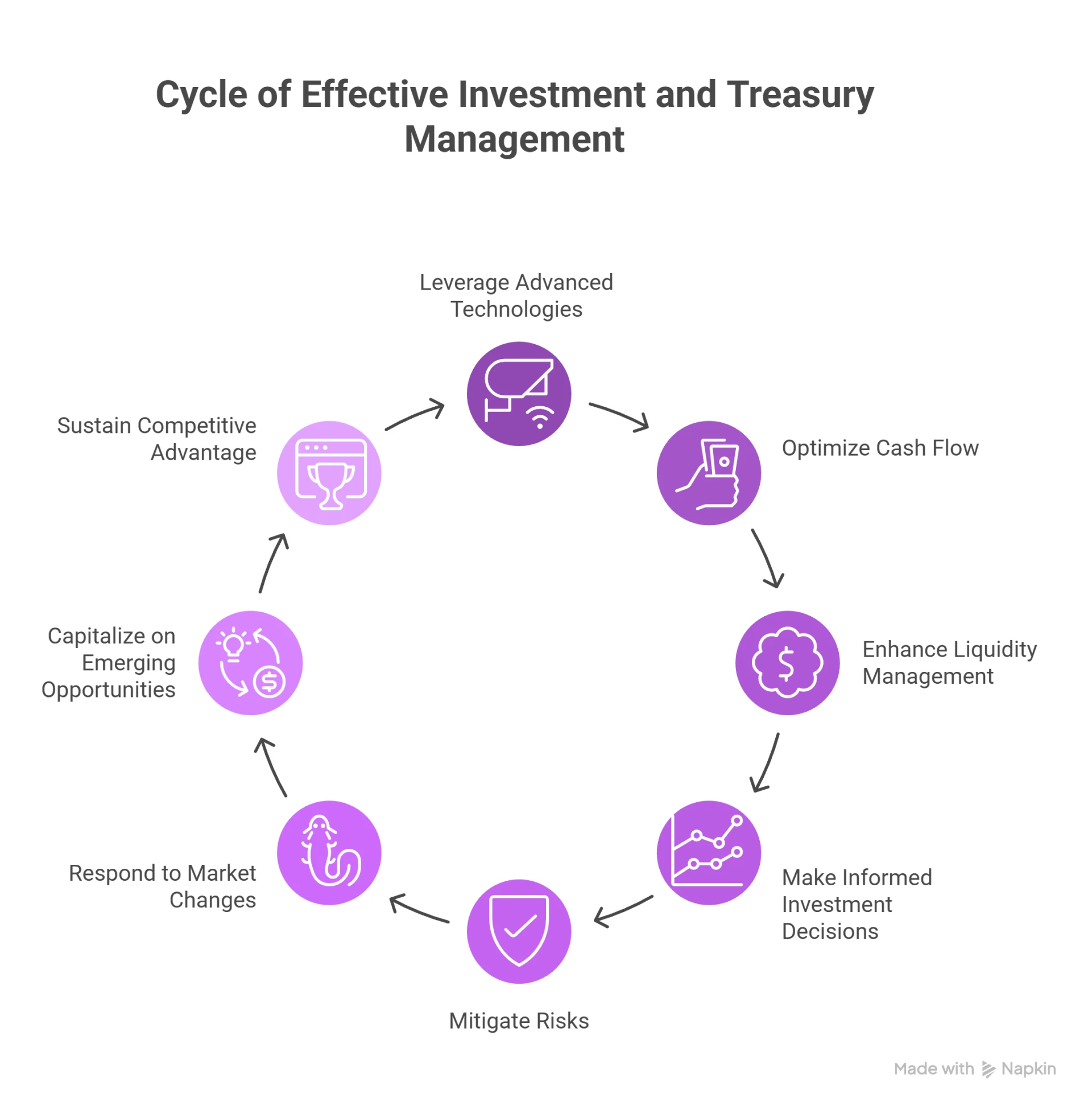
In today’s volatile financial landscape, enterprise agility depends on how quickly organizations can monitor liquidity, optimize investments, and mitigate risks across entities and markets.
For decades, treasury and investment functions were seen as transactional back-office activities. But in the era of real-time finance and global operations, they’ve become strategic drivers of business performance.
Modern enterprises are achieving this agility through Enterprise Investment Solutions and Treasury Management ERP systems- cloud platforms that unify cash, investments, and risk data into a single source of truth.
Let’s explore how forward-thinking organizations manage their treasury and investment operations to stay financially agile and compliant in an ever-changing environment.
The Evolving Role of Treasury in Modern Enterprises
From Transactional to Strategic
Traditionally, treasury teams focused on cash reconciliation and short-term liquidity. Today, they’re expected to guide funding strategy, investment decisions, and risk management—acting as strategic partners to the CFO.
An integrated ERP environment empowers treasury leaders to analyze real-time data, evaluate exposures, and drive long-term capital efficiency.
Real-Time Visibility and Forecasting
Global businesses often operate across multiple subsidiaries and currencies. Without unified data, cash forecasting becomes error-prone and reactive.
Modern ERP-based treasury platforms deliver real-time visibility into cash positions, allowing finance leaders to make proactive investment and funding decisions.
Integration with Investment Portfolios
Treasury is no longer isolated from investment operations. Enterprises increasingly require connected systems that align portfolio performance, market exposure, and liquidity planning—something legacy setups rarely achieve.
Challenges in Traditional Treasury and Investment Operations
Despite automation elsewhere in finance, many enterprises still manage treasury through disconnected spreadsheets and siloed systems. This leads to:
- Fragmented cash visibility across entities and banks
- Manual consolidation of investment data
- Limited forecasting accuracy due to lagging updates
- High compliance risk from inconsistent governance
- Slow decision-making driven by outdated reports
As a result, finance teams spend more time compiling data than analyzing, limiting their ability to respond to market changes quickly.
What Is an Enterprise Investment Solution?
An Enterprise Investment Solution is a centralized platform that integrates with ERP systems to manage the full lifecycle of corporate investments.
Key capabilities include:
- Real-time tracking of investment portfolios across asset classes and subsidiaries
- Automated accruals and valuations to streamline accounting
- Risk exposure analysis to optimize investment strategy
- Multi-entity and multi-currency management for global operations
By linking these capabilities directly with core finance modules, enterprises gain a 360-degree view of their investment health and liquidity status—essential for agile decision-making.
Treasury Management ERP – The Backbone of Financial Agility
A Treasury Management ERP unifies cash, liquidity, risk, and investment processes within a single, cloud-based environment. Rather than operating as standalone software, it connects the treasury directly with the general ledger, accounts payable, receivable, and banking systems.
1. Unified View of Cash, Liquidity, and Investments
Treasury professionals can access real-time dashboards displaying global bank balances, projected inflows and outflows, and investment maturity schedules. This holistic view enables instant liquidity analysis and informed funding decisions.
2. Automated Forecasting and Reconciliation
AI-enabled ERP systems automatically reconcile bank statements, forecast cash requirements, and alert users to anomalies—reducing manual effort and errors. Enterprises can model various scenarios to evaluate future liquidity positions.
3. Risk Mitigation Through Real-Time Analytics
Built-in analytics identify exposure to currency fluctuations, interest-rate changes, and counterparty risks. Treasury teams can hedge proactively and ensure compliance with internal risk policies.
4. Regulatory Compliance and Audit Readiness
A Treasury ERP maintains automated audit trails, version control, and compliance templates aligned with IFRS and SOX standards—ensuring transparency during audits and regulatory reviews.
Benefits of Implementing a Treasury Management ERP
Centralized Control & Visibility
Gain a consolidated view of enterprise-wide cash, investments, and debt—eliminating data silos and improving financial governance.
Faster, Data-Driven Decisions
Real-time dashboards empower CFOs to act quickly on investment opportunities, funding requirements, or risk exposures.
Reduced Operational & Compliance Risk
Automated processes and consistent workflows minimize human error and enhance regulatory compliance.
- Optimized Working Capital
- Better forecasting ensures the efficient use of idle cash, lowers financing costs, and maximizes returns on investments.
- Improved Collaboration Across Departments
- Integration with Microsoft 365, Teams, or Power BI enables finance, treasury, and operations teams to collaborate seamlessly using shared data.
The Role of Microsoft Dynamics 365 in Treasury Transformation
While several platforms exist, Microsoft Dynamics 365 Finance & Operations has become a preferred choice for large enterprises due to its scalability and integration ecosystem.
- Unified Financial Platform: Dynamics 365 consolidates core accounting, cash, and investment modules.
- Advanced Analytics: With embedded Power BI, treasury teams can visualize liquidity trends and investment performance instantly.
- Cloud Security & Scalability: Built on Azure, D365 provides enterprise-grade compliance and rapid deployment across regions.
- ISV Add-Ons for Treasury & Investment: Solutions like Dynamic Netsoft’s modules extend D365’s capabilities for treasury, investment, and multi-entity financial management.
Through these features, organizations can transition from reactive liquidity management to proactive financial planning and investment optimization.
Case Example: A Multi-Entity Enterprise Achieving Financial Agility
A global real-estate investment group operating across the Middle East and Asia relied on spreadsheets for treasury consolidation. Limited visibility into cross-border liquidity led to inefficient fund utilization and delayed reporting.
By implementing a Treasury Management ERP integrated with Dynamics 365, the company achieved:
- Real-time monitoring of cash balances across 40 bank accounts
- Automated reconciliation, reducing manual workload by 60%
- Improved investment yield through optimized cash positioning
- Month-end closing accelerated by 30%
This transformation not only improved efficiency but also strengthened the firm’s ability to respond to changing market conditions with confidence.
Conclusion
Financial agility is no longer optional—it’s the foundation of modern enterprise success. In an era of global operations, volatile markets, and regulatory scrutiny, manual treasury practices can no longer keep pace.
By adopting an Enterprise Investment Solution integrated with a Treasury Management ERP, organizations gain the real-time intelligence, automation, and visibility needed to make faster, smarter financial decisions.
Whether through Microsoft Dynamics 365 or other ERP ecosystems, the goal remains the same: empower treasury to move from control to strategy, from reporting to insight, and from static to agile finance.
✅ Call to Action
Ready to modernize your treasury and investment operations?
👉 Talk to our experts and discover how Enterprise Investment Solutions built on Dynamics 365 can accelerate your organization’s journey to financial agility.