
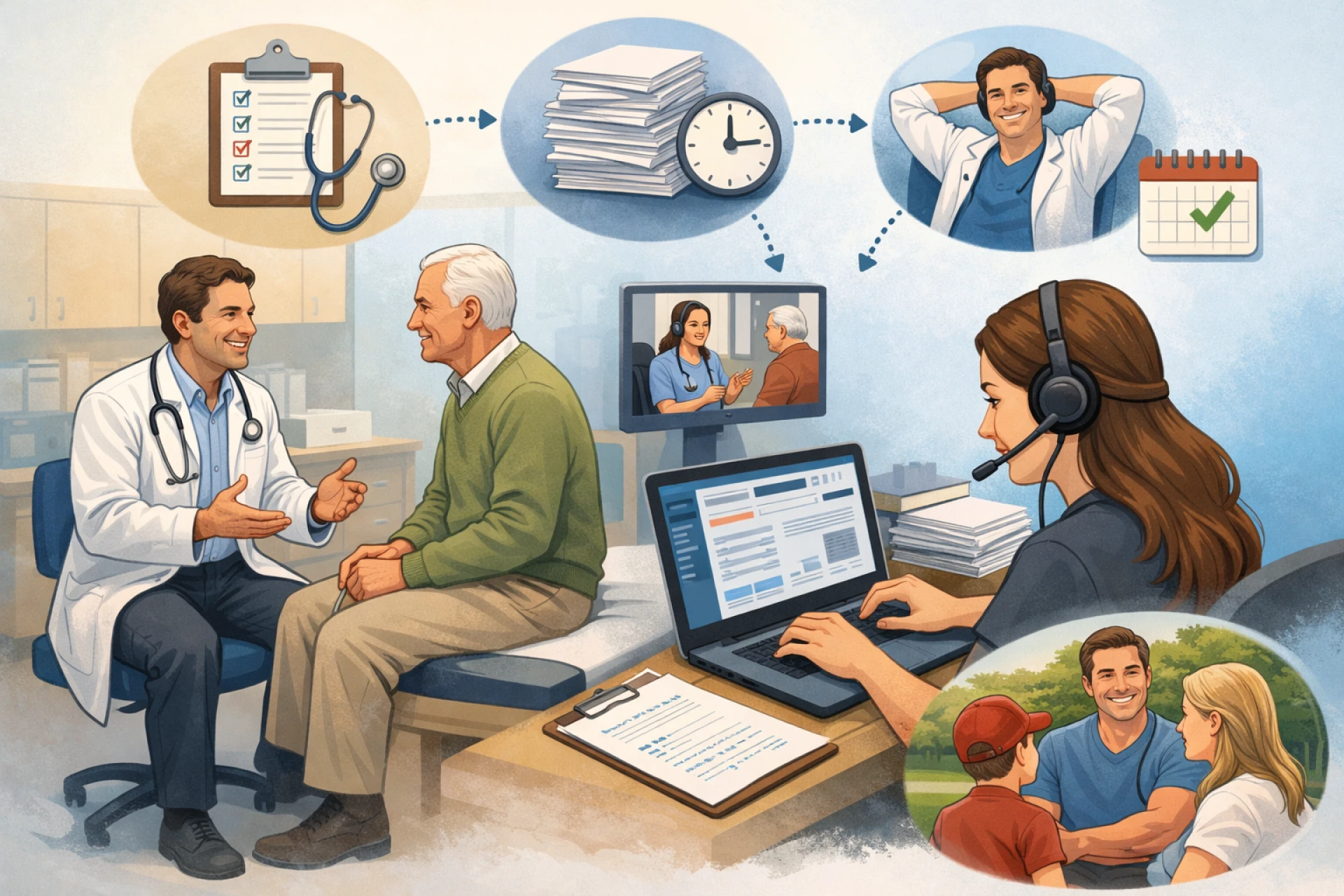
Physicians today face an ever-growing documentation workload. Electronic health records (EHRs), regulatory requirements, quality reporting, and billing compliance have transformed clinical documentation into a time-consuming responsibility that often competes with patient care. As a result, many physicians spend hours each day charting—both during and after clinic hours.
Medical scribing has emerged as a powerful solution to this challenge. By offloading documentation tasks, medical scribes help physicians reclaim time, reduce stress, and focus on delivering high-quality patient care.
The Growing Problem of Documentation Burden
Clinical documentation is essential, but the volume and complexity have increased dramatically. Physicians are expected to document:
- Detailed patient histories and exams
- Medical decision-making and care plans
- Orders, procedures, and follow-ups
- Coding and compliance-related details
This administrative load often extends beyond patient visits, leading to after-hours charting, reduced face-to-face time with patients, and increased risk of burnout. For many providers, documentation has become one of the biggest barriers to efficiency and job satisfaction.
What Is Medical Scribing?
Medical scribing involves trained professionals who assist physicians by documenting patient encounters in real time or near real time. Scribes work alongside providers—either onsite or virtually—to capture clinical information accurately and efficiently within the EHR.
Rather than replacing physician oversight, scribes act as documentation partners, allowing physicians to review, finalize, and sign notes without shouldering the entire documentation process themselves.
Real-Time Documentation at the Point of Care
One of the most impactful ways medical scribing reduces documentation burden is through real-time note creation. As physicians interact with patients, scribes document:
- Chief complaints and histories
- Physical exam findings
- Assessments and plans
- Orders and procedures
This eliminates the need for physicians to divide attention between the patient and the computer. Instead of typing during the visit or relying on memory later, documentation is completed as care is delivered.
Reduced After-Hours Charting
After-hours charting—often referred to as “pajama time”—is a major contributor to physician burnout. Medical scribing significantly reduces or eliminates this burden by ensuring charts are completed during clinical hours.
With scribes handling documentation throughout the day, physicians:
- Finish charts faster
- Leave work on time
- Experience less mental fatigue
- Maintain better work-life balance
Over time, this reduction in administrative overload leads to improved provider well-being and retention.
Improved Efficiency and Workflow
Medical scribes streamline clinical workflows by allowing physicians to move seamlessly from one patient to the next without documentation delays. This efficiency results in:
- Faster patient throughput
- Shorter visit times
- Reduced backlog of unfinished notes
- More consistent documentation quality
By working in parallel with physicians, scribes transform documentation from a bottleneck into a background process.
Enhanced Documentation Accuracy and Consistency
When physicians are rushed or fatigued, documentation errors or omissions become more likely. Medical scribes are trained to capture details thoroughly and consistently, even in fast-paced environments.
Accurate documentation supports:
- Clear clinical communication
- Continuity of care across teams
- Proper coding and billing
- Compliance with regulatory standards
This reliability reduces the need for rework and minimizes the stress associated with audits or chart corrections.
Allowing Physicians to Focus on Patient Care
Perhaps the most meaningful benefit of medical scribing is the ability for physicians to focus fully on patients. Without the distraction of typing or navigating EHR systems, providers can:
- Engage more deeply during visits
- Improve patient satisfaction
- Strengthen communication and trust
- Make clinical decisions more efficiently
This renewed focus restores the patient-centered nature of healthcare, benefiting both providers and patients.
Flexibility Across Care Settings
Medical scribing is adaptable across a wide range of healthcare environments, including:
- Hospitals and inpatient units
- Emergency departments
- Outpatient clinics
- Specialty practices
- Telehealth and virtual care
Whether deployed onsite or remotely, scribes can be scaled to meet fluctuating documentation demands without adding long-term staffing pressure.
Long-Term Impact on Physician Burnout
By consistently reducing documentation burden, medical scribing addresses one of the root causes of physician burnout. Organizations that implement scribe programs often see:
- Higher provider satisfaction
- Improved retention
- Better clinical performance
- Stronger organizational morale
Medical scribing is no longer just an operational support—it’s a strategic investment in clinician well-being.
Conclusion
Documentation will always be a critical part of healthcare, but it doesn’t have to overwhelm physicians. Medical scribing offers a practical, proven way to reduce administrative workload, improve efficiency, and restore focus on patient care.
By shifting documentation responsibilities to trained scribes, healthcare organizations empower physicians to do what they do best—care for patients—while maintaining accurate, compliant, and timely medical records. In today’s demanding healthcare environment, medical scribing is a key solution to reducing physician documentation burden and building a more sustainable clinical workforce.