
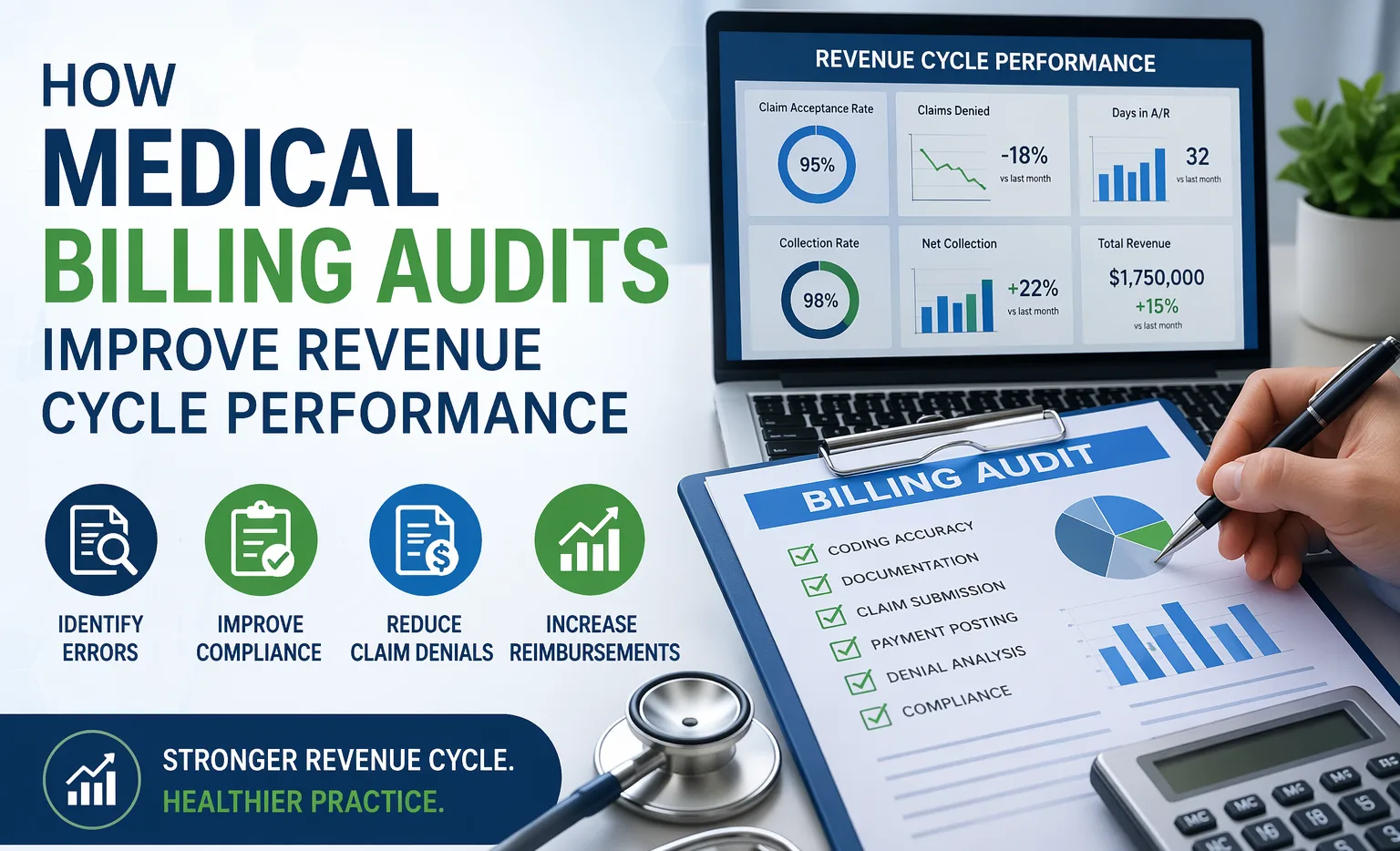
Healthcare organizations depend on a healthy revenue cycle to maintain financial stability, improve patient care, and support long-term growth. Yet even well-managed practices can experience claim denials, coding errors, delayed reimbursements, and missed payments that weaken overall performance. One of the most effective ways to identify these issues and improve financial outcomes is through medical billing audits.
Regular medical billing audits help healthcare providers uncover hidden inefficiencies in their billing process, strengthen compliance, and improve the flow of revenue from patient registration to final reimbursement. By reviewing billing practices in detail, organizations can reduce errors and create a more efficient revenue cycle that supports both operational and financial goals.
Understanding Revenue Cycle Performance in Healthcare
Revenue cycle performance refers to how efficiently a healthcare organization manages the financial side of patient care. This process begins when a patient schedules an appointment and continues through insurance verification, coding, claim submission, payment posting, and collections.
A strong revenue cycle allows providers to:
- Receive reimbursements faster
- Reduce claim denials
- Improve cash flow
- Minimize billing errors
- Increase patient satisfaction
- Maintain compliance with payer requirements
When even one part of the cycle breaks down, the entire system can suffer. Errors in coding or missed documentation can delay payments and create costly rework. This is where medical billing audits become valuable.
What Are Medical Billing Audits?
Medical billing audits are systematic reviews of a healthcare practice’s billing records, coding accuracy, claims submissions, and payment processes. These audits examine whether the organization is billing correctly, following payer rules, and collecting the full reimbursement it deserves.
Audits may focus on:
- CPT and ICD coding accuracy
- Documentation support
- Claim submission quality
- Denial patterns
- Payment posting errors
- Underpayments from insurers
- Compliance risks
- Staff performance issues
By identifying these weaknesses, practices can improve the efficiency of the entire revenue cycle.
Identifying Revenue Leaks Before They Become Major Problems
One of the biggest benefits of medical billing audits is the ability to identify revenue leaks. Many practices lose money without realizing it because of small errors repeated across hundreds of claims.
Common sources of revenue leakage include:
- Incorrect patient demographics
- Missing insurance details
- Duplicate billing
- Under-coded services
- Unbilled procedures
- Incorrect modifiers
- Missed follow-up on denied claims
Even minor mistakes can add up to substantial losses over time. Audits reveal where revenue is slipping through the cracks so providers can fix the problem before it affects profitability.
Reducing Claim Denials and Rejections
Claim denials are one of the most common obstacles to strong revenue cycle performance. Denied claims slow payments, increase administrative work, and reduce cash flow.
Medical billing audits help reduce denials by analyzing:
- Why claims are rejected
- Which payers deny most often
- Whether coding supports medical necessity
- If documentation matches billed services
- Common staff errors causing denials
Once these patterns are identified, healthcare organizations can adjust workflows and train staff to prevent future denials. Fewer denied claims means faster reimbursements and a healthier revenue cycle.
Improving Coding Accuracy
Coding errors are among the most expensive problems in medical billing. Incorrect coding can lead to underpayments, overpayments, compliance issues, and payer scrutiny.
Through medical billing audits, providers can verify that:
- Codes match the services performed
- Documentation supports the selected codes
- Modifiers are used correctly
- Diagnosis codes justify treatment
- Upcoding and downcoding are avoided
Accurate coding improves reimbursement while reducing the risk of audits from insurance companies or government agencies. Better coding directly improves revenue cycle performance by ensuring each service is billed properly the first time.
Strengthening Compliance and Reducing Financial Risk
Healthcare billing regulations continue to become more complex. Failing to follow payer rules can result in penalties, repayment demands, or legal consequences.
Regular medical billing audits help organizations maintain compliance by reviewing whether billing practices meet:
- Medicare guidelines
- Medicaid requirements
- Commercial payer policies
- HIPAA standards
- Documentation regulations
Compliance improvements protect revenue while reducing the risk of costly investigations. A compliant billing process creates a more stable revenue cycle over time.
Accelerating Cash Flow
Cash flow is critical for every healthcare practice. Delayed reimbursements can affect staffing, technology investments, and daily operations.
Medical billing audits improve cash flow by identifying delays in:
- Charge entry
- Claim submission
- Payment posting
- Denial follow-up
- Patient collections
When these delays are corrected, claims move faster through the system and payments arrive sooner. This allows providers to maintain stronger financial performance and reduce dependence on emergency cash reserves.
Enhancing Staff Performance
Sometimes revenue cycle problems are not caused by systems but by inconsistent staff processes. Front desk teams, coders, and billing specialists all influence billing accuracy.
Medical billing audits can uncover:
- Training gaps
- Repeated manual errors
- Inefficient workflows
- Poor communication between departments
- Inconsistent follow-up procedures
Audit findings give leadership clear insight into where staff need additional support. Better-trained teams produce cleaner claims and stronger revenue outcomes.
Improving Patient Financial Experience
The revenue cycle is not only about insurance reimbursement. It also includes patient billing. Confusing statements or inaccurate balances can lead to delayed payments and patient frustration.
Medical billing audits improve the patient experience by ensuring:
- Statements are accurate
- Charges are explained clearly
- Payment posting is correct
- Outstanding balances are managed properly
When patients understand their financial responsibility, they are more likely to pay promptly. Improved patient collections contribute to stronger revenue cycle performance.
Supporting Better Decision-Making
Another advantage of medical billing audits is access to meaningful data. Audits provide insights that help healthcare leaders make informed financial decisions.
Audit reports may reveal:
- High denial trends
- Underperforming payers
- Frequent coding issues
- Slow collection cycles
- Department-specific billing problems
With this information, leadership can develop targeted strategies to improve profitability and operational efficiency.
Creating a Continuous Improvement Process
Revenue cycle management should not be reactive. The most successful healthcare organizations use medical billing audits as part of an ongoing improvement strategy.
Rather than waiting for revenue problems to become severe, regular audits help organizations:
- Monitor performance consistently
- Correct issues early
- Adapt to payer changes
- Improve accountability
- Increase long-term profitability
A continuous audit process transforms billing from a basic administrative task into a strategic financial tool.
Conclusion
Strong financial performance in healthcare depends on an efficient revenue cycle. When billing errors, denials, and compliance problems go unnoticed, revenue suffers. Medical billing audits provide the insight needed to identify weaknesses, improve workflows, and maximize reimbursement.
From reducing claim denials to improving coding accuracy and accelerating cash flow, medical billing audits play a critical role in strengthening revenue cycle performance. For healthcare providers that want greater financial stability, regular billing audits are no longer optional—they are an essential part of long-term success.