
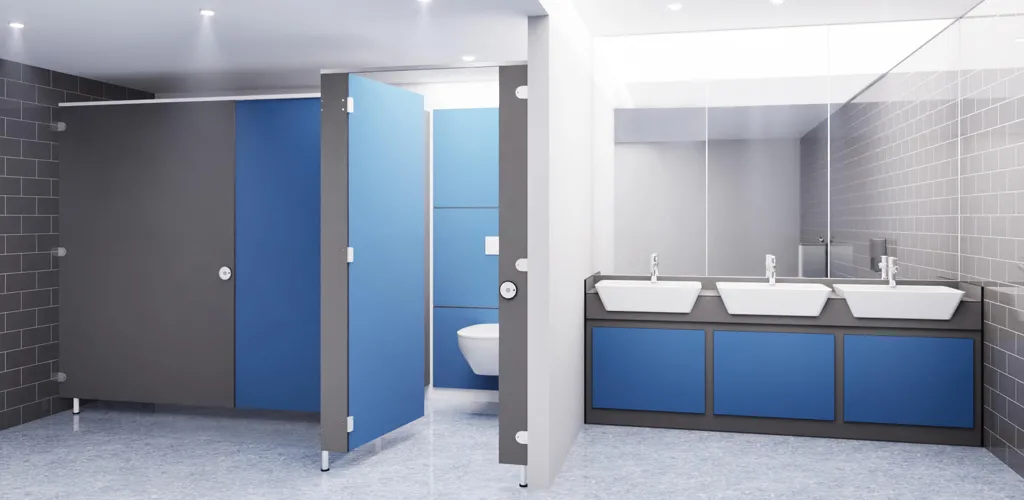
A commercial washroom must be strong, safe and easy to maintain. Every part matters, from the doors and panels to the hinges and locks. Even a small error during manufacturing can cause problems during installation. Doors may not close well. Panels may sit unevenly. Gaps may look untidy, and fittings may wear out too soon.
Manufacturing precision helps prevent these issues. It ensures that each panel, edge, fixing point and fitting meets the required measurements. This makes installation easier and helps the finished washroom perform well over time.
For businesses, schools, offices and public buildings, choosing well-made cubicles is a practical step towards better washroom quality. Accurate manufacturing can reduce fitting problems, support daily use and help protect the long-term value of the installation.
What Does Manufacturing Precision Mean?
Manufacturing precision means making each part to the correct size and shape. It also means keeping measurements consistent across the whole order. Panels must have the right height and width. Edges must be straight. Holes for hinges, locks and brackets must sit in the correct places.
These details may seem small, but they affect the final result. A panel that is even slightly too wide may not fit the planned space. A misplaced fixing hole can make installation harder. If several parts have small errors, these can add up and affect the whole layout.
Reliable toilet cubicle manufacturers use careful measuring, suitable tools and quality checks to reduce such risks. This helps ensure that parts fit together as planned and that the finished system looks neat and works as intended.
Why Accurate Measurements Matter During Installation
Every washroom has its own layout. Some have wide spaces, while others must make the best use of a small floor area. Walls may not be perfectly straight, and floors may have slight slopes. These factors make accurate measurements important before production begins.
A clear site survey helps the installer understand the space. It can identify wall positions, floor levels, door openings and possible obstacles. These details then guide the design and production process.
When toilet cubicles are made to match the approved layout, installers can position the panels and doors with greater accuracy. This can reduce the need for cutting, drilling or other changes on site.
Good planning also helps keep the work on schedule. Fewer fitting problems mean less wasted time and a lower risk of delays. For busy buildings, this can make a real difference to the washroom refurbishment process.
The Role of Panel Quality and Consistency
Panels form the main structure of a cubicle system. Their quality affects strength, appearance and service life. Panels should have consistent thickness, clean edges and a suitable finish for the place where they will be used.
Poorly cut panels may leave uneven joints. Rough edges can affect the finish and may become weak points over time. Differences in panel size can also make it hard to keep doors and partitions aligned.
Experienced toilet cubicle manufacturers UK understand the need for consistent production standards. They aim to make panels that match the agreed design and suit the intended use.
Material choice matters too. High-pressure laminate can suit many busy commercial settings. Solid grade laminate is often chosen for areas exposed to moisture. The right option depends on the building, expected use and cleaning needs.
Accurate production cannot make an unsuitable material perform well. However, when good materials and precise manufacturing work together, the finished cubicle system can offer better value and more reliable service.
How Precise Hardware Placement Improves Performance
Hinges, locks, brackets and handles may be small parts, but they play a major role in daily use. They help doors open, close and stay secure. If their fixing points are not in the correct position, the door may hang unevenly or fail to close as it should.
Incorrect hinge placement can place extra strain on the door. Over time, this may lead to loose screws, dragging edges or poor alignment. A lock fitted in the wrong position may also fail to meet the keeper correctly.
Precision during production helps reduce these problems. Correctly placed fixing points allow hardware to sit as designed. This supports smoother movement and reduces the need for adjustments during installation.
Quality fittings are equally important. Even a well-made panel can perform poorly if it uses weak hinges or unsuitable locks. Businesses should therefore consider the complete system rather than judging quality by panel appearance alone.
Better Alignment Creates a Neater Finish
A professional washroom should look clean and well planned. Straight partition lines, even gaps and properly aligned doors all help create this effect.
Small manufacturing errors can make a finished installation look uneven. One door may sit higher than another. A partition may not line up with the next panel. Uneven gaps can also affect privacy and the overall appearance.
Accurate production helps installers achieve a more consistent finish. When panels and fittings match the approved drawings, the parts are easier to position correctly.
This is important in offices, hotels, schools and other public buildings. Washrooms form part of the wider customer and visitor experience. A neat finish shows that care has gone into the building's design and upkeep.
For projects involving toilet cubicles UK, consistent quality across the full order can be just as important as the design itself. Each cubicle should work and look like part of the same system.
Reducing Waste, Delays and Extra Costs
Manufacturing errors can create costs that are not always clear at the start of a project. Incorrect panels may need to be cut again or replaced. Installers may need extra time to adjust fittings. Missing or unsuitable parts can also delay the work.
These problems may affect other trades working on the same site. A delay in the washroom can disrupt the wider building schedule, especially during a major refurbishment.
Precise manufacturing helps reduce the chance of these setbacks. Accurate cutting and drilling can limit waste. Clear production records and checks can also help ensure that the correct parts reach the site.
However, precision alone cannot remove every risk. Poor site measurements, transport damage or incorrect installation can still cause problems. Good results depend on clear communication between the manufacturer, installer and client.
Businesses should look at the full process when planning a washroom project. The aim should be to reduce avoidable problems from the first measurement to the final inspection.
Manufacturing Precision and Long-Term Durability
A cubicle system faces repeated use every day. Doors open and close many times. Locks and hinges carry regular loads. Cleaning products and moisture may also affect surfaces and fittings.
When panels and hardware are made and fitted correctly, the system is more likely to work as intended. Proper alignment can reduce unnecessary strain on hinges and door edges. Secure fixings can help keep partitions stable.
Precision also supports easier maintenance. If parts fit correctly, staff can inspect and service them with less difficulty. Routine checks can identify loose screws, worn hinges and damaged edges before they become larger problems.
Still, durability depends on more than manufacturing. Suitable materials, correct installation and regular care all matter. Businesses should choose a system that matches the level of use and the conditions within the building.
What Should Businesses Check Before Choosing a Manufacturer?
Choosing a manufacturer involves more than comparing designs or prices. Businesses should understand how the products are made and how quality is checked.
Before placing an order, consider the following points:
- Measurement process: Does the project include clear site measurements and approved drawings?
- Panel consistency: Are the panels made to the required sizes and thicknesses?
- Hardware placement: Are fixing points positioned to match the design?
- Material suitability: Are the panels suitable for the level of moisture and daily use?
- Quality checks: Are parts checked before they leave the production facility?
- Installation support: Can the supplier provide clear specifications and fitting guidance?
- Aftercare: Are replacement parts and maintenance advice available when needed?
These questions help buyers assess the quality of the full service. They also make it easier to compare suppliers on practical factors rather than appearance alone.
Washroom Cubicles Direct Ltd can be considered by businesses seeking commercial washroom cubicle solutions. When assessing any supplier, clients should review the proposed materials, specifications, manufacturing standards and installation arrangements to ensure they meet the needs of the project.
Why Communication Matters Between Manufacturers and Installers
Even the best production process can fail if project details are unclear. The manufacturer needs accurate measurements and agreed specifications. The installer needs clear drawings and correct information about each part.
Changes made after production begins can create further risks. A revised door width or a moved partition may affect several connected components. If these changes are not shared with everyone involved, the parts may no longer fit the planned layout.
Good communication helps prevent such issues. Clients should confirm the design, dimensions, finish and hardware before production starts. Any later changes should be recorded and approved.
A final site check can also help confirm that the finished installation matches the agreed plan. This step supports better quality control and gives the client a clear record of the completed work.
Conclusion
Manufacturing precision plays a key role in the installation and performance of commercial washroom cubicles. Accurate measurements, consistent panels and correctly placed hardware help create a system that looks neat, works smoothly and is easier to maintain.
For businesses, the benefits go beyond appearance. Better precision can reduce fitting problems, limit waste and support long-term durability. However, these results also depend on suitable materials, careful installation and regular maintenance.
When choosing toilet cubicle manufacturers, buyers should look closely at product quality, manufacturing checks and technical support. A well-planned project, backed by clear communication, can help deliver a reliable washroom that meets the needs of its users for years to come.