After surgery, recovery can feel uncertain for both your dog and you. You may notice changes in your dog's appetite, energy and behaviour as it settles back in. Some dogs feel better within a few days, while others need several weeks or more before they return to normal. Knowing what to expect, spotting complications early and giving good aftercare will help your dog heal comfortably.
Understand the Typical Recovery Time After Dog Surgery
How long a dog takes to recover depends mainly on the type of surgery and its overall health. Minor operations usually need a shorter period of restricted activity, while complex ones can take several weeks to heal. Your dog will slowly regain its appetite and energy as the anaesthesia wears off. A trusted Pet Clinic Singapore can give you a more accurate recovery estimate based on the operation and your dog's needs.
Recovery After Minor Surgery
Dogs that have routine procedures may feel more comfortable within a few days. They still need rest and limited activity until the wound has healed.
Recovery After Major Surgery
Operations on bones, joints or internal organs usually mean a longer recovery. Some dogs need six to twelve weeks or more before they return to their usual activities, depending on the procedure and how well they heal. Complex operations like these are often done at a Pet Hospital Singapore, where the team can closely monitor your dog.
Know What Affects Your Dog's Recovery Time
Every dog responds to surgery differently, so recovery times can vary even when two dogs have similar procedures. Age, body condition, existing health problems and the complexity of the operation can all affect healing. Dogs that have orthopaedic surgery may need extra support and a longer period of restricted movement. Knowing these factors helps you prepare and give the right care. The type of operation is one of the biggest factors. Minor soft tissue surgery usually heals on a different timeline from surgery on bones, joints or major internal organs. Young, healthy dogs may recover differently from older dogs or those with health problems. Your vet will take these into account when recommending medication, activity limits and follow-up visits.
Provide Proper Care During the First 24 to 48 Hours
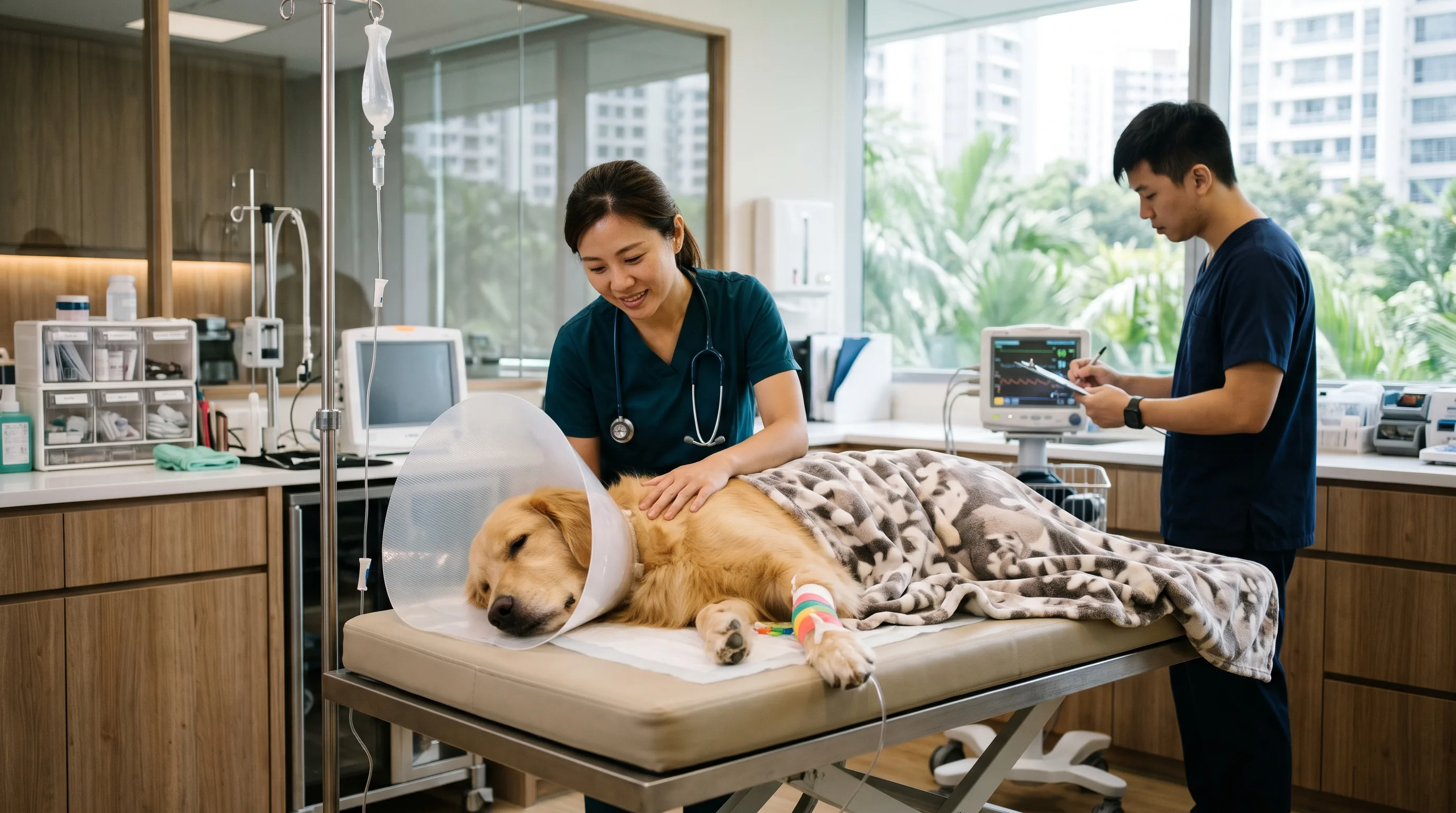
The first two days after surgery are particularly important because your dog may still experience the effects of anaesthesia. Some dogs may feel sleepy, move slowly, or show less interest in food during this period. Prepare a quiet resting area and follow your veterinarian's feeding and medication instructions. Monitor your dog closely and report any unusual or worsening symptoms to the veterinary team. Your dog may look tired, unsteady or a little confused when it gets home. This usually improves as the anaesthetic wears off, but weakness that does not go away or trouble waking up needs a vet's attention.
Look After Your Dog's Surgical Wound
Good wound care is key to recovery, because the surgical site needs time to heal. Check the incision regularly for more redness, swelling, bleeding or unusual discharge. Stop your dog from licking, chewing or scratching the area, as this can slow healing and raise the risk of infection. Clean the wound only as your vet instructs, and do not apply any product without professional advice.
Protect the Surgical Incision
Your vet may recommend an Elizabethan collar, also called a recovery cone, to keep your dog from reaching the wound. Keep the area dry unless your vet says otherwise, and do not bathe your dog until it is safe.
Recognise Signs of Wound Infection
Increasing redness, heavy swelling, pus or a bad smell around the incision can be signs of infection. Call your vet if you notice any of these, instead of trying to manage the problem at home.
Control Your Dog's Activity During Recovery
Even when your dog seems better, its body may still be healing inside. Too much movement can put pressure on the wound, delay recovery or cause complications. Your vet may suggest short lead walks and no running, jumping or stair climbing. Increase exercise slowly, and only after your vet gives the go-ahead. Choose a quiet, clean spot where your dog can rest without being disturbed. Use comfortable bedding and keep food and water close by so your dog doesn't need to move around much. Stop your dog from jumping on furniture, playing roughly or running around with other pets. Even if your dog looks full of energy, stick to the activity limits until the wound has healed.
Follow the Prescribed Medication and Feeding Routine
Medication and good nutrition both support your dog's recovery. Your vet may prescribe pain relief or other medicines depending on the surgery and your dog's condition. Give each medicine at the prescribed dose and time, and never give human painkillers without your vet's approval. A suitable diet and fresh water also support your dog while it heals. Keep a record of your dog's medicines and follow the vet team's instructions. If your dog refuses medication, vomits after taking it, or has an unusual reaction, call your vet for advice.
Choose Suitable Food During Recovery
Feed the food your vet recommends and avoid sudden diet changes. Watch your dog's appetite and drinking, and report any prolonged loss of appetite or trouble eating.
Recognise Warning Signs During Post-Surgery Recovery
Some tiredness and appetite changes are normal after surgery, but certain symptoms need immediate attention. Never ignore difficulty breathing, collapse, uncontrolled bleeding or severe pain. Repeated vomiting, worsening swelling or unusual discharge should also be discussed with your vet. Knowing the warning signs helps you act quickly if recovery does not go as planned.
Warning Signs That Need Veterinary Attention
- Difficulty breathing or sudden collapse
- Heavy bleeding or an open surgical wound
- Severe pain or unusual restlessness
- Repeated vomiting or being unable to keep water down
- Increasing swelling, pus or a bad smell around the incision
When Should You Contact Your Veterinarian?
Contact your vet team at a veterinary clinic in Singapore if your dog becomes unusually weak, refuses food for longer than expected or seems uncomfortable. For severe symptoms, go to a vet hospital in Singapore for emergency care instead of waiting for the next appointment.
Attend Follow-Up Appointments and Monitor Healing
Follow-up visits let your vet check that your dog is healing as expected. The vet may examine the wound and discuss any concerns about movement, appetite, or medication. Some procedures require stitches or staples to be removed at a set stage of recovery. These visits also help determine when your dog can slowly return to normal activities. Book them with your regular vet clinic in Singapore, and don't skip any.
Check the Surgical Site
Your vet will check the incision for proper healing and possible complications. Follow any extra instructions on wound care, dressing changes or stitch removal.
Gradually Return to Normal Activities
Don't let your dog return to unrestricted exercise just because it looks comfortable. Your vet will tell you when longer walks, normal play and other activities are safe again.
Final Thought
Helping your dog recover from surgery takes patience, attention and steady aftercare. A comfortable resting space, careful medication and a well-protected wound all make recovery easier. A dog that looks energetic may not be fully healed inside, so do not rush back to normal activities. With regular vet guidance and good home care, you can help your dog heal and return to its daily routine comfortably.
FAQs
1. How many days does a dog need to recover from surgery?
Minor procedures may need several days of restricted activity, while complex operations can take six to twelve weeks or longer. The exact time depends on the surgery type and your dog's condition.
2. Is it normal for a dog to sleep a lot after surgery?
Yes, extra sleepiness is common for the first day or two while the anaesthesia wears off. But tell your vet if your dog is extremely weak, hard to wake or getting more lethargic.
3. When can my dog walk normally after surgery?
Your dog may be allowed short, controlled walks within a few days, depending on the procedure and your vet's instructions. Wait for your vet to confirm it is safe before allowing running, jumping or unrestricted exercise.
4. How do I know if my dog's surgical wound is healing properly?
A healing wound should become less swollen and less irritated over time, with no unusual discharge or increasing redness. Call your vet if you see bleeding, pus, a bad smell or an open wound.
5. When should my dog return to the veterinarian after surgery?
Your vet will set a follow-up schedule based on the procedure and how your dog is healing. These visits let the vet monitor recovery, check the wound and decide when activity limits can be eased.