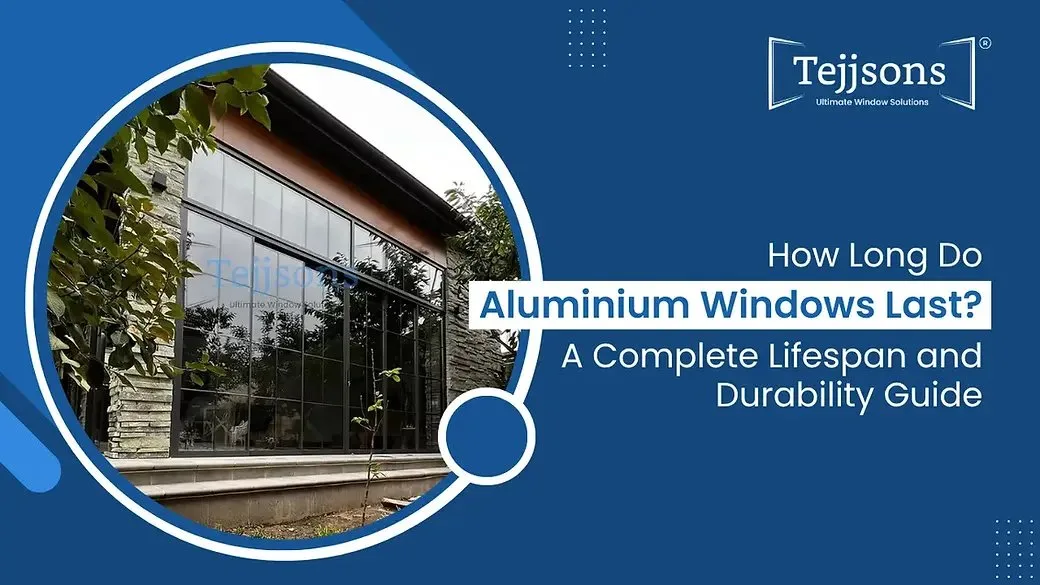
Aluminium windows are designed to withstand years of sunlight, monsoon rain, dust, humidity, and daily use. While some aluminium windows continue to operate smoothly for decades, others may begin rattling, leaking, or jamming within a few years.
The lifespan of aluminium windows depends on several factors, including the profiles, hardware, glass, seals, surface finish, fabrication, installation quality, and maintenance.
How Long Do Aluminium Windows Last?
Good-quality aluminium windows commonly last 30 to 45 years. Well-made aluminium window systems may remain in service for even longer, particularly when installed in suitable locations and maintained with regular cleaning and timely hardware repairs.
The 30–45 year range should not be considered an exact expiry date. Different window styles experience different levels of wear. Fixed windows have no moving hardware, while sliding and casement windows place repeated loads on rollers, hinges, locks, and stays.
Individual components can have different lifespans:
- Aluminium frames can remain sound for several decades.
- Rollers, hinges, handles, and locks may require earlier replacement.
- Gaskets and perimeter sealants can harden, shrink, or separate over time.
- Insulated glass units may require replacement if their edge seals fail and condensation develops between the panes.
- Powder coating may lose some colour or gloss without affecting the strength of the frame.
Replacing a worn component does not necessarily mean the complete aluminium window system has failed.
What Causes Aluminium Windows to Fail Early?
The age of the aluminium frame is not always the main reason for early deterioration. Premature problems can often begin because of weak specifications, fabrication issues, or poor installation.
Common causes include:
- Profiles that are too light for the panel size.
- Hardware that cannot carry the glass weight.
- Frames fabricated or installed out of square.
- Missing, blocked, or incorrectly positioned drainage holes.
- Gaps at corners and joints.
- Incorrect glass packing.
- Poor sealant application.
- Different metals placed directly together without suitable separation.
- Salt, dirt, or cement residue left on the finish.
- Large shutters used without suitable stays or restrictors.
Delayed repairs when a sash begins dragging or a roller starts failing.
A small problem can create a chain reaction. For example, a worn roller can cause a sliding panel to drop, which may damage the track, strain the lock, and create gaps along the seals. Addressing the roller early can help prevent more extensive repairs.
Factors That Affect Aluminium Window Lifespan
Several factors determine how long an aluminium window can perform reliably.
Profile Strength
The frame and sash should match the opening size, glass weight, wind pressure, and opening style. Profiles that are too light may bend or lose alignment.
System Design
Drainage paths, gasket positions, interlocks, corner joints, and glass support should work together as part of the complete window system.
Surface Finish
Powder coating or anodising should suit the property's exposure. Coastal and heavily polluted locations require greater protection.
Hardware Quality
Rollers, hinges, locks, handles, and stays carry the working load each time the window is operated. Good-quality hardware can help improve long-term performance.
Fabrication Accuracy
Square frames, tight joints, correctly positioned drainage slots, and properly fitted hardware can reduce uneven wear.
Installation Quality
Correct levelling, anchoring, packing, and perimeter sealing help keep the frame stable and weather-resistant.
Local Conditions
Salt, humidity, monsoon rain, dust, pollution, and strong sunlight can affect how quickly finishes and moving parts age.
Maintenance
Clean tracks, clear drainage holes, and timely repairs help protect the window from avoidable damage.
Strong aluminium alone cannot compensate for weak hardware or poor installation. The complete specification determines how the window performs after ten, twenty, or thirty years.
Read more - How Much Do Zip Screens for Balconies Cost in India?
https://writeupcafe.com/how-much-do-zip-screens-for-balconies-cost-in-india
How to Extend the Life of Aluminium Windows
Regular maintenance can prevent dirt, salt, and minor hardware problems from becoming major issues.
- Clean frames and tracks using water, mild detergent, and a soft cloth or sponge.
- Remove compacted dirt from track corners.
- Clear drainage holes before the monsoon and after nearby construction work.
- Inspect gaskets for cracking, shrinking, hardening, or separation.
- Check that handles, locks, rollers, hinges, and stays operate smoothly.
- Lubricate appropriate components according to the hardware manufacturer's instructions.
- Check perimeter sealant and repair gaps between the frame and wall.
- Rinse windows more frequently in coastal locations to remove salt deposits.
- Protect aluminium finishes from cement, plaster, welding sparks, and harsh chemicals during construction.
- Arrange an adjustment when a sash starts dragging or a sliding panel requires extra force.
Avoid abrasive pads, metal scrapers, acidic cleaners, strong alkaline products, and paint thinner because they can damage finishes and seals.
Do Aluminium Windows Rust or Fade?
Aluminium does not develop the red rust associated with iron and steel. Instead, it forms a thin oxide layer when exposed to air, which helps protect the metal beneath it.
However, aluminium can still corrode in harsh conditions. Salt deposits, trapped moisture, damaged coatings, chemical residue, and contact with incompatible metals can affect exposed areas.
Powder-coated frames may also lose some colour or gloss after years of sunlight and weather exposure. Small changes in colour or gloss do not necessarily weaken the frame, but peeling, bubbling, powdery residue, or corrosion beneath the coating requires professional inspection.
Read more - How to Choose Aluminium Windows: Types, Features, Costs and Buying Tips
When Should Aluminium Windows Be Replaced?
Age alone should not determine whether an aluminium window needs replacement because many problems can be repaired.
Replacement may be more practical when:
- The frame is bent, cracked, or separating at the corners.
- The frame has pulled away from the wall or surrounding sealant.
- Repeated repair costs approach the cost of a new system.
- Openable panels no longer sit square after adjustment.
- Water continues entering after drainage and seals have been repaired.
- Air gaps remain after gasket replacement and lock adjustment.
- Corrosion has spread around joints, fasteners, or exposed metal.
- The finish is peeling over large areas and the aluminium underneath is damaged.
- Suitable replacement hardware is no longer available.
- The glass no longer meets the room's safety, heat, or noise requirements.
Aluminium Windows in Indian Weather
Good-quality aluminium windows can last 30 to 45 years in Indian weather. However, coastal salt, monsoon exposure, intense sunlight, pollution, maintenance, and installation quality can shorten or extend their service life.
For this reason, aluminium windows should be selected according to local environmental conditions and project requirements. Proper drainage, suitable finishes, quality hardware, effective sealing, and professional installation all contribute to better long-term performance.
Final Takeaway
Quality aluminium windows commonly provide a 30–45 year lifespan, but their actual performance depends on the complete system. Profile strength, hardware, fabrication, installation, glass, seals, surface finish, local weather conditions, and maintenance all influence longevity.
With proper specification, professional installation, regular cleaning, and timely repairs, aluminium windows can provide reliable long-term performance for residential and commercial buildings.