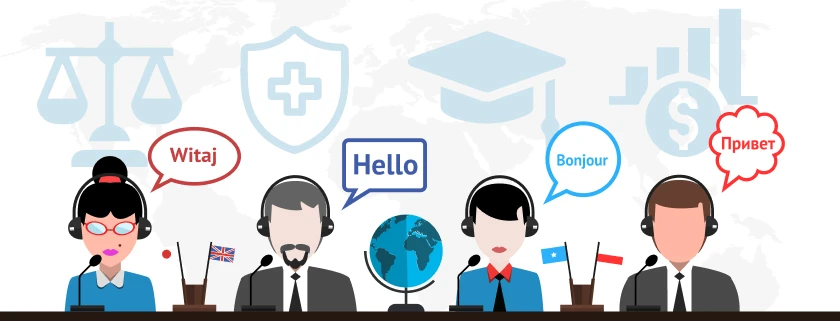
In the modern hyper-connected economy, the traditional barriers to trade—distance and logistics—have largely been dismantled by technology. However, a more subtle and formidable barrier remains: the "Cultural-Linguistic Gap." For a global enterprise, expanding into a new continent isn't just about moving products; it is about moving ideas, values, and trust. To navigate this complexity, forward-thinking corporations are moving beyond simple word-for-word translation. They are increasingly relying on language consulting services to act as their strategic compass in uncharted cultural territories.
Beyond Translation: The Strategic Shift
Most businesses begin their international journey by seeking a reliable translation company to handle their manuals, websites, or legal contracts. While this is a necessary first step, sustainable growth requires a deeper level of integration. Translation tells a customer "what" you are selling, but consulting tells them "who" you are and "why" they should care. By utilizing language consulting services, an enterprise can audit its brand voice across different regions, ensuring that its core message doesn't conflict with local sensitivities or historical contexts. This high-level oversight prevents the costly marketing blunders that often occur when a brand tries to force a "one-size-fits-all" message onto a diverse global audience.
Language as a Catalyst for Operational Efficiency
A global corporation is a massive machine with parts moving in different languages. Internal communication—ranging from HR policies to safety protocols—must be crystal clear to avoid operational friction. A specialized language services company provides the infrastructure for this clarity. When these services are combined with strategic consulting, they help streamline workflows by standardizing terminology across all departments. This "Linguistic Governance" ensures that an engineer in Germany, a marketer in Brazil, and a CEO in Japan are all literally and figuratively on the same page. This internal alignment is the bedrock of sustainable growth, as it reduces the risk of errors and improves overall employee engagement.
Building Authentic Cultural Authority
In a world saturated with generic content, authenticity is the ultimate currency. Consumers today are highly sophisticated; they can instinctively sense when a brand is merely "using a dictionary" versus when it truly understands their culture. An expert language services company doesn’t just translate; it "transcreates." However, the strategy behind this transcreation is dictated by language consulting services. These consultants analyze local idioms, social trends, and even the emotional weight of certain colors or symbols. This allows the enterprise to build "Local Authority," making the brand feel like a native participant in the local market rather than a foreign intruder.
Mitigating Risk in Complex Legal Landscapes
Every new market brings a new set of legal and regulatory challenges. A single misinterpreted clause in a cross-border contract can lead to years of litigation. While a standard translation company is essential for accuracy, the consulting aspect helps in identifying potential linguistic "landmines" in legal frameworks. Consultants provide insight into how specific legal terms are perceived by local judiciaries, adding a layer of "Linguistic Risk Management" to the company’s expansion strategy. This proactive approach saves millions in potential legal fees and protects the company's long-term reputation.
The ROI of Linguistic Intelligence
Ultimately, the investment in high-level linguistic strategy pays for itself through increased market share and customer loyalty. When an enterprise treats language as a core business asset rather than a back-office expense, it unlocks new levels of growth. The synergy between a technical translation company and a strategic language services company creates a "Linguistic Intelligence" that competitors often lack. This intelligence allows the brand to pivot quickly, respond to local crises effectively, and identify emerging market opportunities before they become mainstream.
In conclusion, the journey to global dominance is paved with words. Sustainable growth for global enterprises is no longer just about financial capital; it is about "Linguistic Capital." By integrating language consulting services into the very heart of their international strategy, corporations ensure that they don't just reach the world—they resonate with it. In the global marketplace, the companies that thrive are those that realize that to lead the world, you must first learn to listen to it, and then speak its language with absolute precision and respect.