
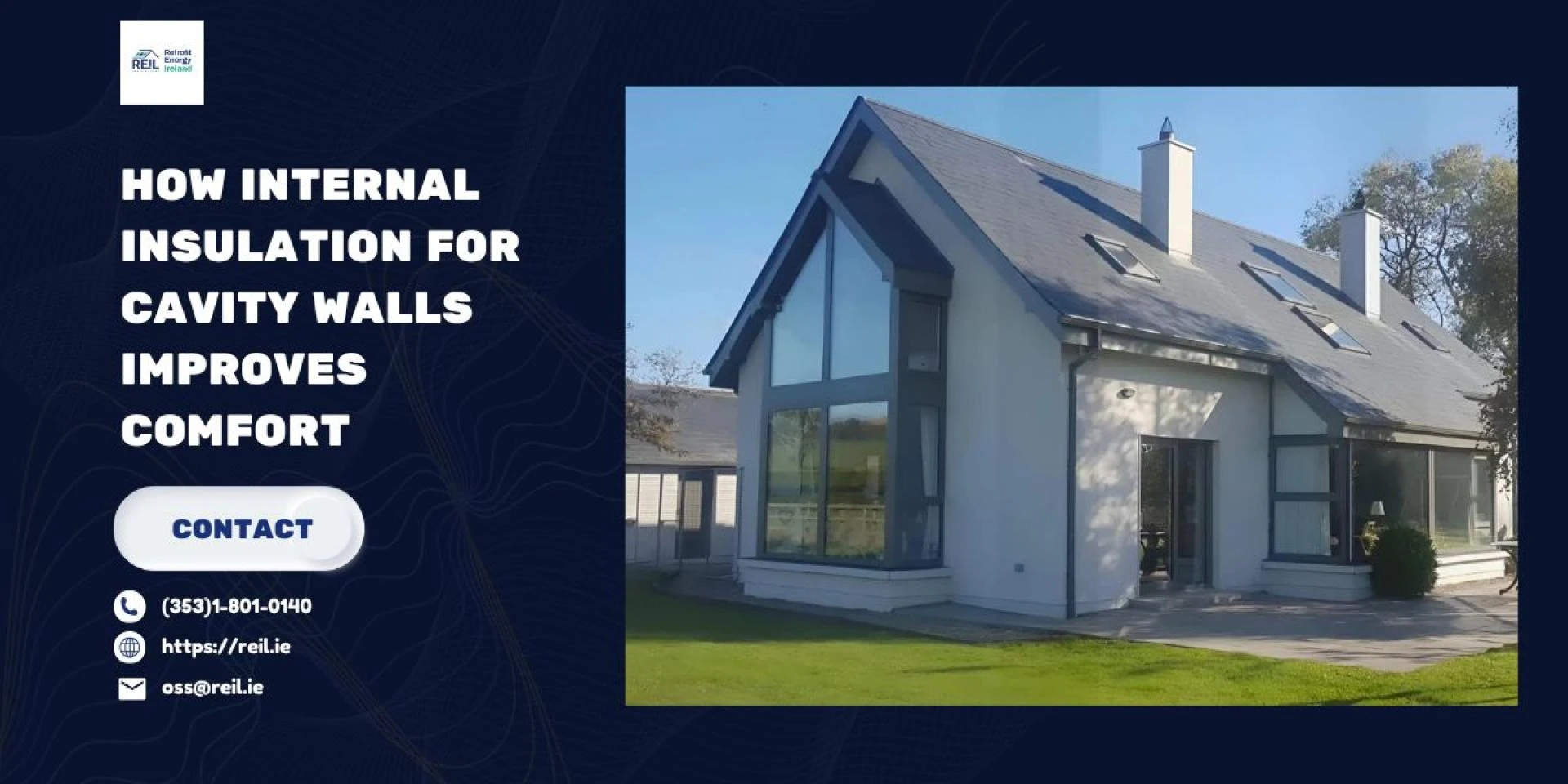
These bills peak and drop with the seasons, but still, homeowners find themselves dealing with uneven temperatures and continuous drafts. The issue usually does not stem from the heating or cooling system but from the walls. Cavity walls were initially constructed to minimize water entry, but since they are not properly insulated, they let in too much heat loss in winter and too much heat gain in summer. Herein lies the Internal Insulation for Cavity Walls, which is, in a literal sense, a game-changer.
By adding insulation to the interior wall cavities, you are able to transform how your house will feel during the year. Besides reducing energy wastage, insulation has also enabled predictability of the indoor climate to promote comfort and efficiency. We can unpack how it works, what to expect, and why it can be combined with other techniques, such as installing insulation between rafters to magnify the outcomes.
Why Cavity Wall Insulation Matters
Walls are some of the biggest surfaces in a house. Left uninsulated, they behave like giant heat conveyors. Studies have indicated that nearly one-third of building heat loss is through walls alone. Even the finest furnace or air conditioner cannot keep up where the building envelope fails to retain the conditioned air.
Internal insulation remedies this shortcoming by lining or filling internal insulation for cavity walls. The insulation sets up a barrier that reduces the flow of heat, retaining warmth indoors in winter and keeping out excess heat in summer. The outcome is less dependence on mechanical systems and more uniformity of indoor comfort.
Understanding Internal Insulation for Cavity Walls
All insulations are not created equal. External wall insulation adds a layer of protection on the exterior of a building. A composite is placed into the inner wall of the cavity, generally panel or board-fastened directly to the wall. It comes in handy especially where the outside insulation is not feasible due to the constraints of architecture or visual considerations or the constraints of a planning department.
Materials for internal insulation for cavity walls may also differ. Some employ rigid boards of high thermal resistance, others mineral wool or foam products. The selection is based on the design of the building, budget, and desired level of performance.
Advantages Beyond Temperature
The most apparent benefit of cavity wall insulation is control over temperature, but the advantages go further:
Lower Utility bills: An insulated house uses less energy or electricity in order to make it comfortable.
Better IAQ: Insulation inhibits condensation that typically results in mold, owing to the inhibition of drafts and cold spaces.
Noise Suppression: Insulated walls can make the inside environment quieter, and the sound barrier is accomplished.
Sustainability: This will reduce the carbon footprint of your home by consuming less energy, and this can serve a larger environmental agenda.
Insulation can also provide these advantages as a life-long and financial payoff.
Comfort in Practice: Real Life Impact.
Suppose it is mid-January, and you are in your home. A room in an insulation-less house is warm, and another room is so cold that it is even reasonable to put on a sweater. There is an infiltration of drafts through corners, and heating cycles are run through their paces. Those extremes are mostly removed with insulation in the walls. There are no hot or cold spots within the rooms, and the rooms are always comfortable.
The same is the case during summer. Rather than fighting against relentless heat from walls, your air conditioning runs in shorter, more effective cycles. You remain cooler with reduced system stress, maximizing the length of the equipment's lifespan while reducing monthly payments.
When combined with Roof and Rafter Insulation
Although cavity walls are important, they are not the sole structural weakness in a building envelope. Warm air rises and causes heat loss through the roof as well, usually at a greater rate. This is why installing insulation between Rafters is an essential supplement to wall insulation.
There is added insulation along rafters to cut down on heat transfer in the roof, complementing internal insulation for cavity walls to form a complete shell. Together, they mean fewer hotspots, less condensation, and a much more consistent indoor climate. Homeowners who treat walls and roofs simultaneously tend to experience the most striking results in terms of comfort and efficiency.
What to Consider Before Installation
While insulation may seem simple, some things should drive your decisions:
1. Wall Condition: Water-damaged or water-affected walls must be repaired prior to insulation being installed. Otherwise, water can be trapped and lead to other problems.
2. Material Choice: Rigid boards, spray foam, and mineral wool all operate in distinct ways. A professional analysis can identify the correct product for your house.
3. Space Planning: Internal insulation minimally decreases the size of the room, which can affect furniture location or design options.
4. Cost vs. Savings: Although there is an initial cost, reduced bills and added comfort normally cover the expense in the long run.
Common Misconceptions
A few owners fear that internal insulation causes rooms to be stuffy or limits circulation. In fact, installed properly, insulation enhances air quality by controlling condensation and minimizing mold threats. Others believe that it is only worth it in older houses, but new homes also lose energy through poorly insulated walls. Even slight enhancements bring noticeable savings and comfort benefits.
Maintenance and Longevity
Once in place, cavity wall insulation needs minimal maintenance. Unlike devices that require ongoing servicing, insulation works silently in the background. From time to time, checks for moisture or splitting of the wall surface ensure ongoing performance. Combined with roof and floor insulation, the system remains effective for decades with little significant intervention.
The Bigger Picture: Energy Efficiency as a Lifestyle
Insulating walls is more than an upgrade for the home, but a step in a larger cultural movement towards energy-aware living. By decreasing fossil fuel reliance, insulated homes are part of national efforts toward energy efficiency and assist families in planning for higher energy prices. This forward-thinking measure harmonizes comfort with responsibility, demonstrating that choices made for the planet frequently enhance rather than limit everyday life.
Final Thoughts
Cavity wall insulation has much more to do than prevent heat loss. It establishes a solid inside atmosphere in which comfort is predetermined, power expenses are controllable, and air is healthier. Combined with other additions like the installing insulation between Rafters, the end result can transform the way a home is utilized during the entire year.
In case you are thinking about improving your home setting, it all starts with the walls. The investment might be understated, but the effect will be experienced daily, seasonally, and in every nook and cranny of your home.