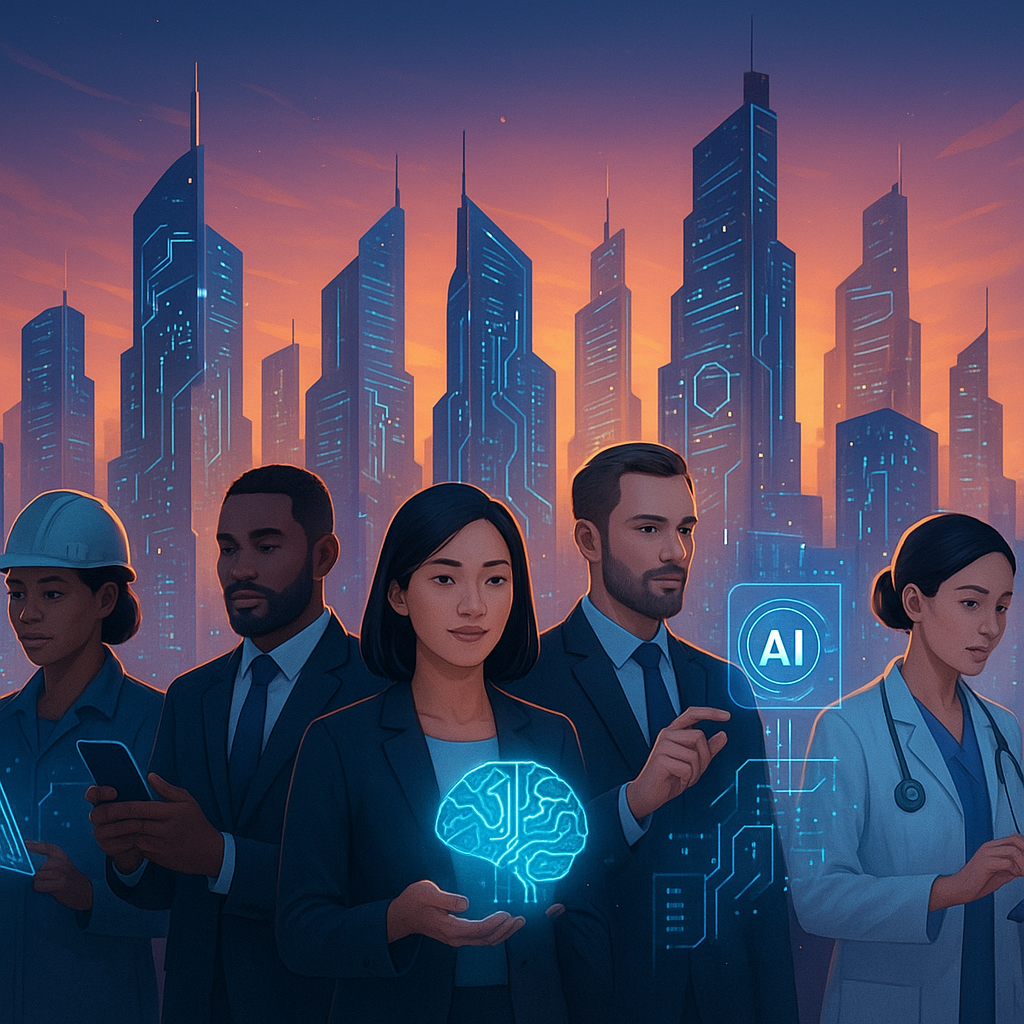
Agentic AI is revolutionizing how businesses operate across every sector. Unlike traditional AI systems that respond to specific commands, agentic AI systems work independently, making decisions, adapting to changing circumstances, and solving complex problems without constant human intervention. Today, companies worldwide are deploying agentic AI development solutions to streamline operations, reduce costs, and gain competitive advantages.
What Is Agentic AI Development and Why It Matters Now?
Agentic AI development refers to creating intelligent systems capable of independent action toward defined goals. These agents perceive their environment, evaluate options, execute decisions, and learn from outcomes. Unlike conventional AI that relies on rigid rule sets, agentic AI systems adapt and improve performance through experience.
Organizations today recognize that agentic AI development services provide a competitive edge. The technology enables automation at scale while maintaining flexibility to handle unexpected scenarios. Companies across finance, healthcare, manufacturing, and retail are investing heavily in agentic AI development solutions because traditional automation simply cannot match the intelligence and adaptability these systems provide.
The business impact is measurable. Industries report reduced operational costs, faster decision-making, improved customer experiences, and accelerated product development. This is why agentic AI development has shifted from research labs into mainstream enterprise environments.
Financial Services and Banking: Automating Complex Decisions
The financial sector leads adoption of agentic AI development technology. Banks and investment firms deploy these systems to process transactions, detect fraud, manage risk, and provide investment recommendations at speeds and scales impossible for human teams.
Fraud Detection and Prevention
Financial institutions use agentic AI development solutions to monitor millions of transactions in real-time. These agents analyze payment patterns, identify suspicious behavior, and flag potential fraud before it occurs. Unlike static rule-based systems, agentic AI learns from each transaction, continuously improving its ability to spot emerging fraud tactics. A major advantage is that these systems work 24/7 without fatigue, catching threats across time zones and currencies instantly.
Algorithmic Trading and Portfolio Management
Investment firms employ agentic AI agents to manage trading decisions and portfolio allocation. These systems evaluate market data, economic indicators, and geopolitical events in milliseconds, executing trades and rebalancing portfolios without human bottlenecks. The agents adapt to market volatility, adjust risk exposure in real-time, and execute strategies that would take human analysts weeks to execute manually. This continuous optimization has helped many financial institutions achieve better returns while reducing operational overhead.
Customer Service and Credit Assessment
Banks deploy agentic AI to handle customer inquiries, process loan applications, and conduct credit assessments. These agents gather customer information, evaluate creditworthiness against complex criteria, and make lending decisions instantaneously. The system answers customer questions, processes routine requests, and escalates complex issues to human specialists. This reduces application processing time from days to minutes while improving customer satisfaction.
Healthcare: Improving Diagnostics and Patient Care
Healthcare organizations apply agentic AI development to enhance diagnostic accuracy, optimize treatment plans, and manage patient care workflows. Medical professionals partner with agentic AI agents to deliver better outcomes at scale.
Diagnostic Support and Medical Imaging Analysis
Hospitals use agentic AI systems to analyze medical imaging including X-rays, MRI scans, and CT images. These agents detect abnormalities, compare current images to historical records, and flag potential conditions for physician review. The systems work alongside radiologists, reducing the time needed for image interpretation while catching subtle indicators human eyes might miss. The agents continuously learn from diagnosed cases, improving accuracy with each analysis. This collaborative approach between AI agents and medical professionals leads to earlier detection and better patient outcomes.
Treatment Planning and Personalized Medicine
Healthcare providers deploy agentic AI to recommend personalized treatment plans based on individual patient data. These agents review medical history, genetic information, current medications, and clinical guidelines to suggest optimal treatment approaches. The system adapts recommendations as patient conditions evolve, monitoring treatment effectiveness and proposing adjustments when needed. For complex cases involving multiple conditions, agentic AI agents synthesize information faster than any individual physician, enabling truly personalized medicine at scale.
Administrative Operations and Patient Scheduling
Hospitals use agentic AI development solutions to manage scheduling, insurance verification, and administrative workflows. These agents coordinate appointments across departments, verify patient insurance coverage, and manage bed allocation in real-time. The system reduces no-shows by intelligently scheduling appointments based on patient availability and travel time, improving hospital efficiency and patient experience simultaneously.
Manufacturing and Supply Chain: Optimizing Operations
Manufacturing companies and logistics providers deploy agentic AI to optimize production, reduce waste, and streamline supply chains. These agents monitor equipment health, manage inventory, and coordinate complex logistics networks.
Predictive Maintenance and Equipment Monitoring
Factories use agentic AI agents to monitor machinery continuously, predicting failures before they occur. These systems analyze vibration data, temperature readings, and operational patterns to detect subtle signs of equipment degradation. When the agent predicts potential failure, it automatically schedules maintenance before breakdown happens. This prevents costly production stoppages and extends equipment lifespan. Manufacturers report significant reductions in unplanned downtime and maintenance costs by implementing agentic AI monitoring systems across their production facilities.
Inventory Management and Demand Forecasting
Supply chain managers deploy agentic AI to optimize inventory levels across warehouses and distribution centers. These agents forecast demand by analyzing sales patterns, seasonal trends, and market signals, automatically adjusting inventory orders to match predicted demand. The system reduces excess stock while preventing shortages, improving cash flow and customer satisfaction. In complex supply networks with hundreds of SKUs across multiple locations, agentic AI agents manage inventory far more efficiently than traditional systems, adapting quickly to demand changes.
Production Scheduling and Quality Control
Manufacturing facilities use agentic AI to optimize production schedules, allocating resources efficiently and minimizing changeover time between products. Quality control agents inspect products, identify defects, and adjust production parameters automatically to maintain consistency. These agents work continuously, improving production efficiency and reducing defect rates across shifts and production lines.
Retail and E-commerce: Personalizing Customer Experience
Retail companies leverage agentic AI development to personalize shopping experiences, optimize pricing, and manage inventory across online and physical channels.
Personalized Product Recommendations
E-commerce platforms use agentic AI agents to deliver personalized product recommendations to each customer. These systems analyze browsing history, purchase patterns, and customer preferences to suggest products likely to match individual interests. Unlike static recommendation engines, agentic AI agents adapt in real-time to customer behavior, continuously learning from purchases and interactions. This personalization increases conversion rates, improves customer satisfaction, and drives repeat purchases through genuine relevance.
Dynamic Pricing and Inventory Optimization
Retailers deploy agentic AI to adjust pricing dynamically based on demand, competitor prices, and inventory levels. These agents analyze market conditions continuously, recommending price adjustments that maximize revenue while remaining competitive. For inventory, agents coordinate stock across multiple channels, automatically transferring inventory from slow-moving locations to high-demand areas. This optimization reduces overstock and stockouts while improving profitability.
Customer Service Automation
Online retailers use agentic AI agents to handle customer support at scale. These agents answer product questions, process returns, resolve complaints, and track orders intelligently. They understand customer intent, provide relevant solutions, and escalate complex issues to human agents only when necessary. This provides customers with instant support while reducing labor costs significantly for support teams.
Energy and Utilities: Improving Grid Management
Energy companies apply agentic AI development to optimize power distribution, predict equipment failures, and reduce energy consumption. These applications improve reliability and sustainability across electrical grids and utility networks.
Smart Grid Management and Load Balancing
Utility companies deploy agentic AI agents to balance electricity supply and demand across power grids. These systems monitor consumption patterns in real-time, predict peak demand periods, and coordinate power generation and distribution accordingly. The agents integrate renewable energy sources efficiently, managing the variability of solar and wind power by automatically switching between energy sources. This intelligent management reduces waste, stabilizes grid voltage, and improves overall system reliability.
Equipment Maintenance and Outage Prevention
Power companies use agentic AI to predict equipment failures and prevent outages. Agents monitor transformer health, cable conditions, and substation equipment continuously, identifying degradation patterns early. When failure is predicted, maintenance is scheduled proactively, preventing cascading blackouts and service interruptions. For consumers, this means more reliable power supply. For utilities, it means reduced emergency repair costs and improved customer satisfaction.
Transportation and Logistics: Route Optimization and Fleet Management
Logistics companies and transportation providers use agentic AI to optimize routes, manage fleets, and reduce fuel consumption. These applications directly impact operational costs and environmental sustainability.
Route Optimization and Delivery Planning
Delivery companies deploy agentic AI agents to plan optimal delivery routes considering traffic conditions, package weights, delivery windows, and vehicle capacity. These agents adapt routes in real-time as new orders arrive and traffic conditions change, finding efficiencies humans cannot calculate manually. The result is faster deliveries, reduced fuel consumption, and lower delivery costs. For customers, it means more accurate delivery estimates and faster service.
Autonomous Vehicle Operations
Companies developing autonomous vehicles use agentic AI extensively. These agents control vehicle navigation, detect obstacles, interact with traffic signals, and make split-second safety decisions. The agents learn from millions of miles of driving data, continuously improving their ability to handle diverse road conditions and unexpected situations. This technology promises to reduce accidents caused by human error while optimizing fuel consumption and traffic flow.
Telecommunications: Network Optimization and Customer Service
Telecom companies apply agentic AI to optimize network performance, manage resources, and provide proactive customer support. These applications keep networks running smoothly and customers satisfied.
Network Performance Management
Telecom providers deploy agentic AI agents to monitor network performance continuously, detecting congestion, identifying problems before they escalate, and allocating bandwidth intelligently. These agents optimize network resources based on real-time usage patterns, ensuring consistent performance during peak times. The result is faster internet speeds, fewer dropped calls, and more reliable connectivity for customers.
Proactive Customer Support
Telecom companies use agentic AI to identify customer problems before customers notice them. Agents monitor service quality metrics, detect unusual patterns indicating potential issues, and proactively reach out to customers with solutions. This reduces customer frustration and prevents churn by addressing problems before they impact the customer experience.
Legal and Compliance: Document Analysis and Risk Assessment
Law firms and corporations deploy agentic AI to analyze legal documents, conduct due diligence, and assess regulatory compliance. These applications reduce the time and cost associated with legal work while improving accuracy.
Contract Analysis and Due Diligence
Law firms use agentic AI agents to review contracts, identifying key terms, potential risks, and non-standard clauses. In mergers and acquisitions, these agents analyze thousands of documents, extracting relevant information and flagging issues for attorney review. What traditionally takes weeks, agentic AI completes in hours, freeing attorneys to focus on strategy and negotiation rather than document review.
Regulatory Compliance Monitoring
Corporations deploy agentic AI to monitor regulatory changes and assess compliance across operations. These agents stay current with changing regulations, evaluate company practices against requirements, and alert compliance teams to gaps. This reduces regulatory risk and helps companies stay ahead of compliance requirements.
The Real Business Impact of Agentic AI Development
Companies implementing agentic AI development solutions report measurable improvements across multiple dimensions. Operational efficiency increases dramatically as agents handle routine tasks at scale. Decision-making speed improves because AI agents analyze information faster than human teams. Cost reduction occurs through labor optimization and waste reduction. Employee satisfaction often increases as workers are freed from repetitive tasks to focus on strategic work requiring human judgment.
The technology also enables new business models. Companies can offer services at scale that were previously impossible economically. Startups can compete with established players by leveraging agentic AI to minimize operational overhead. The barrier to market entry lowers as AI agents substitute for specialized human expertise.
Challenges and Considerations
Despite the benefits, organizations implementing agentic AI face real challenges. Integrating AI agents into existing systems requires careful planning and technical expertise. Data quality directly impacts agent performance—poor data leads to poor decisions. Organizations must establish governance frameworks ensuring agents operate within defined parameters and maintain human oversight of critical decisions. Security and privacy concerns require attention because AI agents access sensitive business data. Finally, employees worry about job displacement, requiring thoughtful change management and retraining programs.
The Future of Agentic AI Across Industries
Agentic AI development is moving from experimental implementations toward mainstream adoption. As technology matures and costs decrease, more companies will deploy these solutions. Industries just beginning to explore agentic AI include agriculture, real estate, and education, where the technology promises significant disruption.
The evolution continues. Multi-agent systems where multiple AI agents coordinate toward common goals represent the next frontier. These systems could manage entire business processes autonomously, with human oversight rather than human operation. Regulatory frameworks governing AI agents will mature, providing clearer guidelines for responsible deployment. This combination of technological advancement and regulatory clarity will accelerate adoption significantly.
Organizations that build expertise in agentic AI development now will lead their industries tomorrow. Those waiting for the technology to stabilize risk falling behind competitors who are already realizing benefits. The question is not whether your industry will adopt agentic AI, but when and how effectively your organization will implement it.
Key Takeaways
What You Need to Know About Agentic AI Today
- Agentic AI is operational today across finance, healthcare, manufacturing, retail, energy, transportation, and other major industries
- Real business benefits include improved efficiency, faster decisions, cost reduction, and new service capabilities
- Successful implementation requires technical expertise, quality data, clear governance, and thoughtful change management
- The technology continues evolving toward more autonomous systems with improved capabilities and reduced costs
- Early adopters gain competitive advantages that become harder for later entrants to overcome
Industries worldwide are discovering that agentic AI development delivers measurable value. Whether you're managing operations, serving customers, or optimizing supply chains, agentic AI solutions offer opportunities to work smarter, faster, and more profitably. The companies implementing these systems today are already outpacing competitors using traditional approaches. Automate Decision-Making with Agentic AI.