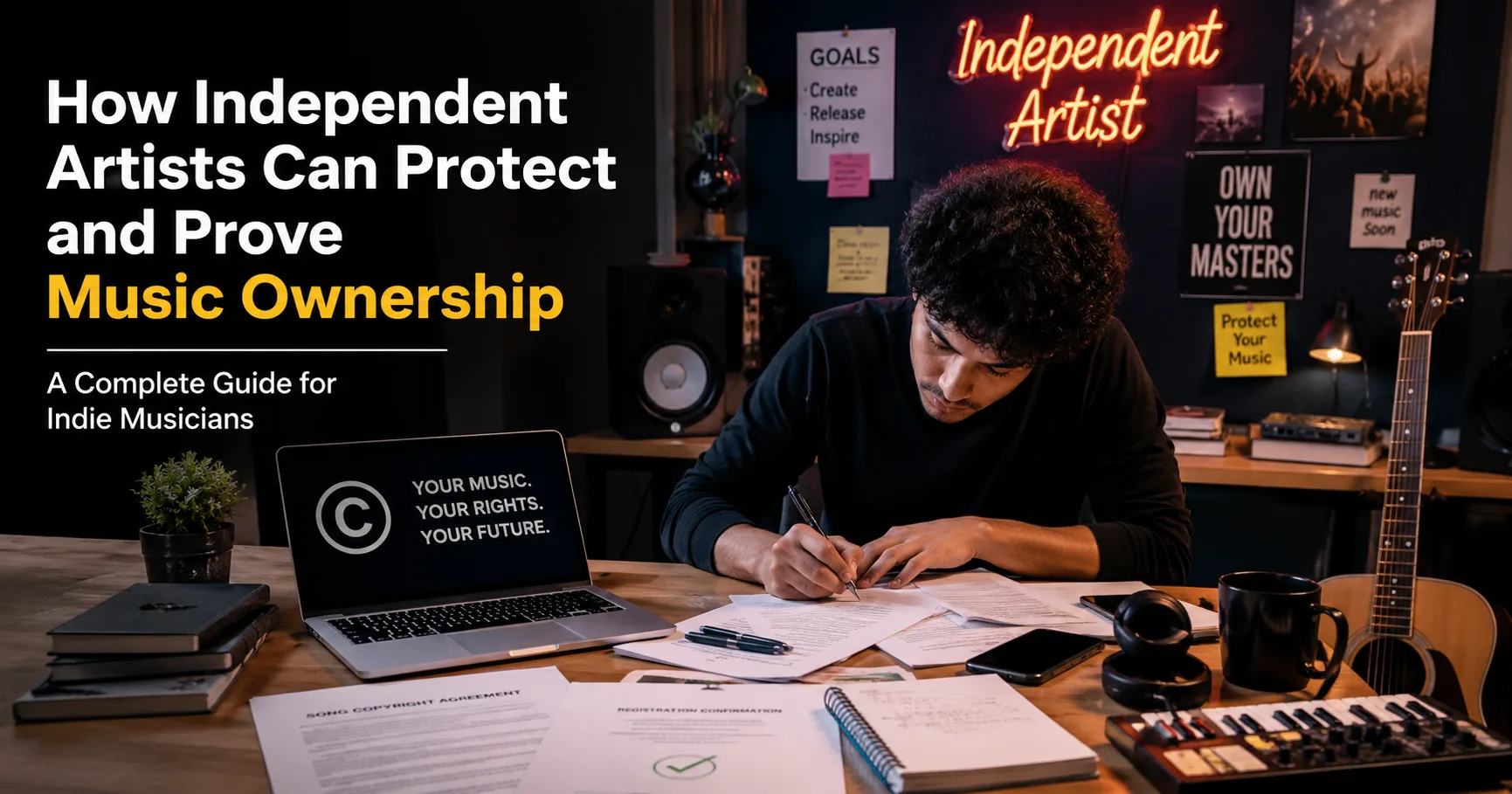
You wrote the song at 2 a.m. You recorded it in your bedroom. You poured your whole heart into it. But if someone steals it tomorrow — can you actually prove music ownership legally?
For modern indie musicians, protecting songs is no longer optional. In today’s digital era, AI-generated music, content theft, fake uploads, and viral reposts are becoming common across streaming platforms. If you want to build a long-term career or even go viral as an indie music artist, protecting your work should be one of your top priorities.
Many artists focus only on promotion while ignoring music copyright protection and ownership verification. But ownership is what protects your royalties, your identity, and your future income.
Here’s everything independent artists need to know about securing and proving ownership of their music.
Why Music Ownership Matters More Than Ever
Ownership is not just about getting credit. It directly affects your income, control, and long-term career growth.
When you own your music, you decide:
- Who can use your songs
- Where your music gets distributed
- Whether your music can be licensed for films, games, or ads
- Who earns royalties from streams and performances
- How your catalog grows as a business asset
Without proper music copyright protection, artists risk losing royalties, facing ownership disputes, or discovering their music uploaded elsewhere without permission.
As streaming platforms become more crowded, understanding independent artist music rights is becoming essential for survival.
Also Read - How to Go Viral as an Indie Music Artist in the USA Without a Label.
Understanding the Two Types of Music Ownership
Before learning how to copyright music, artists need to understand what they actually own.
1. Composition Rights (Publishing Rights)
Composition rights refer to the songwriting itself — not the recording. This includes:
- Lyrics
- Melody
- Song structure and arrangement
If you wrote the song, you own the composition, even if another artist records or performs it. These rights are connected to publishing royalties generated from streaming, radio plays, live performances, sync licensing, and covers.
For artists focused on long-term independent artist music rights, publishing ownership is extremely valuable because songs can continue generating income for decades.
2. Master Recording Rights
Master rights refer to the actual recorded version of the song distributed on platforms like Spotify, Apple Music, and YouTube.
If you recorded and released the track independently, you usually own the master recording. Master owners control how the recording is distributed, monetized, licensed, and used commercially.
One of the biggest advantages of being independent is keeping both publishing and master ownership — something many major-label artists often give away through contracts.
Understanding these two rights is one of the first steps toward properly protecting and managing your music career.
Step 1: Learn How to Copyright Music Properly
Many artists think uploading a song to Spotify automatically protects it. That is false.
Technically, copyright exists once an original work is created and recorded. However, legal enforcement becomes much easier when you officially register it.
If you truly want to prove music ownership, registration matters.
Register Your Music Officially
Depending on your country:
- United States → US Copyright Office
- India → Copyright Office of India
- United Kingdom → Intellectual Property Office
Official registration helps with:
- Legal ownership records
- Copyright disputes
- Royalty claims
- Licensing protection
- Court enforcement
This is one of the most important steps in proper music copyright protection.
What Should You Register?
Register separately:
- Lyrics
- Musical composition
- Master recording
Artists serious about independent artist music rights should never skip this step.
Step 2: Create Proof of Ownership From Day One
Official registration is important, but artists should also create a strong digital paper trail. This helps strengthen your ability to prove music ownership if disputes happen later.
Practical ways to timestamp your work:
Registration is essential, but a strong paper trail supports your claim even before registration is processed.
- Email yourself the lyrics, demos, or final files. Email timestamps are admissible as evidence.
- Upload to a private cloud folder (Google Drive, Dropbox) — this creates a timestamped record.
- Use a notary for major releases. Getting a song notarized before release is inexpensive and creates a legal record.
- Send yourself a physical copy via registered post (the "poor man's copyright") — while not legally ironclad in most countries, it adds to your overall evidence.
- Versions control everything. Save drafts with dates. Keep voice memos. That 3-month-old rough demo could one day prove you wrote the song before someone else claims they did.
Step 3: Register With a Music Rights Management System
One of the smartest moves independent musicians can make is joining a music rights management system. These organizations help you manage your rights, track public performances, and collect royalties globally. They also strengthen your music copyright protection by creating official records of your work.
Major Music Rights Organizations:
- ASCAP
- BMI
- SESAC
- IPRS
- PRS for Music
What These Systems Do:
- Track public performances of your songs worldwide
- Collect and distribute performance royalties
- Maintain official ownership records of your music
- Help ensure you get paid from streaming, radio, live shows, and sync licensing
A professional music rights management system not only supports royalty collection but also strengthens your ability to prove music ownership in case of disputes or claims.
Step 4: Use Metadata for Verified Music Ownership
Every audio file can carry invisible data called metadata — artist name, song title, ISRC code, copyright notice, and more. Most artists ignore this. Don't.
Why metadata matters: When your song travels across the internet — shared, reuploaded, embedded in videos — the metadata travels with it. It's how streaming platforms, sync licensing platforms, and content ID systems identify your music as yours.
What to embed in every file:
- Artist name
- Song title
- Year of creation
- Copyright notice: © [Year] [Your Name]. All rights reserved.
- ISRC code (more on this below)
Use software like MP3Tag (free), iTunes, Logic Pro, or Adobe Audition to embed metadata before uploading anywhere.
Step 5: Get an ISRC Code for Every Song
An ISRC (International Standard Recording Code) is a unique 12-character identifier assigned to a specific recording — like a barcode for your song.
Every song you release should have one.
Why it matters:
- Tracks your song across platforms globally
- Helps collect royalties from streaming and broadcast
- Proves the recording is officially documented under your name
How to get one in the US:
The US ISRC Agency is managed by RIAA (Recording Industry Association of America). You have two main routes:
- Through your distributor (easiest) — Platforms like DistroKid, TuneCore, CD Baby, and Amuse assign ISRC codes automatically when you upload your music. This is the most common path for indie artists.
- Directly from the ISRC Agency — Register at usisrc.org to get your own ISRC registrant code, which lets you self-assign codes to all your recordings. This is ideal if you're releasing frequently or running your own label imprint — you pay a one-time registration fee rather than relying on a distributor each time.
Pro tip: If you ever switch distributors, make sure to carry your original ISRC codes with you. Each recording should keep the same ISRC for life — reassigning new codes to the same recording creates tracking gaps and can result in lost royalties.
Common Music Ownership Mistakes Artists Make
“Posting on Instagram proves ownership.”
Not fully. Social media timestamps help, but they are not complete legal proof.
“My producer owns the song automatically.”
Only if agreements say so.
“I don’t need copyright registration.”
Wrong. Registration dramatically improves your ability to enforce rights legally.
“Labels protect everything.”
Many labels own masters themselves. Independent ownership can often provide more long-term control.
Understanding these realities is critical for protecting independent artist music rights.
Quick Checklist Before Releasing Music
Before every release, make sure you have:
- Copyright registered with your national copyright office
- Song registered with your PRO (IPRS, ASCAP, BMI, etc.)
- ISRC code assigned to the recording
- Metadata embedded in the audio file
- Split sheet signed (if collaboration)
- Timestamped drafts and demos saved
- Distribution agreement reviewed
This creates stronger verified music ownership and improves your overall music copyright protection strategy.
Final Thoughts
Your songs are not just creative projects — they are intellectual property assets that carry long-term value. The artists who build sustainable careers are not only the most talented, but also the ones who understand ownership, royalties, contracts, and proper protection systems.
Learning how to copyright music correctly gives independent artists greater control over their income, distribution, and creative freedom. It also reduces the risk of disputes and unauthorized usage.
In today’s digital era, where anyone can upload, copy, remix, or redistribute content instantly, strong music copyright protection and the ability to prove music ownership give artists a real competitive advantage.
Protect your music early, document everything, and take full control of your masters and rights. Because independent artists who understand and secure their ownership are the ones who ultimately control their careers and long-term success.