Composite materials already play a major role in modern engineering. Manufacturers rely on them because they combine different materials to create better performance. These materials often provide high strength while remaining lightweight.
Because of this balance, industries such as aerospace, automotive manufacturing, electronics, and construction use composite systems in many structural and functional products.
However, traditional composites still face several limitations. For example, some materials struggle to distribute mechanical stress effectively.
Others may trap heat or lack electrical conductivity. Over time, these limitations can reduce performance or shorten product lifespan. Therefore, engineers constantly search for advanced additives that improve composite materials without increasing weight.
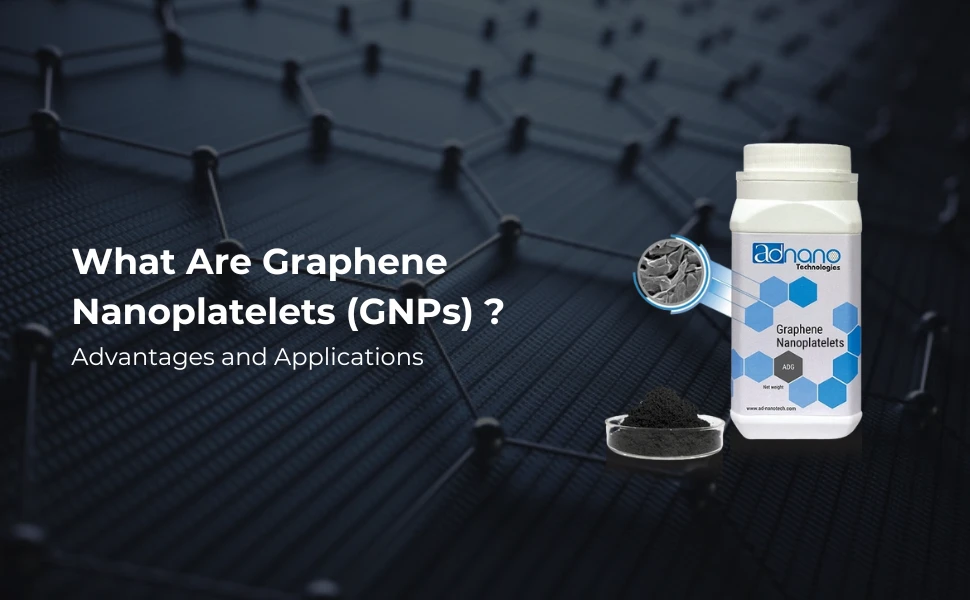
One promising solution is Graphene nanoplates (GNP’s). These nanoscale carbon structures offer exceptional strength, thermal conductivity, and electrical performance. Even when manufacturers add small amounts, the overall material properties can improve significantly.
Because of these advantages, many industries now explore graphene-based reinforcement technologies. When engineers introduce these nanosheets into polymers, resins, or metal matrices, they create composite materials that perform better in demanding environments.
The following sections explain how GNP improves composite systems and why they have become an important development in modern materials science.
Structure and Characteristics of Graphene Nanoplatelets
Understanding the structure of raphene nanoplatelets helps explain why they perform so well in composite materials. These materials consist of several graphene layers stacked together in thin plate-like structures. Each graphene layer contains carbon atoms arranged in a honeycomb pattern.
This unique structure gives the material several important advantages.
- First, the nanosheets provide a very large surface area. Because of this, they interact strongly with the surrounding materials inside the composite matrix.
- Second, the carbon lattice remains extremely strong. Even though the sheets are extremely thin, they maintain outstanding mechanical durability.
- Third, the layered shape allows the particles to disperse across the composite system. When properly distributed, they connect different parts of the material and improve structural stability.
In addition, GNP’s combine low weight with excellent physical properties. As a result, manufacturers can strengthen materials without increasing their mass.
These characteristics explain why GNPs attract significant attention in advanced materials research.
Why Composite Materials Need Advanced Reinforcement?
Composite materials already provide advantages compared with traditional materials such as steel or aluminum. By combining different substances, engineers can design materials with improved strength, flexibility, and durability.
For example, polymer composites offer lightweight performance, while fiber-reinforced materials improve structural stability. However, conventional reinforcement materials still present several challenges.
Glass fibers, mineral fillers, and other additives often increase the weight of the final product. In addition, these fillers sometimes fail to distribute stress evenly throughout the composite structure. As a result, materials may develop weak points under repeated mechanical loads.
Therefore, engineers look for reinforcement materials that can provide several benefits at the same time:
- Higher strength without increasing weight
- Improved resistance to cracks and fatigue
- Better heat transfer performance
- Enhanced electrical conductivity
Nanocarbon materials offer solutions to many of these problems. Because they operate at the nanoscale, they interact closely with the surrounding matrix. This interaction improves bonding and structural performance.
Consequently, manufacturers can design composite materials that perform better in demanding industrial environments.
Improving Mechanical Strength in Composite Systems
One of the most important advantages of graphene nanoplatelets involves mechanical reinforcement. When nanosheets disperse evenly inside a polymer or resin matrix, they create a strong internal network.
This network helps distribute mechanical stress across the entire structure.
Instead of concentrating force at a single location, the stress spreads throughout the composite.
Because of this, materials become more resistant to deformation and structural damage.
In addition, graphene reinforcement improves tensile strength. Studies show that even low filler concentrations can increase stiffness and load-bearing capacity.
Another important benefit involves crack resistance. Microcracks often appear in composite materials under repeated mechanical stress. However, graphene nanosheets interrupt crack propagation pathways. When cracks begin to form, the nanosheets absorb some of the mechanical energy and slow the crack growth.
Because of these properties, graphene reinforcement improves fatigue resistance. Composite materials last longer and maintain structural performance under demanding conditions.
For this reason, the aerospace and automotive industries actively explore graphene-based composite technologies.
Thermal Conductivity and Heat Management
Thermal management is a critical challenge in many engineering systems. Electronic devices, motors, and batteries all generate heat during operation. If materials cannot dissipate this heat effectively, temperatures may rise and reduce system reliability.
GNP’s offer excellent thermal conductivity. Heat moves quickly across their carbon lattice structure. When engineers incorporate these nanosheets into composite materials, they create pathways that help distribute heat throughout the structure.
Instead of accumulating in one location, thermal energy spreads evenly across the material.
This improved heat transfer provides several advantages.
Electronic components maintain safer operating temperatures. Battery systems experience less thermal stress. In addition, materials resist thermal degradation for longer periods.
Because of these benefits, graphene-enhanced composites are increasingly used in thermal interface materials, electronic housings, and heat-dissipating components.
Electrical Conductivity in Composite Materials
Many polymer materials naturally act as electrical insulators. While this property works well in some applications, other technologies require conductive materials. GNp’s help solve this challenge.
When nanosheets disperse inside the composite, they form conductive pathways. These pathways allow electrons to travel across the material.
As a result, engineers can transform insulating polymers into conductive composites.
This capability supports several important applications:
- Electromagnetic interference shielding
- Antistatic materials
- Conductive coatings and adhesives
- Sensors and electronic devices
Another advantage involves flexibility in design. Engineers can adjust conductivity levels by controlling filler concentration. Lower concentrations provide antistatic properties, while higher levels create highly conductive materials.
Because of this flexibility, GNPs support a wide range of electronic and industrial applications.
Lightweight Reinforcement and Industry Applications
Weight reduction remains an important goal in many engineering sectors. Aircraft manufacturers seek lighter materials to improve fuel efficiency. Electric vehicle designers want lightweight components that extend driving range.
Because the material offers extremely high strength relative to its weight, it strengthens composite systems without adding significant mass.
This property makes graphene reinforcement especially valuable in industries that demand both strength and lightweight performance. Several industries already explore graphene-enhanced composites.
- In aerospace engineering, manufacturers investigate graphene-reinforced structural panels and protective coatings. These materials improve durability while maintaining low weight.
- Automotive manufacturers use graphene composites in lightweight vehicle components and battery enclosures.
- Electronics companies develop thermally conductive materials for smartphones, laptops, and electronic modules.
- In construction, researchers examine graphene-enhanced cement and polymer composites to improve crack resistance and structural durability.
These examples demonstrate how GNP supports innovation across multiple industries.
Processing Considerations for Graphene Reinforcement
Although graphene nanoplatelets offer significant advantages, proper processing remains essential for achieving the best results.
First, manufacturers must ensure uniform dispersion within the matrix. Agglomerated particles reduce reinforcement effectiveness and may create weak points.
Second, surface modification techniques can improve bonding between graphene nanosheets and polymer matrices.
Third, engineers must carefully select the appropriate filler concentration. Small amounts may not provide noticeable improvements, while excessive loading may complicate manufacturing processes.
Finally, mechanical and thermal testing help confirm whether the composite material meets performance requirements for its intended application.
Conclusion
Composite materials continue to play a critical role in modern engineering. However, industries constantly seek ways to improve strength, durability, and efficiency without increasing weight.
Graphene nanoplatelets provide a powerful solution.
Their nanoscale structure enhances mechanical strength, thermal conductivity, and electrical performance at the same time.
Because of these advantages, engineers increasingly explore graphene reinforcement in advanced composite materials. From aerospace structures to consumer electronics, these materials support innovative designs and improved performance.
As manufacturing technologies continue to develop, graphene-enhanced composites will likely become even more common across many industries.
Ultimately, graphene nanoplatelets represent an important step forward in the development of stronger, lighter, and more efficient materials.