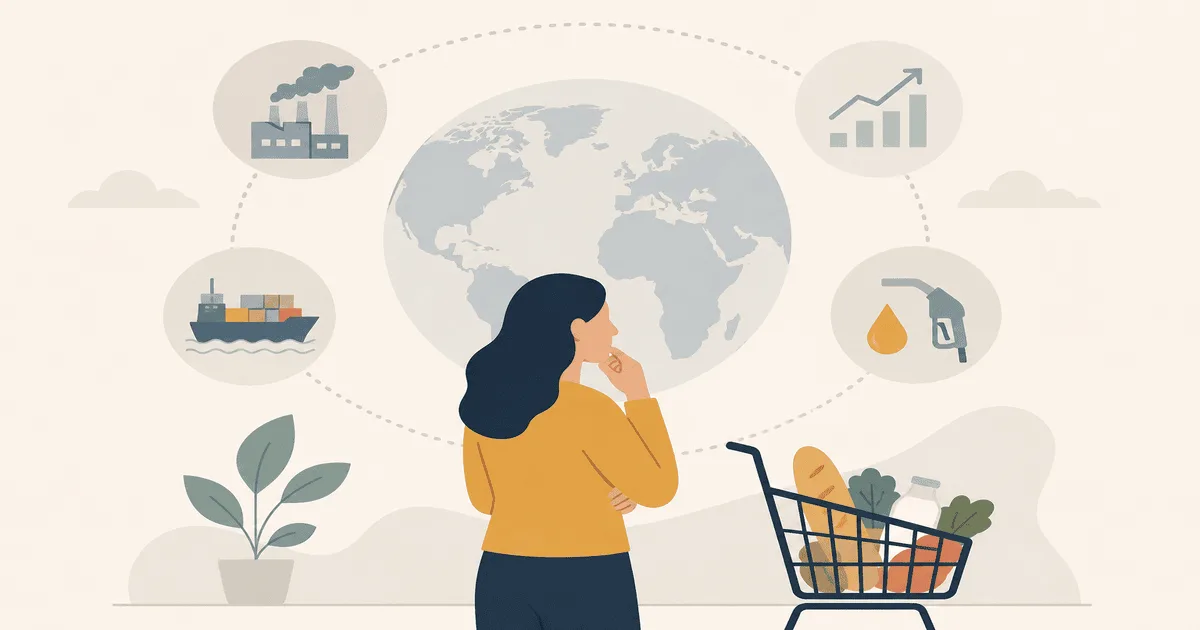
When we wake up in the morning we don’t think about oil prices or change in trade policies. Yet those events affect our day to day life, it affects how much we spend on fuel or the decision of buying a new phone.
Global events don't affect our day to day life in one night but the changes arrive gradually and quietly. Prices rise little by little at a time, delivery costs increase, so businesses have to adjust their prices as well and at the end the consumer has to pay more, and bear the impact that is slowly spreading across daily life.
Small Changes Add Up Faster Than We Realize
Let's take the fuel price example because it's one of the clearest things which affects the global price. When crude oil becomes more expensive due to any geopolitical tension, the transportation cost increases. Things like trucks or trains cost more to run, shipping becomes costlier, and business passes those expenses on to the customers. We can see how tension in the Middle East is affecting oil prices, which clearly shows us how quickly increased costs in the energy sector can affect the global economy.
The thing is it's not just limited to patrol stations. Grocery delivery, airline tickets and even online shopping is going to be affected by this and become more expensive over time.
Consumers may not immediately connect these price increases to international events, but they often share the same starting point.
News Shapes Spending, Even Before Prices Change
News plays a crucial role in letting people know about the changing economy. People can plan ahead and change their habits so that they can adapt to those changes.
When we see the news of inflation or trade disputes we can become more cautious and prepare in advance.
Today there are hundreds of news channels which are kind of overwhelming for the readers. Trusted platforms like Wow News 24x7 or TOI can help readers to stay informed about how global business developments and financial events eventually influence our day to day life.
By staying informed people can take action in advance and prepare themselves for what may be coming next.
Supply Chains Are Still Sensitive
During the pandemic we all have seen the shortage of products and how fragile global supply chain is.
Many products are built with multiple parts which come from different parts of the world. If something happens like shipping disruption, port congestion etc., in completely different part of the world can delay production somewhere else.
The easiest example would be a smartphone, a smartphone sold in the USA may contain parts from several countries. If shipping delays for some global reason or trade restrictions increase the costs, manufacturers usually increase the price for the end consumer.
Consumers might think the price just got increased without understanding the global journey behind it.
Exchange Rates Matter More Than People Think
Currency exchange rate influences purchasing power.
When a country’s currency get weak against the USD, importing goods will generally become more expensive. Products like oil, electronic devices to luxury products and even industrial equipment.
Many businesses import raw material from other countries and if the dollar price increases they increase the price of the product to protect their margin. Those higher prices eventually reach the consumer, even if the original reason was a shift in the global currency market.
This explains why exchange rate discussions are not just for economists. They have a direct connection to everyday spending.
Global Policies Can Reach Local Stores
Governments of different countries introduce new tariffs or trade restrictions for protecting local industries.
While these are aimed for a bigger picture and to achieve larger economic goals, businesses often face higher import costs temporarily. Eventually the product becomes more expensive for the consumers.
Recent discussions around tariffs and changing trade policies in major economies have shown how international decisions can influence manufacturing costs and retail pricing across global markets.
A customer buying household appliances may never hear about those policy changes, but the final price often reflects them.
People Become More Selective During Uncertainty
Periods of global uncertainty usually change consumer priorities.
Instead of making impulse purchases, many households focus on essentials. Discount stores often see stronger demand, while luxury spending slows. Families compare brands more carefully and search for better deals before committing to larger expenses.
This behavior is not driven only by actual income changes. Confidence plays a major role.
If people believe tougher economic conditions are ahead, they naturally become more cautious with their money.
The Bigger Picture Behind Everyday Choices
When we go shopping the decision seems personal but millions of collective decisions reflect the global economy.
A conflict in energy supplies or change in trade policy can influence the price of groceries, transportation, electronics and much more. These links are not obvious but they shape the spending patterns across the countries.
For consumers, paying attention to major global events makes it easier to understand the price change.
Even if the global event may begin thousands of miles away but may still affect our day to day life and our household budget.