Quick Summary
Footwork and positioning improve pickleball shot accuracy because they help players reach the ball on time, stay balanced, contact the ball in front of the body, and recover into the right court position before the next shot.
Good footwork helps players:
- Hit from a stable base.
- Avoid reaching too far.
- Control paddle angle more easily.
- Keep the ball lower over the net.
- Place shots with better direction.
- Recover faster after each shot.
- Make fewer rushed decisions.
If your feet are late, your paddle usually has to compensate. That is when errors happen.
Shot accuracy in pickleball does not start with the paddle. It starts with the feet.
Many beginners think a missed dink, floating return, weak volley, or rushed drive is caused by poor paddle control. Sometimes that is true. But more often, the real problem happens before contact. The player is reaching, leaning, standing too tall, moving late, or hitting while their body weight is falling away from the target.
That is why strong movement habits matter so much. Players who understand pickleball footwork fundamentals usually make cleaner contact, recover faster, and reduce avoidable mistakes because they are not relying only on hand skills to fix poor body position.
In simple terms, your feet create the shot. Your paddle only finishes it.
Why Balance Matters More Than Power
A balanced player can guide the ball. An off-balance player usually reacts to it.
Balance affects the height, direction, and pace of every shot. When your weight is under control, you can keep your paddle face stable and send the ball where you want. When your weight is falling backward or drifting sideways, even a simple shot becomes harder to place.
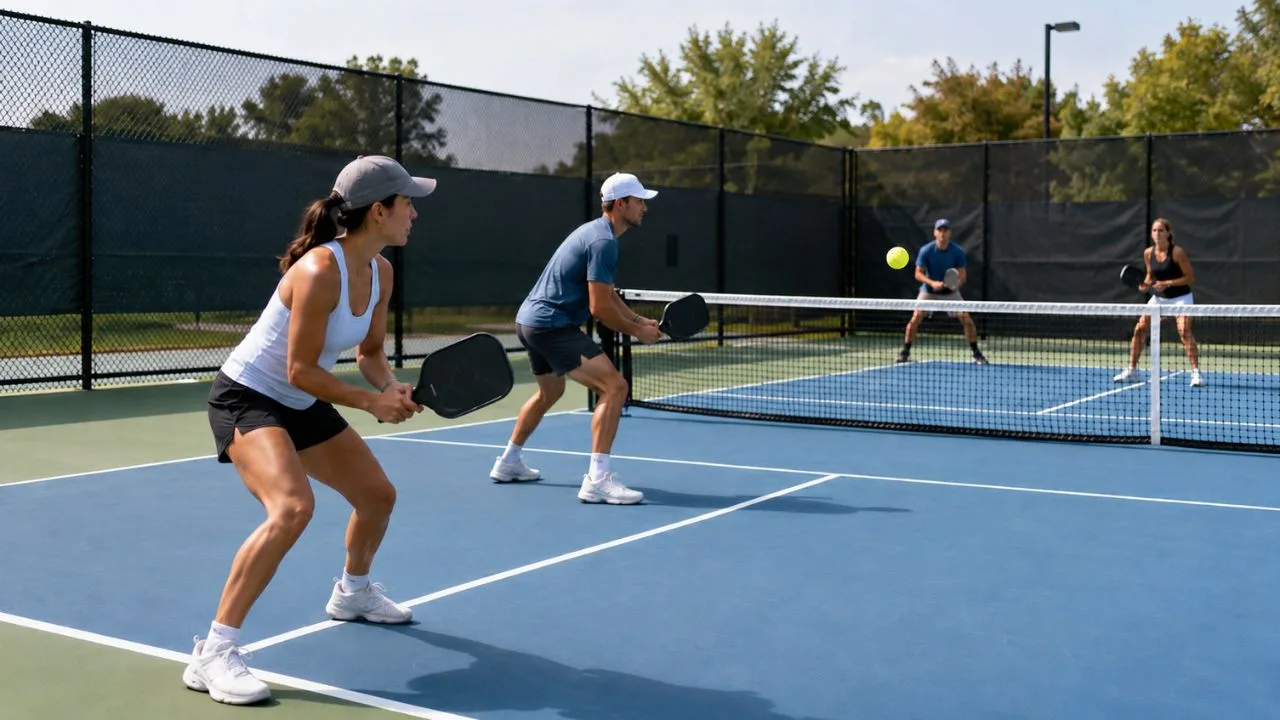
This is especially important near the kitchen line. A player who lunges at a dink often pops the ball up. A player who stays low, takes small adjustment steps, and contacts the ball calmly can keep the dink softer and lower.
Accuracy comes from repeatable contact. Repeatable contact comes from a repeatable body position.
The Ready Position Sets Up Every Shot
Good positioning starts before your opponent even hits the ball.
The ready position is simple: feet slightly wider than shoulder width, knees bent, weight on the balls of the feet, paddle up in front, and body facing the action. This position lets you move in any direction quickly.
Players who stand too upright often react late. Players who let the paddle drop often rush the next shot. Players who keep their weight back on their heels struggle to move forward for low balls.
The ready position does not guarantee accuracy, but it gives you a much better chance of getting to the ball early and making a controlled swing.

Small Steps Create Better Contact
Beginner players often take one big step toward the ball. Better players use several small adjustment steps.
Those small steps matter because pickleball is played in tight spaces. A few inches can decide whether you hit the ball comfortably in front of your body or awkwardly beside your hip. For players still learning the basics of court movement, rules, scoring, and common early mistakes, this beginner pickleball guide can help build the foundation before moving into more advanced footwork habits.
Small adjustment steps help with:
- Getting the ball in your strike zone.
- Avoiding overreaching.
- Keeping your shoulders steady.
- Controlling paddle angle.
- Staying balanced after contact.
This is especially useful during kitchen exchanges, resets, and volleys. The ball moves quickly, but the swing is compact. Your feet need to make the final adjustment so your paddle does not have to do all the work.
Court Positioning Changes Shot Quality
Where you stand affects what shots are available.
If you are too far behind the baseline, you may give your opponent too much space. If you are stuck in the transition area, you may be forced to hit difficult half volleys. If you are too close to the kitchen line without balance, you may get jammed by fast balls.
The best position depends on the situation, but the goal is usually to control space.
After serving, stay ready for the return and avoid rushing forward too early. After returning, move toward the kitchen line because the returning team has the first chance to claim the net. During soft rallies, hold the kitchen line with a stable base. During defensive moments, reset the ball and recover before attacking.
The 20-foot by 44-foot pickleball court and 7-foot non-volley zone create a game where positioning, control, and court awareness are central to strategy, not just movement. USA Pickleball describes the court layout, kitchen zone, and basic gameplay structure as core parts of how the sport is played.
Footwork Helps You Hit the Ball in Front
One of the most common causes of inaccurate shots is late contact.
When the ball gets too close to the body, players often flick the wrist or open the paddle face too much. When the ball gets behind the body, they lose power and direction. When the ball is too far away, they reach and lose control.
Good footwork solves this by helping you contact the ball slightly in front of your body.
That position gives you better control over:
- Paddle face angle.
- Shot direction.
- Ball height.
- Follow through.
- Recovery movement.
The goal is not to run fast. The goal is to arrive early enough to hit calmly.
Shot Accuracy Depends on Recovery
The shot is not finished when the ball leaves your paddle. It is finished when you recover.
Many players hit a good shot and then admire it. That creates problems. Pickleball moves quickly, especially in doubles. If you do not recover after contact, your next shot becomes rushed.
Recovery means returning to a useful court position after each shot. At the kitchen line, this often means resetting your feet and paddle in front. From the baseline, it may mean moving forward after a return. From the transition zone, it may mean staying low after a reset instead of standing upright too soon.
Accuracy improves when you are ready before the ball comes back.
The Ball Also Affects Timing and Accuracy
Footwork is the biggest factor, but equipment consistency also matters during practice and match play. If the ball bounces unpredictably or loses shape quickly, players may struggle to develop reliable timing.
A consistent ball helps players judge bounce, flight, and contact point more clearly. That matters when practicing controlled returns, dinks, resets, and placement drills. Players looking for reliable practice and match balls can explore these high-performance outdoor pickleballs built for consistent bounce, stable flight, and regular court play.
Better balls will not fix poor movement, but they can support better repetition. And repetition is how footwork becomes natural.
Simple Drills to Improve Footwork and Positioning
Split Step Drill
Have a partner feed balls from the opposite side. As they make contact, perform a small split step, then move to the ball. This trains timing and readiness.
Kitchen Shuffle Drill
Stand at the kitchen line and move side to side using short shuffle steps. Keep your paddle in front and avoid crossing your feet. Add soft dinks once the movement feels natural.
Drop and Recover Drill
Start in the transition area. Hit a soft reset in the kitchen, then recover into a balanced ready position. The goal is to stay low after contact.
Deep Return and Approach Drill
Return the serve deep, then move toward the kitchen line under control. Do not sprint blindly. Move with balance so you are ready for the next ball.
Target Placement Drill
Place cones or markers in safe target zones. Practice hitting dinks, returns, and resets while focusing on foot position before contact. Do not count only successful shots. Count how often you were balanced when you hit them.
Common Footwork Mistakes That Hurt Accuracy
- Most accuracy problems come from a few repeated mistakes.
- Standing too tall.
- Reaching instead of moving.
- Hitting while backing up.
- Letting the ball get too close.
- Crossing the feet during quick exchanges.
- Stopping in the transition area without balance.
- Failing to recover after contact.
- Moving forward without the paddle ready.
These mistakes force the player to improvise. The paddle opens too much, the wrist takes over, and the ball floats high or misses the target.
The fix is usually simple: move earlier, take smaller steps, stay lower, and reset after every shot.
Build Accuracy From the Ground Up
If you want better shot accuracy, do not only work on your swing. Work on the position that allows the swing to repeat.
Get ready before the ball comes. Use small adjustment steps. Stay balanced. Contact the ball in front. Recover after every shot. Hold the kitchen line with patience instead of panic.
The players who place the ball well are not always the strongest. They are usually the players who arrive on time, stay calm at contact, and make their next shot easier before it even happens.
In pickleball, accurate shots come from good feet first. The paddle follows.