
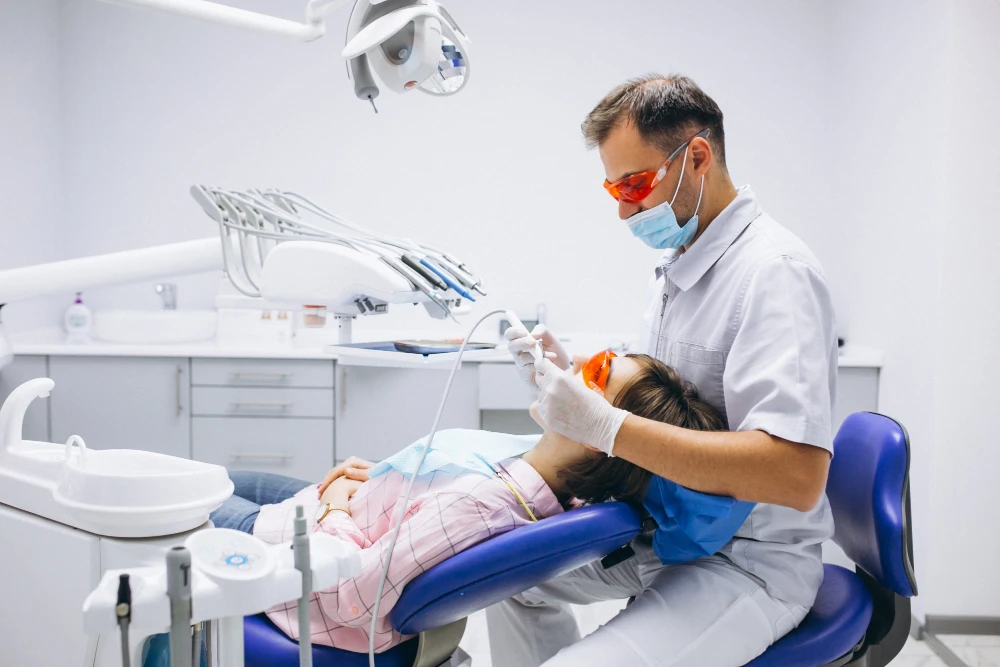
Have you ever wondered why your claims are being denied? This mostly happens due to incorrect coding in dental billing. Dental practices face several challenges when it comes to effective reimbursement of claims. Most of the challenges are related to claim denials and incorrect coding. Correct dental coding will ensure that your services are documented with proper codes and modifiers.
This helps in faster reimbursement of claims for your dental services to patients.
The process of assigning standardized codes to dental services and procedures for documentation, billing, and reimbursement purposes is known as dental coding. The use of correct Current Dental Terminology codes ensures that every dental service is properly documented and submitted for reimbursement. For example, the CDT code D0120 is used for a routine dental check-up of a patient who has already consulted the dentist before. The billing team needs to document the same (existing patient instead of new) to submit the claim to the insurance company. Professional billing companies transform the challenges into benefits to ensure that dental clinics are reimbursed on time.
Common Dental Billing Coding Challenges and How to Fix Them
The following are the challenges that hinder growth for the dental practitioners:
1) Outdated or incorrect use of codes – The current dental terminology (CDT) codes are developed by the American Dental Association. These codes are updated on an annual basis, which makes it mandatory for the billing services to stay updated on the coding guidelines. In case of a dental filling, the coding team needs to implement the CDT codes between D2000 and D2999. The use of the correct version of these codes is essential for clean claim submissions.
2) Inadequate clinical descriptions – The correct coding without proper documentation might still lead to claim denials. The ADA emphasizes the necessity of precise documentation in dental billing practices.
For example, in case of a root canal, the applicable codes are:
- D3310
- D3320
- D3330
If the dentist has performed a root canal for a premolar, the correct code in this case would be D3320. This makes it very important for billing companies to have proper knowledge of the application of correct CDT codes.
3) Inaccurate application of specialized surgical codes – The surgeries performed by dentists are covered under CDT codes. If oral surgeries such as wisdom tooth removal do not have clinical documentation or radiographic services, the claim gets denied. Some of the commonly used CPT codes include 41874 for surgical preparation of the jaw ridge and 42145 for reconstruction of the palate.
4) Coding discrepancies between procedures and diagnoses – Procedure codes are used for medical services like treatments and diagnostic tests. If these codes do not comply with the diagnosis codes, claims get denied.
In case a tooth abscess diagnosis is coded and billed without considering the root canal treatment documentation, it creates a discrepancy in the process. Thus, it is necessary for dental billers to use correct codes, both for procedures and diagnoses.
5) Inadequate staff training and audit – The lack of an audit trail means that the clinic cannot identify which staff member has entered what kind of procedure codes. The staff are not trained adequately to stay on track with the updated coding and billing guidelines. The ADA provides seminars and online courses to update the dentists and billing staff about the updated coding guidelines and practices.
6) Incorrect use of modifiers – Apart from coding, modifiers play an important role in conveying additional information about a dental procedure. The lack of training in modifier management often leads to incorrect documentation of dental services. The trained dental billing staff perform frequent audits and use reference guides to ensure correct application of the modifiers.
Overcoming dental billing challenges with professional expertise
With frequent changes in coding and guidelines, dental clinics are facing several challenges in the reimbursement process. Most of these hindrances can be managed effectively by hiring expert dental billing services, which have all the resources for streamlined billing operations. Most of these billing companies have a track record of working with established dental clinics and services. You can stay ahead in terms of revenue generation, since these companies offer end-to-end RCM services. These services include deep knowledge and expertise on CDT, ICD-10 codes, and modifiers. Their billing staff ensures optimum accuracy, reduces claim denials and has almost 97% first-pass acceptance rates. You will also receive the benefit of services that are charged at $7 an hour. If your dental practices are not getting the result which it deserves, it is time you consider partnering with a professional outsourced billing service.