
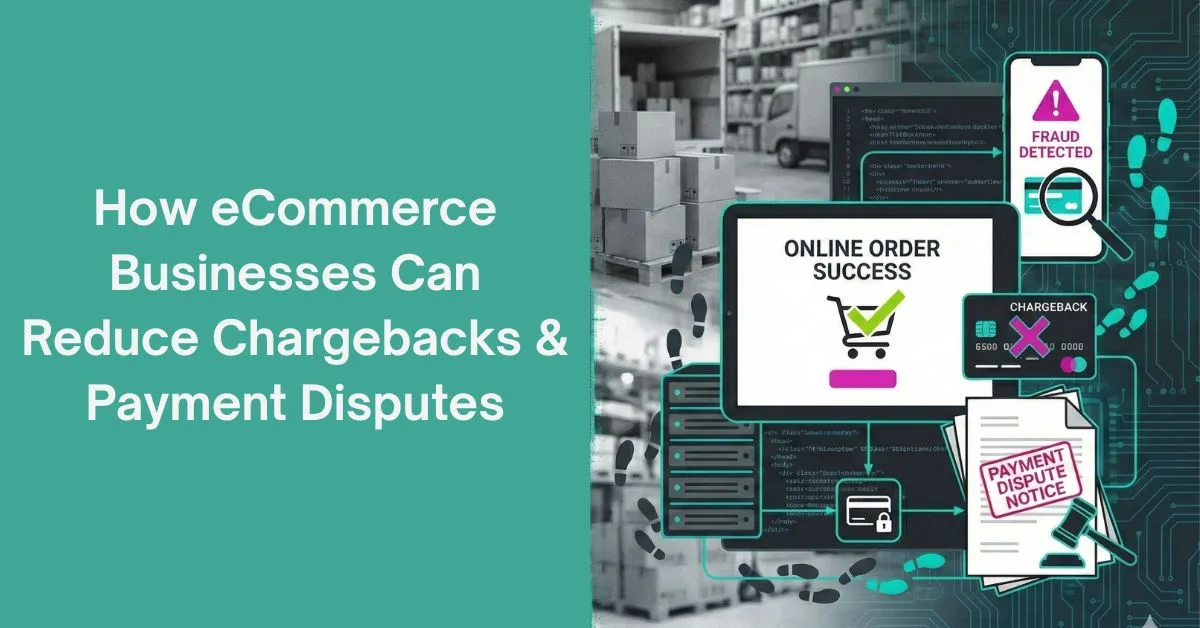
Chargebacks and payment disputes have become a persistent challenge for eCommerce businesses. What often starts as a single disputed transaction can quickly spiral into higher processing fees, strained relationships with payment providers, and even the risk of merchant account termination. Beyond direct financial loss, excessive chargebacks, fraud can also weaken controls or highlight gaps in the customer journey.
For businesses focused on sustainable growth, eCommerce chargeback reduction is no longer just about reacting to disputes. It’s about preventing them before they occur.
How eCommerce Businesses Can Reduce Chargebacks and Payment Disputes
1. Stop Fraud at the Point of Transaction
A large share of chargebacks originates from fraud. The biggest one among them is unauthorized card usage. If fraudulent transactions are approved, disputes are almost inevitable.
Using AI fraud detection for eCommerce helps assess risk in real time by analyzing device signals, transaction context, and historical behavior. Blocking high-risk transactions upfront is far more effective than fighting disputes after funds are already lost.
This is especially critical for card-not-present transactions, where fraudsters exploit speed and anonymity.
2. Identify Repeat Fraud Using Device Intelligence
One of the biggest challenges in chargeback fraud in eCommerce is repeat offenders. Fraudsters don’t rely on a single transaction. They test cards, rotate identities, and return repeatedly.
This is where device fingerprinting for chargebacks plays a key role. By identifying the same device across multiple accounts and transactions, businesses can recognize repeat abuse even when emails, names, or cards change.
Stopping repeat fraud significantly reduces both disputes and operational overhead.
3. Monitor and Act on Early Warning Signals
Chargebacks rarely happen without warning. Failed payments, unusual velocity, mismatched locations, or repeated checkout attempts often precede disputes.
Using chargeback monitoring tools allows teams to:
- Detect abnormal transaction patterns early
- Flag risky users or devices
- Take preventive action before disputes are filed
Early intervention, such as pausing fulfillment or requesting additional verification, can prevent unnecessary losses.
4. Reduce “Friendly Fraud” Through Clarity and Controls
Not all disputes come from criminals. Many are caused by “friendly fraud,” where customers don’t recognize a charge, forget a purchase, or dispute instead of requesting a refund.
To reduce payment disputes online, eCommerce businesses should:
- Use clear billing descriptors
- Send timely order confirmations and receipts
- Make refund and cancellation flows easy to find
When customers understand their transactions, they’re far less likely to escalate issues to their bank.
5. Connect Fraud Prevention With Chargeback Strategy
Chargeback reduction works best when fraud prevention and dispute management are aligned. Treating them as separate problems creates blind spots.
A unified approach allows businesses to:
- Link disputed transactions back to original risk signals
- Improve fraud models based on chargeback outcomes
- Continuously refine prevention rules and intelligence
This feedback loop is essential for long-term reduction, not just short-term fixes.
Things to Be Taken Care Of While Dealing with Chargebacks and Payment Disputes
We have researched in-depth and have come up with some special instructions that can benefit businesses while dealing with chargebacks and payment disputes:
- Don’t rely solely on manual reviews: They don’t scale and often react too late.
- Avoid adding friction for genuine users: Excessive verification can hurt conversions more than fraud itself.
- Think beyond rules: Static rules are easy to bypass and require constant maintenance.
- Prioritize real-time decisions: Post-transaction checks won’t prevent disputes; they only explain them later.
- The goal is to block risky activity & silently: Genuine customers move through checkout without disruption.
A Smarter Path to Chargeback Reduction
Modern eCommerce platforms are increasingly adopting device-based intelligence to strengthen fraud prevention and reduce disputes. Solutions like SHIELD focus on identifying repeat fraud at the device level, enabling businesses to stop high-risk transactions before they become chargebacks without increasing customer friction.
By combining real-time detection with persistent device identification, businesses gain stronger control over fraud-driven disputes.
Case Study: See how SHIELD eliminates fraud and reduces chargebacks in the cash on delivery marketplace - Logzz
Conclusion
Chargebacks on eCommerce platforms is fraud, user experience, and trust problem rolled into one. Businesses that treat disputes as isolated incidents will always be on the defensive.
Effective eCommerce chargeback reduction comes from stopping fraud early, recognizing repeat abuse, and making the customer journey transparent and frictionless. With the right prevention strategies in place, chargebacks become the exception, not the cost of doing business online.
FAQs
1. How can eCommerce businesses reduce chargebacks?
By preventing fraud upfront, identifying repeat offenders, monitoring risk signals in real time, and improving customer communication and refund flows.
2. What is the difference between a chargeback and a payment dispute?
A payment dispute is raised with the merchant or bank, while a chargeback is a formal reversal initiated by the card issuer, often with added fees.
3. How does fraud prevention reduce chargebacks?
By blocking unauthorized and high-risk transactions before they are completed, preventing disputes from occurring in the first place.
4. How does device intelligence help prevent chargebacks?
Device intelligence identifies repeat fraudsters across accounts and transactions, stopping recurring abuse that often leads to disputes.
5. Why is real-time fraud detection important for chargeback reduction?
Real-time detection allows businesses to stop risky transactions instantly, rather than reacting after funds are lost and disputes are filed.