
Enterprise technology decisions today appear different from a few years ago. Most organizations aren’t trying to squeeze more life out of legacy systems anymore. They’re trying to figure out how to move forward without creating more complexity along the way.
That usually means taking a closer look at how teams actually work. Operations, sales, service, and customer support often run on isolated platforms that don’t communicate well. Dynamics 365 aims to bring these pieces together. With the right Dynamics 365 implementation services in place, companies can simplify how work gets done and respond faster when priorities change.
These services don’t just install software. They help businesses envision a future where data isn’t fragmented, processes aren’t siloed, and customer experiences aren’t stuck in the past. The right implementation delivers measurable value quickly. Let’s explore how this works and why Dynamics 365 implementation partners matter more than ever now.
The Digital Backbone Every Enterprise Needs
Legacy systems tend to fragment data. Teams remain trapped in silos. Reporting lags behind reality, and decision-making slows to a crawl.
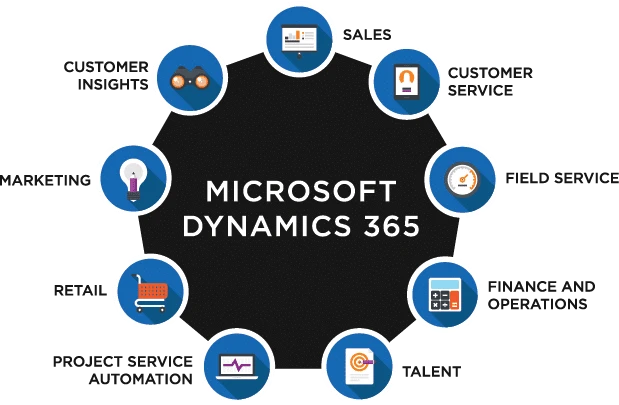
Dynamics 365 breaks these barriers by integrating business activities into a unified environment. Sales, service, marketing, and field service management work in harmony with finance and analytics. This ensures decision-makers have the truth. Business leaders move from reacting to proactively driving growth.
A unified stack isn’t theoretical. It’s practical.
Organizations that deploy Dynamics 365 often see immediate, practical benefits. Manual steps are reduced, data is brought into one place, and teams gain access to real-time information they can use. From day one, this makes everyday work faster. Processes move with less friction, teams collaborate more easily across functions, and customer interactions become more consistent and informed.
Choosing the Right Dynamics 365 Implementation Partners
Execution matters. Thus, choosing the right partner is crucial. Not all implementation projects deliver the value they promise. A recent industry forecast estimates that the global Microsoft Dynamics 365 consulting and implementation market is expected to grow to USD 12.91 billion by 2035 at an estimated CAGR of 14.5% from 2026 to 2035.
A reliable partner does not begin with features or configurations. They start by understanding what the business is actually trying to improve. That understanding comes from asking the right questions and listening closely to how teams work today.
Partners with real industry experience also recognize that change affects people, not just systems. They help reduce rework, keep projects moving without unnecessary delays, and stay involved after go-live so adoption continues instead of fading over time.
Elevating Engagement Through Dynamics 365 Customer Service Implementation
Customer expectations have definitely shifted, and support teams tend to notice it right away. People want answers quickly, but just as importantly, they expect the conversation to continue without starting over each time they change communication channels. When that context gets lost, even simple issues can turn frustrating.
A Dynamics 365 customer service implementation helps by keeping those interactions together in one place. Agents can pick up the conversation where it left off instead of digging through different systems for background. Over time, this reduces repeat work, keeps service more consistent, and gives teams more space to focus on the issues that actually need attention.
Customers also prefer different channels at different times. That’s why connected service matters. When systems work together, the experience feels smoother for customers and far less repetitive for the people supporting them.
These shifts make modern service platforms essential. Organizations that deploy Dynamics 365 customer service provide faster issue resolution. They reduce operational friction and increase customer satisfaction.
These outcomes drive measurable impact: stronger retention, deeper loyalty, and a reputation that reinforces brand trust.
Supporting Smarter Marketing with Dynamics 365
Marketing teams face a different challenge. Campaigns are expected to be personalized, measurable, and fast-moving, often with limited resources.
A Dynamics 365 marketing implementation helps bring customer data together, so marketers can segment audiences and run campaigns across email, social, and digital channels without relying on disconnected tools. Journey performance becomes easier to track, and content decisions can be based on real engagement instead of assumptions.
Built-in analytics and AI capabilities also change how teams work day to day. Buying signals surface earlier. Nurture journeys run automatically. Revenue can be traced back to the campaigns that influenced it.
Over time, this reduces guesswork. Engagement improves. Leads are more relevant. Marketing performance becomes easier to explain and defend.
Maximizing Efficiency with Dynamics 365 Field Service Implementation
Modernizing field operations is one of the greatest challenges for organizations. Technicians need real-time schedules. Dispatchers need visibility. Businesses need efficiency.
This is where Dynamics 365 field service implementation excels.
A Forrester study commissioned by Microsoft found that organizations using Dynamics 365 Field Service achieved an ROI of 346% over three years, with benefits of $42.65 million on a $9.5 million investment and payback in less than six months.
That’s not marketing spin. That’s a measurable financial impact.
How does it work?
i. Field teams get automated scheduling and routing.
ii. Technicians arrive with the right information and parts.
iii. Dispatchers have real-time visibility.
iv. Billing cycles become faster because invoices are processed immediately after service delivery.
Operations become smoother. Service quality improves. Customers see faster resolutions and better updates. That’s the bottom line of effective modernization.
The Human Side of Dynamics 365 Modernization
Technology is only as good as its adoption. A Dynamics 365 system that users avoid is a failed project.
Top implementation partners recognize that success goes beyond delivering software. They also help with:
i. Change management
ii. Designing training programs tailored to user roles
iii. Providing governance frameworks to ensure adoption continues to grow year after year.
A Total Economic Impact™ study shows that organizations with strong adoption realize an ROI of 106% over three years, thanks to better utilization and employee engagement.
Data doesn’t improve on its own. Processes don’t modernize automatically. But when people adopt the tools and trust the data, transformation becomes real.
AI and Future-Ready Modernization
Modernization isn’t static. It evolves.
One of the most compelling trends shaping Dynamics 365 adoption is AI. In a recent Forrester partner study, 50 percent of organizations said implementing AI-enabled tools for business applications is a top technology priority over the next year. Partners also report 10 to 15 percent higher win rates when showcasing AI capabilities within Dynamics 365.
Microsoft’s integrated Copilot and generative AI features help teams automate workflows, summarize data, and accelerate decision-making. These features turn Dynamics 365 from a management platform into a growth engine.
AI isn’t a separate project anymore. It’s part of modern business systems.
Beyond Technology Outcomes
Dynamics 365 doesn’t just change IT systems; it changes business outcomes. Teams see faster response times, more personalized customer engagement, and better operational efficiency. Marketing, sales, and service connect more closely, helping capture revenue and lower costs. Decision-making improves with real-time data accessible to everyone.
The results extend across the business, helping companies act faster, plan better, and seize opportunities before competitors.
Conclusion
End-to-end modernization almost never happens in one clean move. It unfolds over time, as priorities sharpen, and teams start to see what works once plans turn into real execution. Technology plays an important role, but progress usually depends just as much on having partners who know how to guide change as it happens.
Dynamics 365 implementation services provide the right foundation. Data and processes come together, employees have better tools to work with, and customer experiences begin to improve in practical, noticeable ways.
True success, however, depends on Dynamics 365 implementation partners who understand business outcomes and technological complexity. The right partner guides the transformation. They unlock innovation and help organizations not just modernize, but thrive.
If you want to transform your service operations, marketing performance, or customer engagements, Dynamics 365 is more than software. It’s a catalyst for growth. The right implementation can change how your organization operates at every level.
Modernization is here. Transformation starts now.