When shopping for a diamond, sparkle often tops the list of priorities. That fiery flash catching light across a room can make or break your decision. The shape you choose plays a huge role in how much brilliance your stone displays. Comparing oval vs. emerald cut diamonds reveals two very different approaches to light performance. One dazzles with intense fire, while the other impresses with elegant sophistication. Understanding these differences helps you pick the right diamond for your style.
What Creates Diamond Sparkle?
The diamond's sparkle requires knowledge about its diamond sparkle mechanism before any shape comparison. The three components of this attraction function together to produce the visual effect.
Brilliance refers to white light bouncing back from inside the stone. Fire describes the rainbow flashes you see when light breaks into colors. Scintillation describes how light creates different patterns between dark and light regions, which move as the diamond changes its position.
The three elements receive different treatment from various cuts throughout the cutting process. The stone's light behavior gets determined through the combined effect of facet count and angle and arrangement method. Some cuts create maximum brilliance, while other cuts produce a more muted luminosity effect.
How Oval Cuts Handle Light
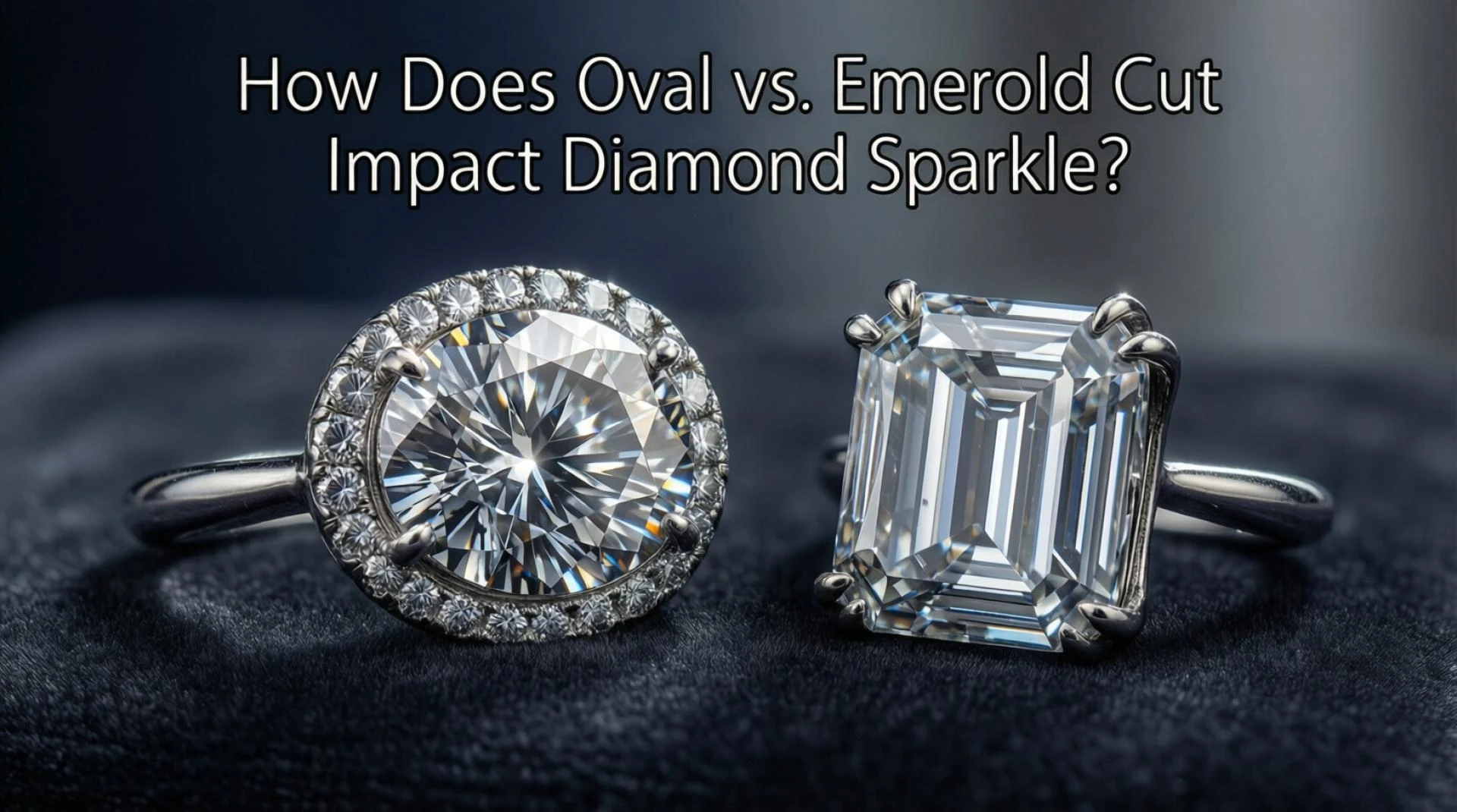
Oval diamonds belong to the brilliant cut family. The diamonds usually contain 57 to 58 facets, which designers position to achieve optimal light reflection. The design produces intense sparkling, which matches the brilliance of the round brilliant cut.
The oval's curved shape lets light enter through multiple entry points. Small facets break up that light into countless tiny reflections. The resultant effect creates a vibrant sparkle that attracts attention from people standing at a distance.
The "bow tie effect" provides an additional benefit to oval cuts, according to jewelers. The center of the stone exhibits a shadow that creates a crosswise pattern. The cutting design of an oval achieves minimal effect while producing maximum brightness.
The elongated shape offers another advantage. Ovals tend to look larger than other shapes of equal carat weight. All that sparkle adds more visual impact to your gemstones.
Oval vs. Emerald Cut: Key Differences in Light Performance
The two shapes create two distinct levels of sparkling. Ovals produce bright traditional sparkles, whereas emerald cuts produce an entirely different type of sparkle.
Emerald cuts use what experts call a "step cut" design. Long rectangular facets stack on top of each other like stairs to create the stepped design. The design generates broad light beams that do not create small shimmering lights.
The visual effect differs dramatically. Oval diamonds produce the traditional disco ball shine that most people associate with diamonds. Emerald cuts create a "hall of mirrors" appearance because they reflect deep images through their geometric arrangement.
The two approaches do not exist as better options since they show different preferences. The two options cater to different customer preferences through their respective designs.
The Unique Appeal of Emerald-Cut Sparkle
Emerald cuts may sparkle less in the traditional sense, but they have their own beauty. The step cut facets create dramatic light and dark contrasts. The stone produces long light beams that extend across its entire surface area.
This cut demands high clarity. The table surface and extended facets of the design allow impurities to become visible to observers. You typically need to choose a higher clarity grade compared to brilliant cuts.
The emerald cut also showcases the diamond's body color more prominently. A slight yellow tint that might hide in an oval becomes visible in an emerald cut. Many buyers select diamonds with better color quality when purchasing this particular shape.
Emerald cuts create fire deficiency because they lack this trait yet maintain their refined appearance. The diamond's body color becomes more visible because the emerald cut showcases its natural color. The diamond cut exhibits clean lines, which attract customers who desire simple yet elegant designs.
Choosing Based on Your Preferences
Your personal style should guide this decision more than any technical factor.
If you love attention-grabbing sparkles, the oval cut delivers. The diamond appears beautiful under every type of light because of its design. This shape suits people who want their diamond to make a statement.
The emerald cut provides an excellent choice for people who prefer refined style. The design creates a sophisticated look that maintains a discreet appearance. Art deco lovers and minimalists often gravitate toward this shape.
Think about your lifestyle too. Oval cuts offer better ability to conceal color and inclusions than other cuts, which results in lower expenses. Emerald cuts need superior gemstone quality while they create an authentic vintage appearance.
You should test both shapes through physical observation before making your choice. Diamond behavior in actual light conditions cannot be properly depicted through photos or videos. The perfect design shown on a screen will not match your expectations during actual wearing.
Making Your Final Decision
Both shapes offer genuine beauty, just in different ways. The oval vs. emerald cut choice really comes down to what type of sparkle speaks to you. Oval diamonds bring traditional brilliance with intense fire and scintillation. Emerald cuts trade that flashy sparkle for dramatic flashes and sophisticated geometry. Neither is right nor wrong. The best choice is the one that makes your heart beat faster when you see it on your finger. Trust your instincts, work with a reputable jeweler, and pick the shape that feels like you.