An Initial Public Offering (IPO) gives investors an opportunity to apply for shares in a company before they begin trading on the stock exchange. However, submitting an application does not guarantee that you will receive shares. The final outcome depends on the number of shares available, the demand from investors, the category in which you apply, and the applicable allotment rules.
Understanding how IPO allotment works can help you follow the process from submitting an application to checking your result. It also helps you understand why some investors receive shares while others do not, particularly when an IPO is oversubscribed.
In this guide, we explain how IPO share allotment works in India, how the basis of allotment is decided, how to check your IPO allotment status, and what happens after the results are announced.
What Is IPO Share Allotment?
IPO share allotment is the process through which shares offered in a public issue are allocated to investors who have submitted valid applications.
When a company launches an IPO, it offers a specified number of shares for subscription. Investors apply for shares within the issue's subscription period. After the issue closes, the registrar processes the applications and helps complete the allotment process according to the applicable regulations and issue terms.
Depending on demand and the investor category, an applicant may receive all the shares requested, a smaller quantity, or no shares.
For example, suppose a company offers 10 lakh shares to a particular investor category, but valid applications in that category represent demand for 20 lakh shares. Since demand exceeds the available supply, the shares must be allocated according to the prescribed allotment method rather than giving every applicant the full quantity requested.
The IPO allotment process aims to distribute the available shares according to the applicable rules and the final basis of allotment.
How Does IPO Allotment Work in India?
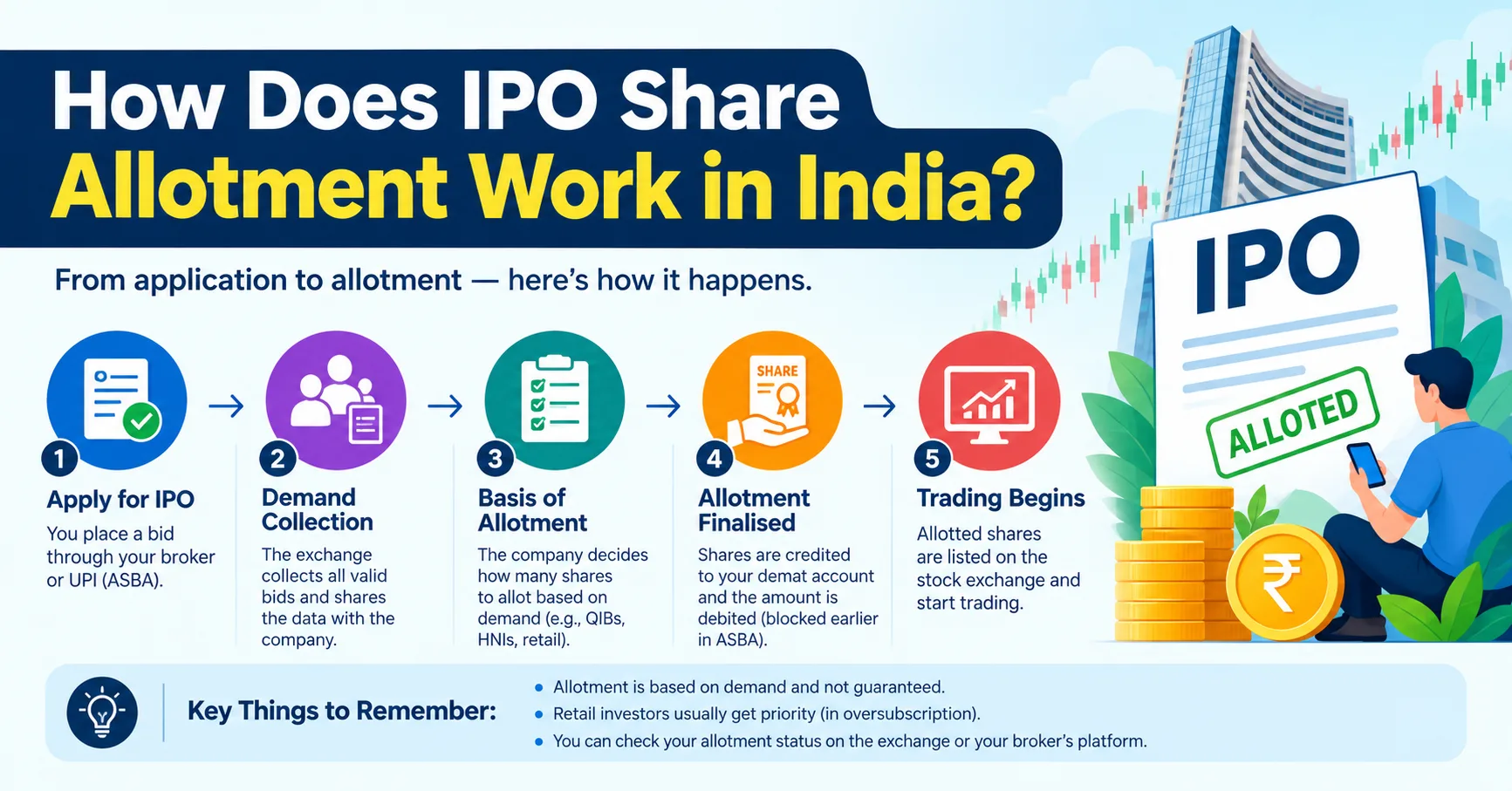
The IPO allotment process involves several stages. Here is how it generally works.
Step 1: The Company Announces Its IPO
Before the IPO opens, the company publishes offer documents containing details about its business, financial performance, risks, issue size, price band, and the purpose of the issue.
Investors should review these documents before applying. The IPO may include a fresh issue of shares, an offer for sale (OFS) by existing shareholders, or a combination of both.
Step 2: Investors Submit Applications
Investors can apply through eligible channels, such as a broker's platform or other authorised IPO application facilities.
The application generally includes details such as PAN, the quantity or bid amount, the investor category, and the required bank or payment mandate information. Investors applying through UPI in eligible categories may need to approve the mandate within the specified time.
Applicants should ensure that their details are accurate and that they follow the applicable application rules.
Step 3: The IPO Subscription Period Closes
Once the application window closes, investors can no longer submit bids for that issue through the regular application process.
The registrar and other parties involved process the applications and subscription information. The total demand in each investor category is then assessed.
Step 4: Applications Are Validated
Applications are checked for compliance with the applicable requirements. Invalid applications, duplicate applications where prohibited, or applications with certain payment or information issues may be rejected.
A successful payment mandate alone does not guarantee allotment. It only forms part of the application process.
Step 5: The Basis of Allotment Is Finalised
After applications are processed, the basis of allotment is finalised in accordance with the applicable regulations and issue-specific rules.
The process can differ depending on the investor category and the level of subscription. Retail individual investors, non-institutional investors, and qualified institutional buyers may be subject to different allocation frameworks.
Step 6: IPO Allotment Status Is Published
Once the allotment is finalised, investors can check their IPO allotment status through the official registrar's website or other authorised status-checking facilities available for the issue.
The result indicates whether shares have been allotted and, where applicable, the quantity allocated.
Step 7: Shares Are Credited or Funds Are Released
Investors who receive shares generally have them credited to the demat account specified in their valid application, according to the issue schedule.
If an applicant does not receive shares, the amount blocked for the application is generally released or refunded as applicable to the payment method and issue process.
The shares may then be listed on the stock exchange on the announced listing date.
How Is IPO Allotment Decided?
The method used to allocate IPO shares depends on the applicable rules, investor category, valid applications, and demand for the issue.
1. Retail Individual Investors
For IPOs that provide a retail individual investor category, allotment is governed by the applicable regulatory framework.
When the retail portion is oversubscribed, eligible applicants may receive allotment through a process designed to provide a fair opportunity to applicants, subject to the available shares and the applicable minimum allotment requirements. A lottery or draw of lots may be used where prescribed.
This means that applying for more shares does not necessarily improve an individual applicant's chances in an oversubscribed retail category. The outcome depends on the specific allotment rules and demand.
2. Non-Institutional Investors
Non-institutional investors (NIIs) apply under a separate category, subject to the issue's terms and applicable regulations.
The allotment method for this category can differ from the retail process. It depends on factors such as the number of valid applications, the amount bid, the available shares, and the applicable allocation rules.
Investors should not assume that the retail allotment method applies to every category.
3. Qualified Institutional Buyers
Qualified institutional buyers (QIBs) include eligible institutional investors, as defined under the applicable rules.
The allocation process for QIBs follows a separate framework. It may involve institutional demand and allocation procedures specified in the relevant regulations and offer documents.
4. Employee and Shareholder Categories
Some IPOs provide reserved portions for eligible employees or existing shareholders, where permitted under the applicable rules and disclosed in the offer documents.
Investors must meet the eligibility conditions to apply under these categories. The allotment process follows the terms and requirements applicable to the particular reservation.
What Happens When an IPO Is Oversubscribed?
An IPO is oversubscribed when the demand for shares in a particular category exceeds the number of shares available in that category.
For example, assume an IPO offers 1 lakh shares in its retail category, while valid applications represent demand for 3 lakh shares. Demand is three times the available supply.
The registrar cannot allocate the full requested quantity to every applicant. Instead, allotment is carried out according to the prescribed method for that category.
In an oversubscribed retail category, an applicant may receive the applicable minimum allotment, where the rules and available shares permit, or may receive no shares. The exact outcome depends on the number of valid applicants, shares available, and the final basis of allotment.
Oversubscription does not guarantee listing gains or indicate that every applicant will receive shares.
What Happens When an IPO Is Undersubscribed?
An IPO is undersubscribed when the demand for shares is lower than the number offered in a relevant category or overall, depending on how subscription is being measured.
The outcome depends on the issue structure, minimum subscription requirements, applicable regulations, and the terms disclosed in the offer documents.
Undersubscription does not automatically mean that every applicant will receive the full quantity requested. Investors should refer to the final basis of allotment and the official issue announcements to understand the outcome.
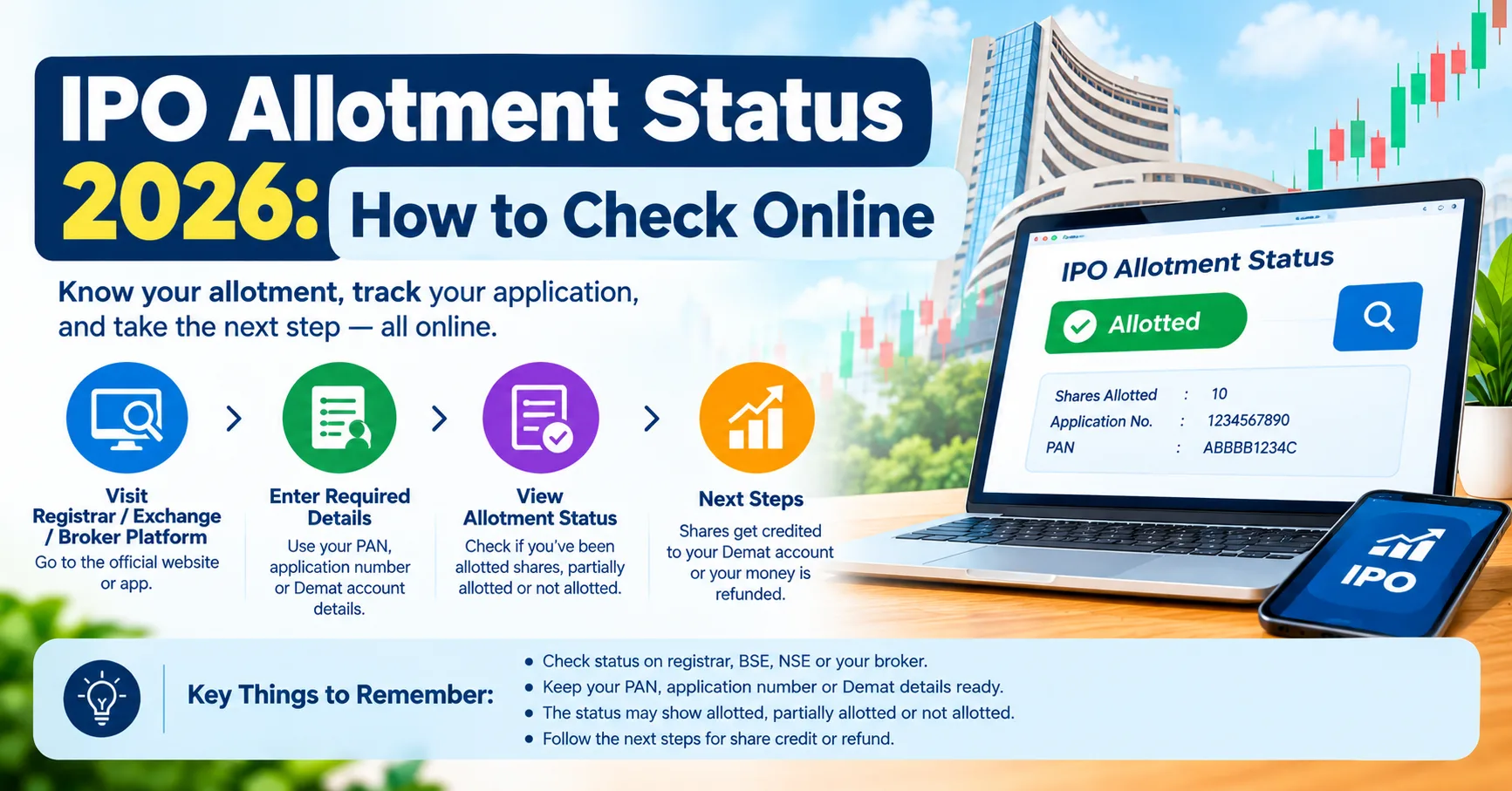
How to Check IPO Allotment Status Online
Once the basis of allotment is finalised, investors can check whether they have received shares. The available channels may vary by IPO.
Method 1: Check Through the Registrar
The registrar handles application processing and allotment-related records for the issue.
- Visit the official website of the registrar handling the IPO.
- Find the IPO allotment or application-status section.
- Select the relevant IPO.
- Enter the requested details, such as your PAN or application number.
- Complete any verification step.
- Submit the details and review your IPO allotment status.
Method 2: Check Through the Stock Exchange
The BSE or NSE may provide an IPO application-status facility for eligible issues.
- Visit the official exchange website.
- Locate the IPO application-status section.
- Select the relevant issue, if available.
- Enter the required identification details.
- Submit the form and check the result.
Method 3: Check Through Your Broker
Some brokers and investment platforms provide IPO application tracking or allotment-related updates. Sign in to your broker's official website or app and check the features available for the relevant issue.
For confirmation, refer to the registrar or official exchange facility where available, as broker-side updates may not always appear at the same time.
What Details Are Needed to Check IPO Allotment Status?
The information required depends on the platform. You may be asked to provide one or more of the following:
Detail Why it may be required PAN Helps identify your application Application number Identifies the IPO application Demat Account details May be accepted by the relevant status-checking facility IPO name Helps select the correct issue Verification code May be used to protect the website from automated accessEnter only the information requested by the official platform. Avoid sharing sensitive information on unofficial websites or with unknown people claiming to provide guaranteed allotment results.
What Is the Role of a Demat Account in IPO Allotment?
A demat account holds securities in electronic form. If you receive shares through an IPO, they are generally credited to the demat account provided in your valid application, according to the announced schedule.
A demat account helps you:
- Hold IPO shares electronically.
- View your shareholding through your depository participant or broker.
- Retain shares after listing.
- Sell eligible shares through the appropriate trading arrangements after listing.
Before applying, verify that your demat account is active and that the account details in your application are correct. Your PAN and other application details should also meet the applicable requirements.
Opening a demat account does not guarantee IPO allotment. Shares are allocated according to the issue's allotment rules and the final basis of allotment.
What Happens After IPO Allotment?
After checking your IPO allotment status, your next step depends on the result.
If Shares Are Allotted
Check your demat account according to the announced share-credit schedule. Once the shares are credited and the company is listed, you can review the stock's market performance and decide whether to hold or sell based on your investment plan.
The listing price may be higher or lower than the IPO issue price. Allotment does not guarantee a profit.
If No Shares Are Allotted
The amount blocked for your application is generally released or refunded as applicable to the payment method and issue process. Check the expected timeline and contact your bank, payment service provider, broker, or the relevant support team if the funds remain blocked beyond the expected period.
If Your Application Is Rejected
Check whether the registrar or platform provides a reason for rejection. Possible issues may involve incorrect application information, payment or mandate problems, or non-compliance with applicable requirements.
For future IPOs, review all details before submitting an application. Not every application issue can be corrected after the subscription window closes.
Common Factors That Can Affect IPO Allotment
Several factors may influence whether an investor receives shares.
- Subscription level: Higher demand relative to available shares can make allotment more competitive.
- Investor category: Different categories follow different allocation frameworks.
- Number of valid applications: The number of eligible applicants affects the allotment process, particularly in oversubscribed categories.
- Application validity: Incorrect details or payment-related issues can affect an application's eligibility.
- Issue-specific rules: Reservation, eligibility, and allocation conditions may vary by IPO.
Investors should not rely on unofficial claims that a particular application amount or number of bids will guarantee allotment. Always refer to the relevant offer documents and applicable rules.
Common Mistakes to Avoid During IPO Application
1. Entering Incorrect Details
Errors in PAN, demat information, or other application details may lead to problems. Review the application before submitting it.
2. Missing the Payment Mandate
If your application requires a UPI mandate or another payment authorisation, complete the required step within the specified timeline. A submitted application may not be valid if mandatory payment steps are not completed.
3. Applying Through Unofficial Platforms
Use authorised IPO application channels and official status-checking websites. Avoid links or messages promising guaranteed allotment.
4. Assuming Oversubscription Guarantees Listing Gains
A heavily subscribed IPO may still list below its issue price. Subscription data reflects demand during the offer period, not a guaranteed future return.
5. Ignoring the Company's Fundamentals
Before applying, review the company's business model, financial performance, valuation, risks, and intended use of IPO proceeds. An IPO should be evaluated as an investment rather than solely as an opportunity for short-term gains.
Conclusion
IPO share allotment in India is a structured process that takes place after the public issue closes. Applications are validated, the basis of allotment is finalised according to the applicable rules, and investors can then check their IPO allotment status online.
The outcome depends on the issue's subscription level, the investor category, valid applications, and the number of shares available. A successful application does not guarantee allotment, and receiving shares does not guarantee listing gains.
Before applying for an IPO, review the offer documents, check your application details, ensure that your demat account information is correct, and understand the risks involved. Use official registrar or exchange channels to confirm your allotment result and follow the issue's announced schedule for share credit or fund release.