
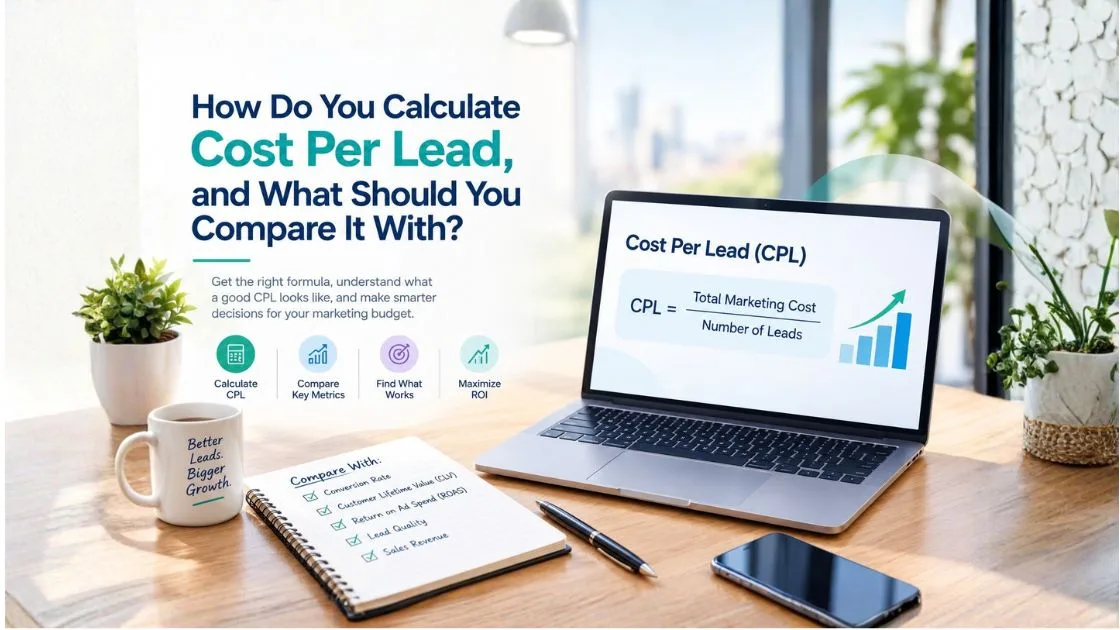
Summary - Cost per lead (CPL) measures how much a business spends to generate one enquiry through marketing. Calculate it by dividing total campaign spend by the number of leads generated. To understand whether the cost is worthwhile, compare CPL with cost per qualified lead, lead-to-customer conversion rate, customer acquisition cost and revenue. For businesses in Pimpri-Chinchwad, the goal is not simply to generate cheaper leads but to attract relevant prospects who are more likely to become paying customers.
For businesses in Pimpri-Chinchwad (PCMC), pay-per-click (PPC) advertising can help attract customers who are actively searching for products and services. However, a high number of clicks or form submissions does not necessarily mean an advertising campaign is successful.
A manufacturing supplier in Bhosari, a real estate company in Wakad and a professional service provider in Chinchwad may have very different lead values and sales cycles. Each needs to understand how much it costs to acquire a potential customer and whether those enquiries can generate profitable business.
That is why cost per lead should be evaluated alongside lead quality, sales performance and revenue.
What Is Cost Per Lead in PPC Advertising?
Cost per lead is the average amount a business spends to generate one potential customer through a marketing campaign. A lead might be a website form submission, phone enquiry, consultation booking or relevant WhatsApp conversation.
The basic formula is:
Cost Per Lead = Total Campaign Spend ÷ Number of Leads Generated
For example, if a business spends ₹30,000 on Google Ads and receives 100 enquiries, its cost per lead is ₹300.
However, this figure tells only part of the story. If many enquiries come from irrelevant locations, duplicate submissions or people who are unlikely to purchase, the campaign may not deliver meaningful business results.
A PPC agency in PCMC should help businesses evaluate both the cost and the quality of leads rather than focusing exclusively on enquiry volume.
How Do You Calculate Cost Per Lead?
Calculating CPL is straightforward, but the result depends on which expenses you include.
Suppose a business spends ₹40,000 on advertising and generates 80 leads.
- Advertising spend: ₹40,000
- Total leads: 80
- Cost per lead: ₹40,000 ÷ 80 = ₹500
If the business also pays ₹10,000 in campaign management fees, its all-in cost per lead becomes ₹625, assuming these are the only costs included.
Keeping advertising-only CPL separate from all-in marketing CPL helps businesses understand campaign efficiency and the total cost of generating enquiries.
How Do You Calculate Cost Per Qualified Lead?
Not every enquiry represents a genuine sales opportunity. A qualified lead meets defined requirements, such as location, budget, service needs or purchase intent.
If a campaign costs ₹40,000 and generates 80 leads, but only 20 meet the qualification criteria, the cost per qualified lead is ₹2,000.
This figure can be more useful than the ₹500 raw CPL because it shows how much the business spends to attract relevant prospects.
What Should You Compare Cost Per Lead With?
CPL becomes more meaningful when compared with other performance metrics that show whether enquiries turn into business.
Cost Per Qualified Lead
Cost per qualified lead (CPQL) reveals how much a business spends to generate an enquiry that meets its sales criteria. A low CPL combined with a high CPQL may indicate that targeting or messaging attracts too many unsuitable prospects.
Lead-to-Customer Conversion Rate
This metric measures the percentage of leads that become paying customers.
Lead-to-Customer Conversion Rate = (Customers ÷ Total Leads) × 100
If 80 leads generate four customers, the conversion rate is 5%.
A campaign with a higher CPL may still perform better if its leads convert into customers more frequently. Businesses should therefore assess lead quality and conversion rates together.
Customer Acquisition Cost
Customer acquisition cost (CAC) measures the cost of acquiring a paying customer. Depending on the method used, it can include advertising, campaign management, sales salaries and other relevant acquisition expenses.
If a campaign spends ₹40,000 and generates four customers, the advertising cost per acquired customer is ₹10,000. The full CAC may be higher when additional sales and marketing expenses are included.
Return on Ad Spend and Customer Lifetime Value
Return on ad spend (ROAS) compares revenue attributed to advertising with the advertising expenditure. Customer lifetime value estimates the revenue or value a customer generates over the relationship with a business.
These metrics help businesses determine whether their lead generation investment makes commercial sense.
For example, a B2B supplier in Bhosari might accept a higher acquisition cost if one customer generates substantial repeat orders. A business selling lower-priced products may need a much lower acquisition cost to remain profitable.
What Is a Good Cost Per Lead for a PCMC Business?
There is no universal CPL that works for every business. Costs depend on competition, service pricing, customer intent, geographic targeting, landing page quality and sales conversion rates.
A clinic in Pimpri, an industrial supplier in Bhosari and a digital marketing agency in Chinchwad will have different acquisition economics.
Instead of copying another company's benchmark, calculate a target based on customer value and the maximum acquisition cost the business can afford.
For instance, if a business can afford ₹4,000 to acquire a customer and converts 10% of leads into customers, its approximate break-even CPL is ₹400, assuming a consistent cost basis and excluding additional expenses not already accounted for. A profitable target should leave room for operating costs and the desired profit margin.
Businesses planning their advertising investment can review this guide to PPC budgeting for PCMC businesses to understand the factors that influence campaign budgets.
How Can Businesses Reduce CPL Without Losing Lead Quality?
Reducing CPL should not mean attracting irrelevant enquiries just to improve campaign statistics. The objective is to generate more qualified leads from the available budget.
Practical strategies include:
- Refine keyword targeting: Focus on relevant commercial searches and use negative keywords to exclude unrelated traffic.
- Improve geographic targeting: Target areas the business genuinely serves, such as Wakad, Nigdi, Ravet or Pimpri, where appropriate.
- Match ads with landing pages: Direct visitors to a page that addresses their search instead of sending everyone to a generic homepage.
- Simplify enquiry forms: Request the information needed to qualify prospects without creating unnecessary barriers.
- Track meaningful conversions: Measure relevant phone calls, qualified forms and genuine sales opportunities rather than clicks alone.
- Improve lead follow-up: Respond promptly and record whether enquiries progress into customers.
- Test changes carefully: Compare results over a suitable period instead of making frequent changes based on limited data.
A well-structured campaign combines relevant keywords, clear ad messaging, accurate targeting and reliable conversion tracking. Businesses can explore this guide to building effective PPC campaigns in PCMC for further practical guidance.
For campaigns that generate clicks but struggle to deliver enquiries or sales, these PPC advertising optimization techniques offer additional ideas for improving return on investment.
How Should Businesses Track CPL Across PPC Campaigns?
Businesses should establish a consistent reporting process before comparing campaigns, locations or advertising platforms.
Track these metrics by campaign, service and location:
- Advertising spend and total leads
- Cost per lead and cost per qualified lead
- Click-through rate and conversion rate
- Customer acquisition cost
- Lead-to-customer conversion rate
- Attributed revenue and return on ad spend
Google Ads conversion tracking, Google Analytics 4 and customer relationship management (CRM) records can help connect advertising activity with actual enquiries and sales. Ensure tracking is configured correctly and avoid counting duplicate submissions or irrelevant interactions as genuine leads.
For example, a service provider targeting Pimpri and Wakad can compare not only the number of leads from each location but also how many become qualified enquiries and paying customers. This makes budget allocation more informed and helps identify which campaigns deserve further investment.
A reliable reporting process should explain how CPL is calculated, which leads are considered qualified and what happens after an enquiry enters the sales pipeline.
Measure CPL Against Lead Quality and Business ROI
Cost per lead is a useful starting point, but qualified enquiries, customer acquisition cost and revenue reveal whether an advertising campaign is delivering real business value. Review these metrics consistently, identify where potential customers are being lost and improve campaigns using reliable conversion data.
If your business in Pimpri-Chinchwad is generating clicks but not enough qualified enquiries, consult a PPC specialist to review your targeting, landing pages, conversion tracking and lead quality. A data-driven campaign strategy can help you use your advertising budget more effectively and turn relevant searches into measurable business opportunities.
Frequently Asked Questions
What is the formula for calculating cost per lead?
Divide the marketing spend attributed to a campaign by the number of leads generated. For example, ₹20,000 spent on 50 leads produces a CPL of ₹400.
What is the difference between CPL and CAC?
CPL measures the cost of generating a lead, while customer acquisition cost measures the cost of acquiring a paying customer. CAC may include additional sales and marketing expenses.
Is a lower cost per lead always better?
No. A lower CPL is not necessarily better if the enquiries are irrelevant or rarely convert into customers. Lead quality, conversion rate, customer value and profitability also matter.
How do you calculate cost per qualified lead?
Divide the relevant campaign spend by the number of qualified leads. If ₹30,000 generates 15 qualified leads, the cost per qualified lead is ₹2,000.
What is a good cost per lead for Google Ads?
A good CPL depends on the industry, keyword competition, customer value, location and conversion rate. Businesses should set a target based on their own sales economics instead of relying on a universal benchmark.