Solar PV panels are one of the most popular renewable energy solutions for homes and businesses across the UK. As energy prices continue to influence household and business budgets, many property owners are now looking for practical ways to reduce electricity costs and make better use of clean energy.
One of the most common questions people ask is: how do solar PV panels generate electricity?
The answer is simple in concept, but the technology behind it is very effective. Solar PV panels use sunlight to create electricity through photovoltaic cells. This electricity can then be used to power appliances, lighting, equipment, heating controls, office systems, and other electrical needs within a property.
This guide explains how solar PV panels work, what happens inside a solar PV system, and why proper system design matters for long-term performance.
What Are Solar PV Panels?
Solar PV panels, also known as photovoltaic panels, are panels designed to convert sunlight into electricity. The word “PV” stands for photovoltaic. “Photo” refers to light, and “voltaic” refers to electricity.
Unlike solar thermal systems, which use sunlight to heat water, solar PV systems generate electricity. This electricity can be used immediately inside the property, stored in a battery, or exported back to the grid depending on the system setup.
Solar PV panels are commonly installed on rooftops, but they can also be used on commercial buildings, ground-mounted systems, and larger energy projects.
How Do Solar PV Panels Generate Electricity?
Solar PV panels generate electricity using photovoltaic cells. These cells are usually made from semiconductor materials such as silicon. When daylight hits the cells, it creates an electrical reaction.
Here is the basic process:
- Sunlight hits the solar PV panels.
- Photovoltaic cells absorb the light energy.
- The cells create direct current electricity.
- An inverter converts this electricity into usable alternating current.
- The electricity is used inside the home or business.
- Any extra electricity may be stored in a battery or exported to the grid.
This process happens automatically whenever there is enough daylight.
Do Solar PV Panels Need Direct Sunlight?
Solar PV panels perform best in bright sunlight, but they do not need direct sunlight all the time. They can still generate electricity on cloudy days because they work from daylight, not only strong sunshine.
In the UK, this is especially important because weather conditions are often mixed. Solar PV panels may produce more electricity during spring and summer, but they can still contribute useful energy throughout the year.
The amount of electricity generated depends on several factors, including:
- Roof direction
- Roof angle
- Shading
- Panel efficiency
- Weather conditions
- System size
- Quality of installation
- Inverter performance
A properly designed solar PV system can still be effective in the UK climate when installed correctly.
What Is the Role of the Solar Inverter?
The inverter is one of the most important parts of a solar PV system.
Solar panels produce direct current electricity, also called DC electricity. Most homes and businesses use alternating current electricity, known as AC electricity. The inverter converts DC electricity into AC electricity so it can be used safely inside the property.
Without an inverter, the electricity generated by solar PV panels would not be suitable for normal household or commercial use.
A good inverter helps improve system performance, monitoring, safety, and long-term reliability.
What Happens to the Electricity After It Is Generated?
Once the inverter converts the electricity, it can be used within the property. For example, it may power lights, computers, appliances, machinery, heating controls, or other electrical systems.
If the property uses electricity at the same time the panels are generating it, the solar electricity can reduce the amount of electricity needed from the grid.
If the panels generate more electricity than the property needs at that time, the extra energy may be:
- Sent to battery storage for later use
- Exported back to the grid
- Managed through the system depending on setup
For many homes, battery storage can be useful because electricity usage is often higher in the evening. For businesses, solar PV can be especially effective because many commercial buildings use energy during daylight hours when panels are generating electricity.
Why Battery Storage Can Improve Solar PV Use
Battery storage is not required for every solar PV system, but it can improve how much solar electricity a property uses.
Without a battery, unused electricity may be exported to the grid. With a battery, some of that unused electricity can be stored and used later.
Battery storage may be useful for:
- Homes with higher evening electricity use
- Businesses that want better energy control
- Properties looking to reduce grid reliance
- Users who want to make better use of generated electricity
- Systems designed for long-term energy savings
However, battery storage should be assessed carefully. The right decision depends on energy usage, budget, available space, and long-term goals.
Solar PV Panels for Homes
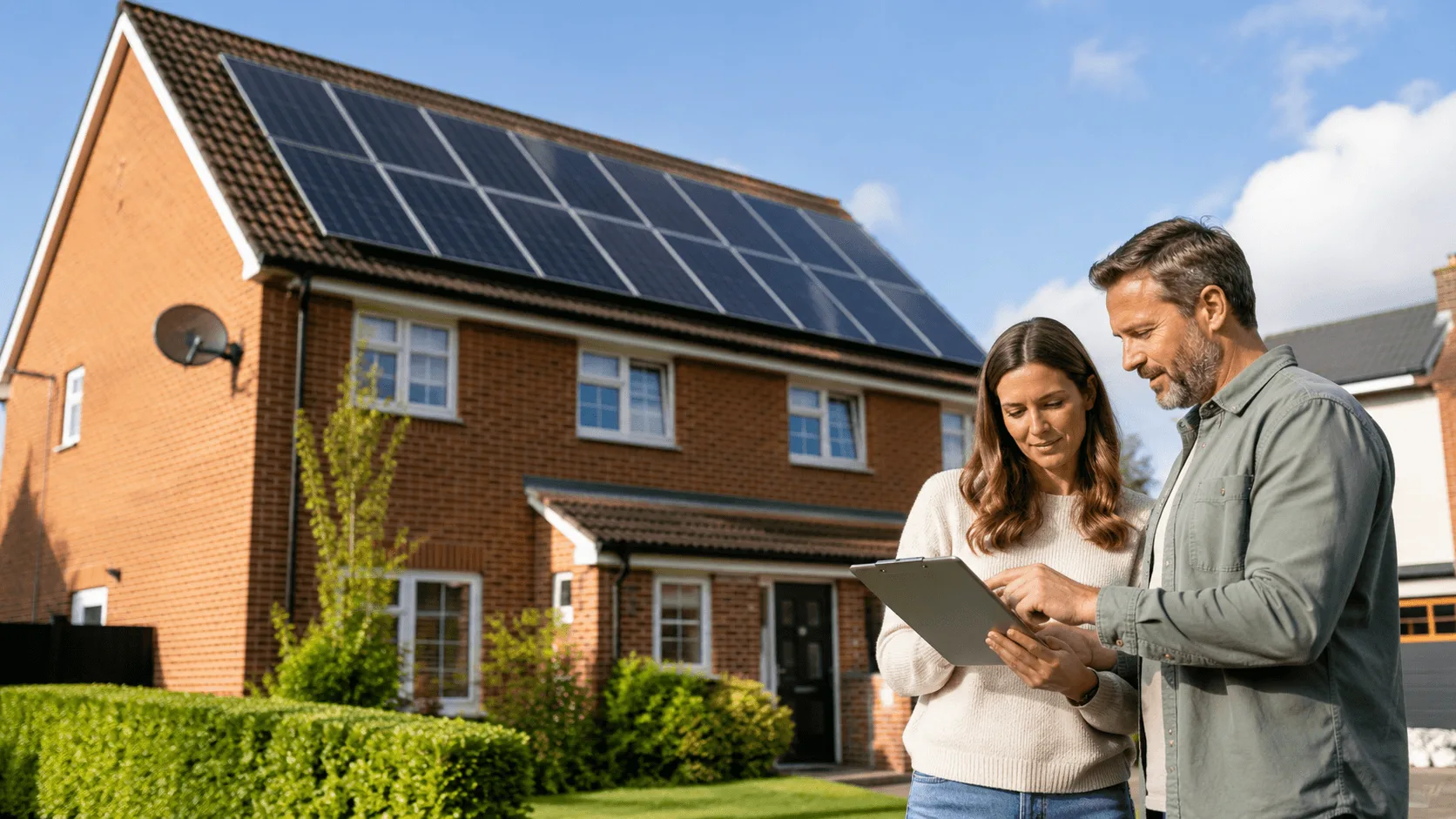
For homeowners, solar PV panels can help reduce electricity bills and improve energy efficiency. A domestic solar PV system is usually installed on the roof and connected to the home’s electrical system through an inverter.
Homeowners should consider roof suitability before installation. The best results usually come from roofs with good daylight exposure, limited shading, and enough available space for the required number of panels.
Important home solar PV considerations include:
- Roof condition
- Roof direction
- Available roof space
- Energy usage
- Budget
- Battery storage options
- Long-term savings
- Installer experience
A professional survey is important because every home is different.
Solar PV Panels for Businesses
Solar PV panels are also a strong option for businesses. Commercial properties often use more electricity during the day, which means they can directly use more of the electricity generated by their solar PV system.
Commercial solar PV can be suitable for:
- Offices
- Warehouses
- Retail units
- Schools
- Industrial buildings
- Farms
- Hospitality businesses
- Landlord-owned properties
For businesses, system design is especially important. A larger roof does not automatically mean the best system. The design should be based on energy usage, roof structure, future plans, and return on investment.
Businesses looking for professional support with solar power installation can work with experienced providers such as AEG Construction, which supports property owners with practical solar PV and energy-efficiency solutions.
What Affects Solar PV Panel Performance?
Solar PV performance depends on several key factors. Even high-quality panels can underperform if the system is not designed or installed properly.
The main factors include:
1. Roof Direction
South-facing roofs usually receive strong sunlight in the UK, but east- and west-facing roofs can also work well depending on the property and energy usage pattern.
2. Roof Angle
The angle of the roof affects how much sunlight reaches the panels. A professional installer can assess whether the roof angle is suitable.
3. Shading
Trees, nearby buildings, chimneys, and roof structures can reduce output if they block daylight from reaching the panels.
4. Panel Quality
Higher-quality panels usually offer better efficiency, stronger durability, and longer performance warranties.
5. Inverter Quality
The inverter plays a major role in converting and managing the electricity generated by the panels.
6. Installation Quality
Correct installation is essential for safety, performance, and long-term reliability.
Are Solar PV Panels Worth It in the UK?
Solar PV panels can be worth it for many UK homes and businesses, especially when the system is designed around actual energy usage and installed professionally.
For homeowners, solar PV can help reduce electricity bills and improve property energy efficiency. For businesses, it can support lower operating costs, sustainability goals, and better long-term energy planning.
The value of a solar PV system depends on:
- How much electricity the property uses
- When electricity is used
- System size
- Installation cost
- Roof suitability
- Battery storage
- Export options
- Long-term energy prices
A proper assessment is the best way to understand whether solar PV is suitable for a specific property.
Final Thoughts
Solar PV panels generate electricity by converting daylight into usable power through photovoltaic cells. The process starts when sunlight hits the panels, continues through the inverter, and ends with electricity being used inside the home or business.
Although the technology is advanced, the idea is simple: solar PV panels help property owners create electricity from daylight and reduce reliance on the grid.
For the best results, property owners should focus on more than just the panels. Roof suitability, system design, inverter quality, battery options, and professional installation all play an important role.
Whether for a home or a business, a well-planned solar PV system can support long-term energy savings, better energy control, and a more sustainable future.