
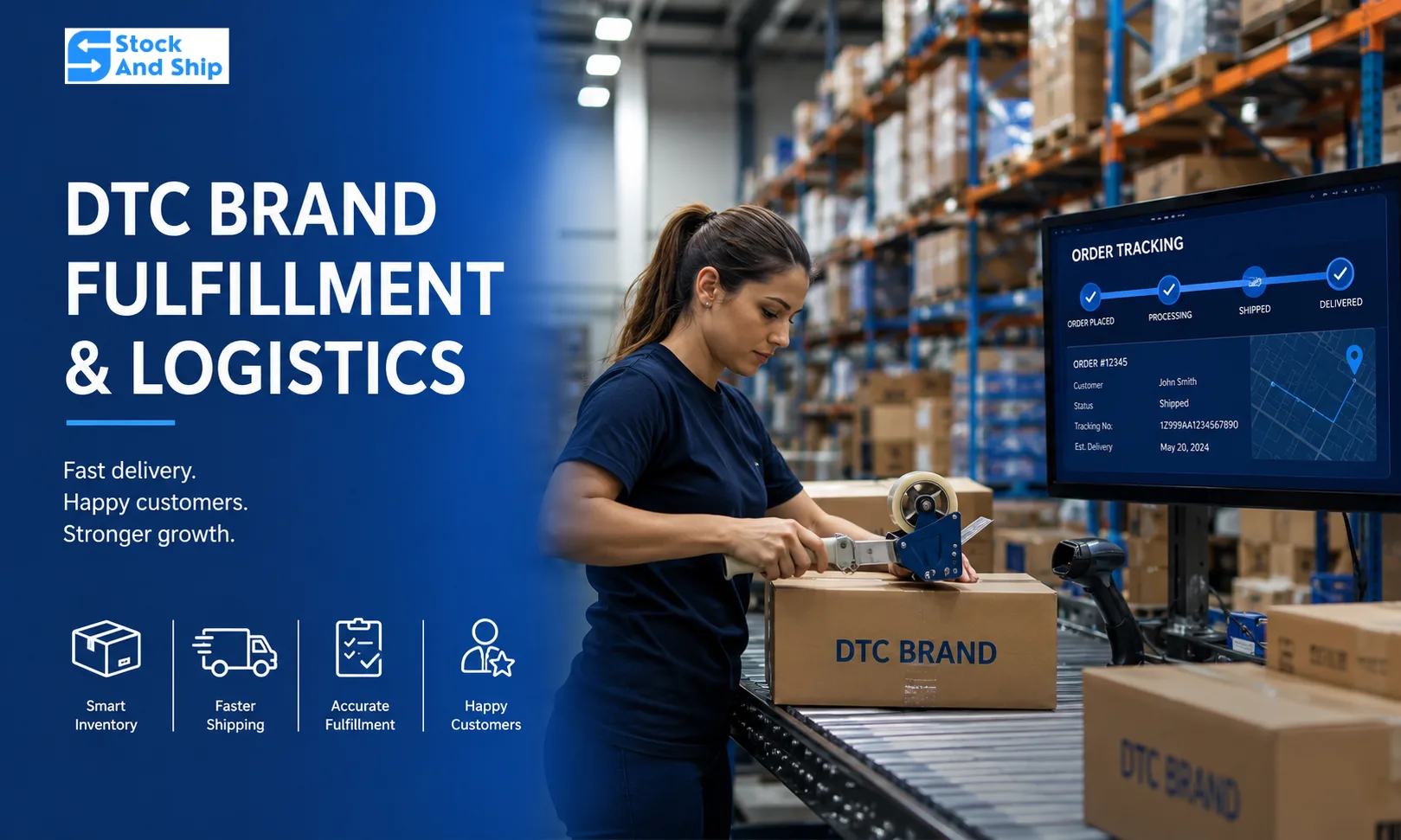
Direct to Consumer (DTC) sales have revolutionized the eCommerce space by enabling brands to sell products directly to consumers without having to use conventional retail models such as retailers and distributors. The model grants brands more freedom in branding, relationship management, pricing, and the customer experience as a whole.
On the downside, DTC brands have more responsibilities than conventional retail brands because the latter rely on third parties to take care of the logistics. In this respect, consumers today have very high expectations regarding shipping time, product delivery, package tracking, and seamless returns among others.
As such, building an effective fulfillment strategy is key for any DTC business today.
The Increasing Relevance of Fulfillment Within DTC
Fulfillment is about more than just moving goods from one location to another. It also impacts the customer experience, purchase frequency, and brand loyalty.
Consumers today expect speedy delivery and visibility of their orders. Late shipments, incorrect inventory records, or even package damage can have negative consequences for the brand image. Conversely, efficient fulfillment creates trust and prompts repeat orders.
As DTC brands grow into multichannel retailers, controlling inventory and fulfillment operations becomes increasingly difficult. Lack of efficient logistics processes will likely result in stockouts, overselling, increased costs, and slower fulfillment times.
By focusing on the efficiency of their fulfillment process, DTC brands have a considerable competitive edge.
Developing a Solid Base with Inventory and Order Management Systems
Proper inventory management forms the basis of a smooth-running direct-to-consumer fulfillment process. Companies require visibility into their inventory across all selling platforms to avoid potential problems and ensure that their products remain available to customers.
Inventory tracking ensures that companies have real-time insight into stock movements and the ability to detect customer demands and avoid overselling. Moreover, advanced inventory prediction solutions could be used to identify seasonal peaks in demand and help optimize inventory levels without overloading business finances.
In addition to efficient inventory management, order management is another key element of successful fulfillment processes. With products sold via different e-commerce sites and social media, managing all customer orders in one place proves to be critical.
Order management systems automate order processing and update inventory levels. Also, such a solution ensures that clients receive information about their order deliveries.
Utilizing Technology and Fulfillment Strategies
Today, technology is considered one of the key components that helps optimize fulfillment and logistics. In order to be successful, more and more DTC companies implement automation and data-powered software to increase operational efficiency.
WMS solutions allow tracking products from the moment they come into a warehouse till delivery. Additionally, automated technologies will assist in improving picking, packing, and shipping operations without involving too many labor-intensive steps and errors.
Predictive analytics and artificial intelligence contribute to improved logistics outcomes by predicting future sales, helping to identify and solve potential issues, and optimizing inventory management. Technologies like that help businesses make strategic decisions, rather than react to fulfillment problems.
In addition, another vital approach in logistics optimization implies implementing efficient warehousing operations. Efficient organization, optimal picking pathways, and fast dispatching will contribute to better order accuracy and higher efficiency.
When the number of orders grows, DTC businesses tend to turn to third-party logistics providers for help. The right 3PL partner will provide scalable warehousing, professional fulfillment, and inventory management assistance, as well as integrate with multiple sales channels.
Developing a Customer-centric and Future-proofed Logistics Strategy
The demands of modern customers continue to change, meaning fulfillment stands out as a vital source of differentiation for brands. Those that value convenience, openness, and sustainability can develop long-term relationships with customers.
Another way of doing this is through proper packaging. Right-sized packaging minimizes shipping fees and keeps products safe when shipping. Sustainable packaging appeals to many eco-conscious customers nowadays.
Return handling is also a critical part of building positive relations with clients. By offering a simple and smooth return procedure, brands can encourage repeat business. It is important for businesses to understand reverse logistics not as a necessity but as an essential step in establishing brand loyalty.
As for future-proofing strategies, there are a number of trends brands need to embrace in order to thrive. This includes micro-fulfillment centers that allow brands to ship packages quickly. Artificial intelligence-based automation, omnichannel fulfillment, real-time tracking, and predictive logistics analytics all stand out too.
Conclusion
A successful Direct to Consumer brand does not depend only on having great products and marketing campaigns. Fulfillment and logistics are critical components that can influence the success of operations significantly.
With proper investments into inventory control and order processing systems, along with using smart fulfillment software and logistics services, DTC brands can offer customers a convenient shopping experience and boost their loyalty.
In this dynamic eCommerce environment, businesses that regard fulfillment as a competitive advantage instead of being satisfied with basic processes are likely to succeed.