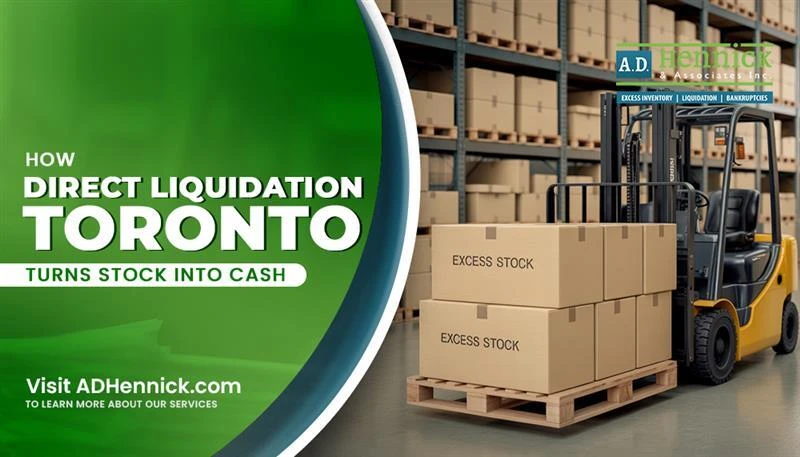
In today’s fast-moving retail and commercial environment, excess inventory is more than just a storage issue,it is tied-up capital. Businesses across Canada, especially in major hubs like Toronto, are increasingly turning to Direct Liquidation Toronto as a practical solution for converting surplus stock into immediate cash. Rather than letting unsold goods depreciate in warehouses, companies are using structured liquidation channels to recover value, improve cash flow, and streamline operations.
For organizations working with industry leaders like AD Hennick, understanding how direct liquidation works,and why it is effective,can make a measurable difference in profitability and operational efficiency.
Understanding Direct Liquidation in the Toronto Market
Direct liquidation refers to the structured sale of surplus, returned, overstocked, or discontinued inventory through established liquidation channels rather than traditional retail routes. Toronto, as one of Canada’s largest commercial centers, has a strong ecosystem of buyers, resellers, and liquidators who specialize in this process.
Direct Liquidation Toronto operates within this ecosystem by connecting sellers directly with qualified buyers. This approach eliminates unnecessary intermediaries, speeds up the sales cycle, and ensures inventory is monetized at fair market value. For businesses, this means faster turnaround and reduced holding costs.
Why Excess Inventory Becomes a Financial Burden
Excess stock often accumulates due to seasonal changes, shifting consumer demand, product updates, or returns. While holding onto inventory may seem harmless, it carries hidden costs:
- Warehouse storage and handling fees
- Inventory depreciation over time
- Insurance and logistics expenses
- Reduced liquidity and cash flow
By leveraging Direct Liquidation Toronto, businesses can offload inventory before it becomes obsolete, freeing up both physical space and working capital. This strategic move allows companies to reinvest in higher-performing products or operational improvements.
How Direct Liquidation Toronto Converts Stock into Cash
The liquidation process is designed to be efficient and transparent. It typically starts with inventory assessment, where products are categorized based on condition, demand, and resale potential. From there, liquidation specialists determine the most effective sales channel,such as bulk sales, auctions, or negotiated deals.
What sets Direct Liquidation Toronto apart is its access to a wide network of buyers, including retailers, wholesalers, exporters, and online resellers. This broad reach increases competition for inventory, helping sellers achieve better recovery rates while ensuring faster transactions.
Speed and Efficiency Compared to Traditional Sales
Traditional sales channels often require extensive marketing, long sales cycles, and ongoing operational costs. In contrast, direct liquidation prioritizes speed. Once inventory is listed or offered to buyers, transactions can be completed in days rather than months.
For companies partnered with AD Hennick, this efficiency is particularly valuable. Instead of allocating internal resources to manage excess stock, businesses can rely on liquidation professionals to handle the entire process,from pricing to logistics,while maintaining transparency and control.
Protecting Brand Value Through Controlled Liquidation
One common concern with liquidation is brand dilution. When products are sold indiscriminately, they can appear in unauthorized markets or at deeply discounted prices that harm brand perception.
Direct Liquidation Toronto addresses this concern by offering controlled sales strategies. Inventory can be directed to specific buyer segments or geographic markets, reducing the risk of brand erosion. This controlled approach allows businesses to recover value without compromising long-term brand equity.
Environmental and Operational Benefits
Beyond financial advantages, liquidation supports sustainability goals. Unsold inventory that sits idle often ends up as waste. By reselling or redistributing products, businesses extend the lifecycle of goods and reduce landfill impact.
Operationally, liquidation simplifies inventory management. Warehouses become more efficient, order fulfillment improves, and forecasting becomes more accurate. These benefits align well with the operational standards promoted by AD Hennick, where efficiency and responsible business practices go hand in hand.
Industries That Benefit Most from Direct Liquidation
While almost any business can benefit from liquidation, certain industries see especially strong returns:
- Retail and e-commerce
- Construction and building materials
- Electronics and appliances
- Industrial and commercial supplies
In a market like Toronto, where competition is high and storage costs are significant, Direct Liquidation Toronto provides a scalable solution for businesses of all sizes, from local retailers to large distributors.
Maximizing Returns Through Strategic Partnerships
Successful liquidation is not just about selling quickly,it is about selling smart. Working with experienced partners ensures inventory is priced accurately, marketed effectively, and sold through the right channels.
By aligning with trusted liquidation providers and established companies like AD Hennick, businesses gain access to expertise, buyer networks, and market insights that would be difficult to replicate internally. This strategic approach transforms liquidation from a reactive measure into a proactive financial strategy.
Turning Inventory Challenges into Opportunities
Excess inventory does not have to be a liability. With the right approach, it becomes an opportunity to recover capital, optimize operations, and strengthen financial stability. Direct Liquidation Toronto enables businesses to take control of their inventory lifecycle, ensuring products move efficiently from storage to sale.
In an increasingly competitive market, companies that embrace smart liquidation strategies are better positioned to adapt, grow, and reinvest where it matters most. For businesses connected to AD Hennick, direct liquidation is not just about clearing stock,it is about turning challenges into measurable value.