
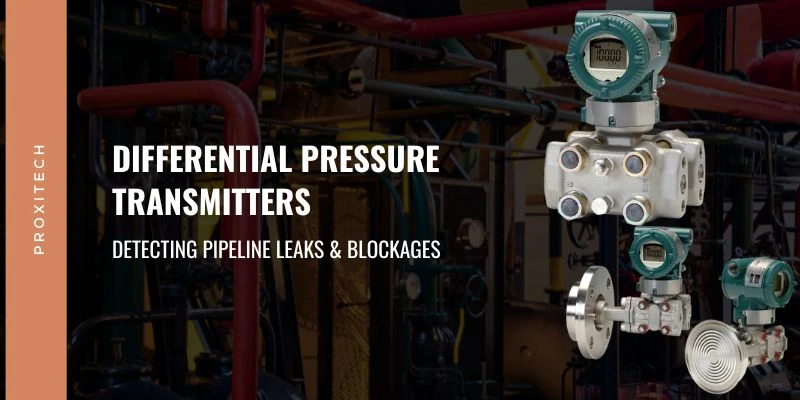
Pipelines are indispensable in industries such as water treatment, chemical processing, and oil and gas. The unexpected blockages or leaks can disrupt the entire operation. Even a minor obstruction in a pipeline can increase energy consumption, cause costly downtime, and reduce flow efficiency. Hence, as a solution, differential pressure transmitters detect pipeline issues by continuously monitoring pressure differences; deviations from expected values indicate problems.
Here, we will discuss how differential pressure transmitters serve as a vital tool to identify blockages and leaks in pipelines.
What is a Differential Pressure Transmitter?
A differential pressure transmitter measures the pressure difference between two points in a system and converts it into an electrical signal. It compares pressure levels upstream and downstream, giving insight into how the fluid or gas is behaving inside the pipeline.
The detected pressure difference is a powerful indicator of abnormalities such as leaks, blockages, or flow restrictions.
How Do Differential Transmitters Detect Pipeline Blockages?
Increased Pressure Drop Indicates Obstruction
During the operating conditions, it is normal to have a pressure drop across two points. However, the sudden spike in differential pressure indicates a problem. If the downstream pressure remains low and the upstream pressure increases, it signals a scoring obstruction.
Early Detection
Pipeline blockages consume more energy because they force compressors and pumps to work harder. Hence, when the differential pressure transmitter identifies a restriction early, it minimizes wear and tear on system components, pump strain, and unplanned shutdowns.
Constant Monitoring
DP transmitter providers' round-the-clock monitoring enables operators to detect blockages early. Rather than discovering the issue when equipment fails, DP transmitters allow teams to receive alerts when pressure levels deviate from normal ranges.
Abnormal Pressure Loss Signals a Leak
If there's a crack in the pipeline, fluid leaks, causing a pressure drop that is detected by DP transmitters.
Faster Response Time
Differential pressure transmitters can be integrated with automated systems or alarms for immediate action. Quick leak detection reduces environmental hazards, product loss, and operational disruption.
Key Considerations While Selecting a Differential Pressure Transmitter
Choosing the right differential pressure transmitter for different applications involves considering many factors, such as the transmitter's pressure range, measurement accuracy, and robustness to withstand the operating conditions. Moreover, the output signal should be compatible with the control system, and its installation and maintenance should be easy.
Wrapping it Up
The differential pressure transmitters are indispensable tools for modern leak detection, offering unparalleled reliability, integration capabilities, and accuracy. Whether you operate a water plant, chemical factory, or oil pipeline network, integrating DP transmitters is one of the most effective ways to ensure a smooth, safe, and cost-efficient flow. Businesses can enhance their processes and achieve optimal performance by choosing the right transmitter, performing proper installation and calibration, and ensuring regular maintenance.