
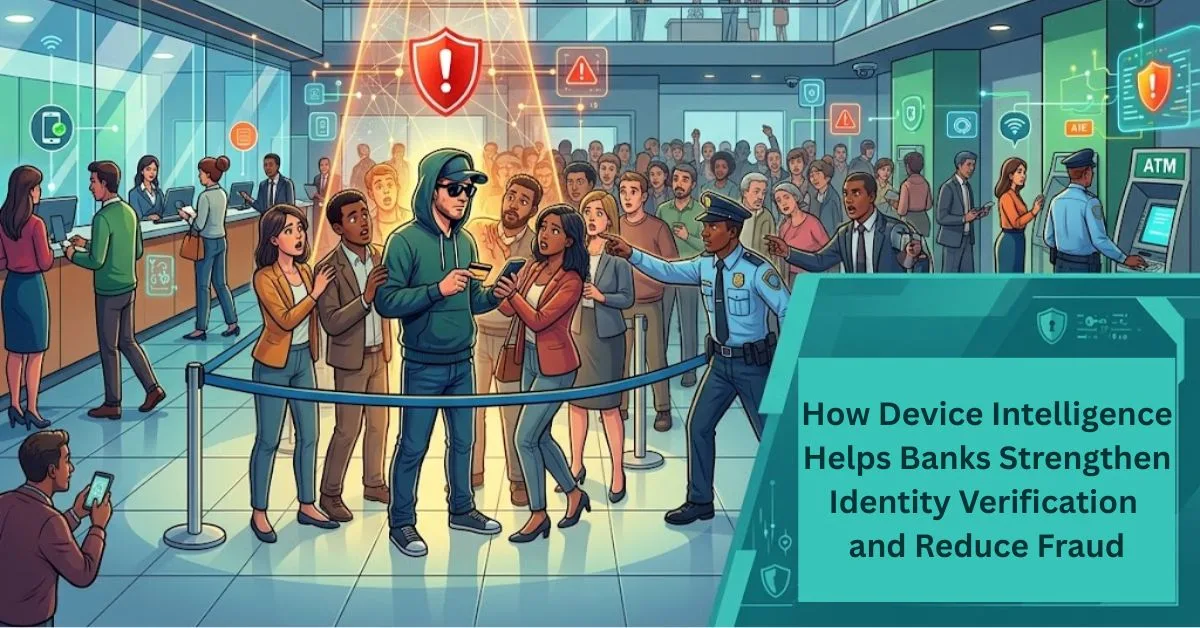
Digital banking has transformed how customers open accounts, transfer funds, apply for loans, and manage their finances. While this convenience has improved customer experiences, it has also expanded opportunities for fraudsters. From account takeover attacks and synthetic identities to deepfake-enabled scams, banks today face a growing range of sophisticated threats that traditional identity verification methods alone struggle to stop.
For years, financial institutions have strengthened security through Know Your Customer (KYC) checks, multi-factor authentication (MFA), one-time passwords (OTPs), and biometric verification. These measures remain essential, but they share a common limitation: they verify identity at specific moments in time.
The challenge is that fraud doesn't happen at a single moment. It unfolds throughout the customer journey, often after onboarding or authentication is complete.
This is where device intelligence for banks is becoming increasingly important. By providing continuous visibility into the devices accessing banking services, device intelligence helps financial institutions strengthen identity verification, improve fraud risk assessment, and detect suspicious activity before losses occur.
Why Traditional Identity Verification Is No Longer Enough
Identity verification in banking has historically focused on proving that a customer is who they claim to be. During onboarding, banks verify documents, perform KYC checks, and assess customer risk. During account access, they rely on passwords, biometrics, and MFA to authenticate users.
These controls are effective, but modern fraud tactics have evolved to exploit the gaps between verification events.
For example, a fraudster may gain access to legitimate credentials through phishing or social engineering. They may use a SIM swap attack to intercept authentication codes. In more advanced scenarios, criminals can use deepfake technology to bypass facial verification or leverage remote access tools to control a customer's device during an active session.
In each case, the identity verification process may appear successful. The credentials are valid, the authentication challenge is completed, and the session looks legitimate. Yet fraud is already underway.
This growing disconnect between authentication and trust has led many financial institutions to rethink their approach to online banking security.
Rather than relying solely on who a user claims to be, banks are increasingly evaluating the device behind every interaction.
The Growing Fraud Challenges Facing Digital Banks
As digital banking adoption grows, fraudsters are leveraging automation, artificial intelligence, and organized fraud networks to scale attacks more efficiently than ever before.
Some of the most significant threats include:
Account Takeover Fraud
Account takeover remains one of the most damaging forms of financial fraud. Attackers gain access to legitimate customer accounts using stolen credentials, social engineering tactics, or compromised authentication flows. Once inside, they can transfer funds, change account details, or initiate unauthorized transactions.
Synthetic Identity Fraud
Synthetic identity fraud combines legitimate and fabricated information to create entirely new identities. These identities often pass traditional onboarding checks, allowing fraudsters to open accounts and build credibility before executing fraudulent activities.
Mule Account Networks
Fraud rings frequently create or recruit multiple accounts to move illicit funds. While these accounts may appear unrelated at the identity level, they often share underlying device characteristics that reveal coordinated activity.
Deepfake and AI-Powered Fraud
Advances in artificial intelligence have made it easier for criminals to generate convincing synthetic identities, spoof biometric verification systems, and automate large-scale attacks against financial institutions.
These evolving threats require banks to look beyond credentials and documents to establish trust.
What Is Device Intelligence?
Device intelligence is the process of collecting and analyzing device, network, and behavioral signals to evaluate risk in real time.
Rather than focusing solely on identity data, device intelligence examines the environment behind every interaction.
This may include:
- Device characteristics and configurations
- Operating system and browser information
- Device integrity signals
- VPN, proxy, and emulator detection
- Geolocation consistency
- Network attributes
- Behavioral patterns and interaction signals
These signals are combined to create a persistent understanding of the device interacting with a banking platform.
Unlike passwords or authentication tokens, device attributes are significantly harder to manipulate at scale. This enables banks to continuously assess risk throughout the customer lifecycle rather than relying exclusively on point-in-time verification.
As a result, banking device intelligence adds an important layer of trust that complements existing identity verification systems.
How Device Intelligence Strengthens Identity Verification
1. Provides Continuous Trust Beyond Onboarding
Digital identity verification is essential during customer onboarding, but trust should not end once an account is approved.
Device intelligence allows banks to continuously evaluate whether the same trusted device is accessing an account over time. If a login suddenly originates from an unfamiliar device environment, risk signals can be assessed immediately.
This ongoing validation helps financial institutions maintain confidence in customer identities long after the initial verification process is complete.
2. Helps Prevent Account Takeover Fraud
One of the most valuable applications of device intelligence fraud detection is identifying account takeover attempts.
Even when attackers possess valid credentials, they often operate from devices that differ significantly from a customer's normal behavior. New device environments, suspicious configurations, emulator usage, or unusual behavioral patterns can all indicate elevated risk.
By identifying these anomalies in real time, banks can apply additional verification steps before fraudulent transactions occur.
3. Strengthens Synthetic Identity Fraud Detection
Synthetic identities are specifically designed to pass traditional identity checks.
However, fraudsters frequently reuse the same devices across multiple applications, accounts, and transactions. Device intelligence helps uncover these hidden connections by identifying shared device attributes and suspicious patterns that would otherwise remain invisible.
This makes synthetic identity fraud detection significantly more effective during both onboarding and ongoing account monitoring.
4. Improves Fraud Risk Assessment
Traditional risk models often rely heavily on customer information and transaction history.
Device intelligence enriches these models by introducing device-level context. Risk teams gain visibility into whether a device has been associated with previous fraud attempts, suspicious activity, or coordinated abuse.
This additional context enables more accurate fraud risk assessment in banking, helping institutions prioritize genuine threats while reducing unnecessary reviews.
5. Detects Organized Fraud Networks
Modern fraud rarely operates in isolation.
Fraud rings often manage multiple accounts, devices, and identities simultaneously. While individual accounts may appear legitimate, device intelligence can reveal patterns linking seemingly unrelated activities.
By identifying shared devices, behavioral similarities, and recurring fraud infrastructure, banks can uncover coordinated attacks much earlier in the fraud lifecycle.
6. Reduces False Positives and Improves Customer Experience
Security controls must balance protection with customer convenience.
Without sufficient context, banks may mistakenly flag legitimate customers as suspicious, creating unnecessary friction and increasing operational costs.
Device intelligence helps distinguish between genuinely risky activity and normal customer behavior. A trusted customer accessing their account from a recognized device can enjoy a smoother experience, while higher-risk interactions receive additional scrutiny.
This allows institutions to strengthen device intelligence banking security without compromising user experience.
How SHIELD Device Intelligence Helps Banks Stay Ahead of Fraud
As fraud tactics continue to evolve, banks need more than isolated fraud signals. They need a comprehensive view of risk across onboarding, account access, and transaction journeys.
SHIELD's Device-First Fraud Intelligence Platform helps financial institutions identify trusted users while detecting suspicious devices, fraud infrastructure, and coordinated abuse in real time.
By combining device intelligence, machine learning, behavioral analysis, and global fraud intelligence, SHIELD enables banks to:
- Detect account takeover attempts before funds are moved
- Identify synthetic identities and multi-accounting activity
- Uncover fraud rings operating across multiple accounts
- Recognize emulators, device spoofing, and suspicious environments
- Improve fraud decisioning with real-time risk insights
- Reduce false positives while maintaining a seamless customer experience
Rather than replacing existing identity verification processes, SHIELD strengthens them by adding persistent device-level trust throughout the customer journey.
The Future of Banking Fraud Prevention
Identity verification remains a critical component of modern banking security. However, fraudsters have become increasingly effective at exploiting the limitations of point-in-time verification methods.
As digital banking ecosystems continue to grow, institutions need a more comprehensive approach to trust.
Device intelligence provides that additional layer by continuously evaluating the devices behind customer interactions, helping banks identify suspicious behavior, strengthen fraud prevention strategies, and improve risk decision-making.
For banks looking to enhance security without introducing unnecessary friction, combining identity verification with device intelligence offers a more resilient foundation for fraud prevention.
The financial institutions that embrace this approach will be better positioned to protect customers, reduce losses, and build long-term trust in an increasingly digital world.
Frequently Asked Questions
What is device intelligence in banking and how does it work?
Device intelligence in banking is the process of collecting and analyzing device, network, and behavioral signals to assess risk. It creates a persistent understanding of the devices interacting with banking platforms and helps identify suspicious activity in real time.
How does device intelligence strengthen identity verification?
Device intelligence strengthens identity verification by providing continuous trust beyond onboarding and authentication events. It evaluates whether the device accessing an account aligns with expected customer behavior, helping detect fraud even when credentials appear legitimate.
Why are banks adopting device intelligence for fraud prevention?
Banks are adopting device intelligence for fraud prevention because traditional identity verification methods alone cannot effectively detect threats such as account takeover, synthetic identity fraud, device spoofing, and coordinated fraud networks.
How does device intelligence help prevent account takeover fraud?
Device intelligence helps prevent account takeover fraud by identifying unusual device behavior, unfamiliar environments, emulator usage, suspicious network activity, and other risk indicators that may signal unauthorized account access.
Can device intelligence reduce fraud without affecting customer experience?
Yes. Device intelligence enables banks to apply risk-based security measures. Trusted users can enjoy seamless access while suspicious interactions receive additional verification, helping reduce fraud without creating unnecessary friction for legitimate customers.