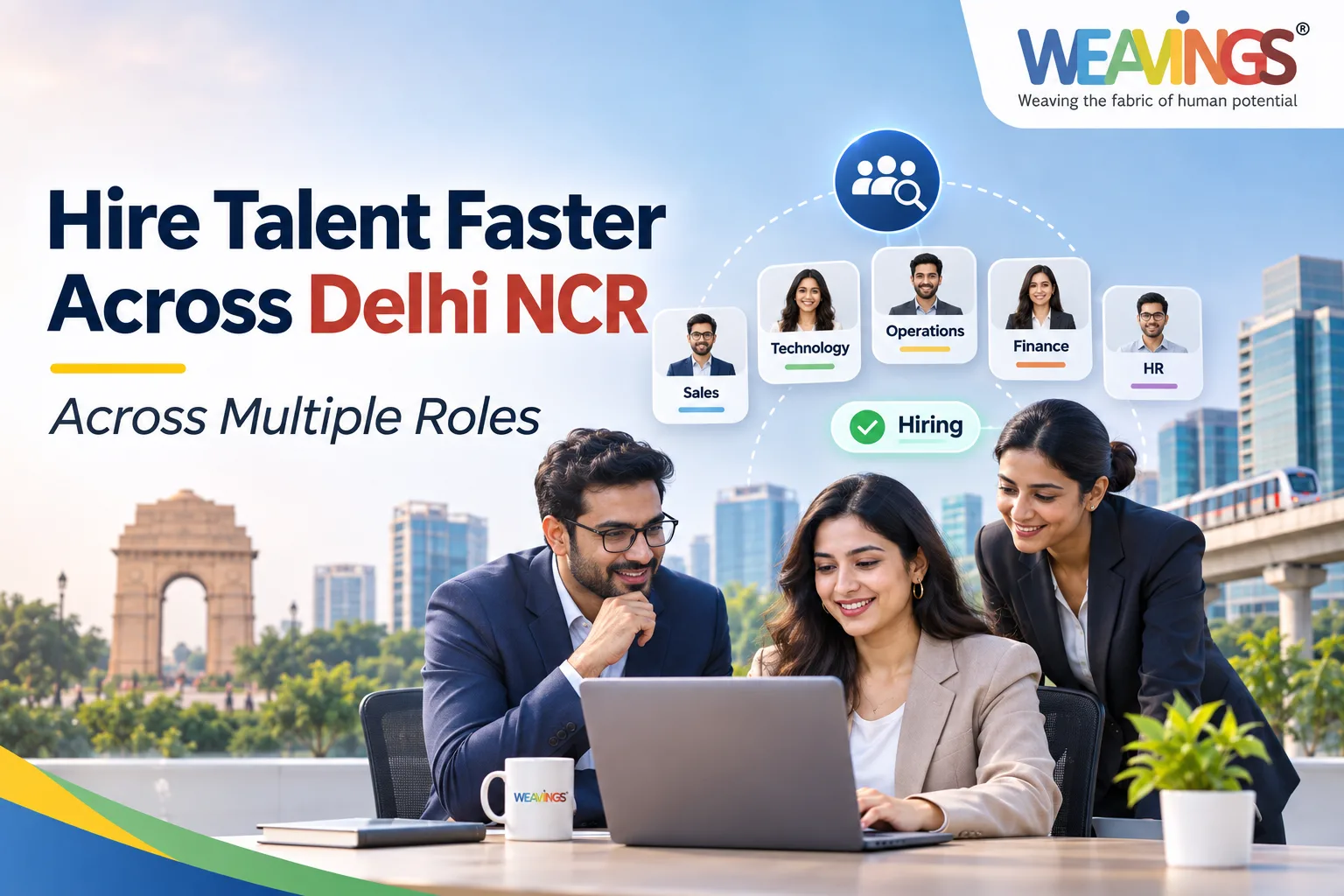
Recruiting employees across different departments can be challenging for businesses operating in Delhi NCR. Whether a company needs IT professionals, sales executives, warehouse staff, finance specialists or experienced managers, every position requires a different approach to recruitment.
For organisations expanding across Delhi, Noida, Gurugram and Faridabad, managing multiple vacancies simultaneously can create delays, increase administrative pressure and affect business operations.
A well-planned recruitment strategy can help companies hire talent faster in Delhi NCR while maintaining candidate quality and workforce stability.
Why Multi-Role Hiring Is Challenging for Businesses
Hiring a single employee is relatively straightforward compared with recruiting professionals for several departments at once.
Businesses often experience recruitment challenges because different positions require different skill sets, salary expectations, experience levels and joining timelines.
For example, recruiting a software developer involves technical assessments, while hiring warehouse employees requires evaluating availability, shift flexibility and operational experience.
Without a structured recruitment process, HR teams may struggle with delayed interviews, unsuitable candidate applications and last-minute withdrawals.
Companies looking to improve their recruitment process can explore this detailed guide on how Delhi NCR businesses can hire talent faster across multiple roles.
1. Define Workforce Requirements Before Starting Recruitment
An effective hiring strategy begins with understanding the organisation's actual workforce needs.
Employers should identify the positions they need to fill, required qualifications, hiring urgency, workforce location, compensation range and expected joining dates.
Separating vacancies according to business priority allows recruitment teams to focus on critical positions while maintaining progress on other requirements.
This approach becomes particularly important when businesses are expanding operations or recruiting across several locations simultaneously.
2. Choose the Right Recruitment Model
Not every business requirement needs the same employment arrangement.
Companies hiring professionals for long-term responsibilities can benefit from permanent recruitment services, which support candidate sourcing, screening, interview coordination and full-time employee recruitment.
However, organisations experiencing seasonal demand, operational expansion or temporary workforce shortages may find contract staffing services more suitable.
Contract staffing allows companies to maintain workforce flexibility while supporting temporary, fixed-term and project-based employment requirements.
Selecting the appropriate staffing model can reduce unnecessary recruitment delays and help businesses align workforce availability with operational demand.
3. Build Separate Recruitment Pipelines for Different Roles
One common mistake businesses make is applying the same hiring process to every vacancy.
Recruiting operational employees requires different sourcing and evaluation methods from hiring technical specialists or senior management professionals.
Businesses should organise recruitment into dedicated workstreams for corporate hiring, operational staffing, technical recruitment and bulk workforce requirements.
For technology-driven organisations, specialised IT staffing and recruitment services can support the identification of candidates with relevant technical experience and project-specific skills.
Maintaining separate recruitment pipelines also enables HR teams to conduct candidate sourcing, screening and interview scheduling simultaneously.
4. Reduce Interview Delays and Candidate Dropouts
Recruitment speed depends on more than finding suitable candidates.
Lengthy interview processes, delayed feedback and slow offer approvals can result in qualified professionals accepting opportunities elsewhere.
Businesses can improve hiring efficiency by establishing clear interview schedules, defining decision-making responsibilities and communicating regularly with shortlisted candidates.
Salary expectations, work location, notice periods and joining availability should also be discussed during initial screening.
These measures help employers avoid unnecessary interviews and reduce the likelihood of candidates withdrawing before joining.
5. Consider Location-Based Recruitment Across Delhi NCR
Delhi NCR includes several important employment centres, including New Delhi, Noida, Gurugram, Greater Noida and Faridabad.
Although these locations belong to the same wider business region, commuting requirements can influence candidate availability and job acceptance.
A professional may be comfortable working in Noida but unwilling to travel daily to Gurugram.
Businesses should therefore consider workplace accessibility, transportation availability, shift timings and employee location preferences before finalising candidate shortlists.
Working with an experienced provider of recruitment and manpower services in Delhi NCR can help companies coordinate hiring requirements across locations and workforce categories.
6. Work With a Recruitment Partner That Understands Business Needs
An experienced recruitment partner can help organisations manage multiple hiring requirements without placing excessive pressure on internal HR teams.
Weavings Manpower Solutions supports businesses with permanent recruitment, contract staffing, IT recruitment and workforce management services.
Its recruitment approach focuses on understanding employer requirements, sourcing relevant candidates, coordinating screening and supporting hiring and onboarding processes.
For companies managing multiple departments or locations, structured recruitment support can make workforce planning more organised and manageable.
Conclusion
Hiring talent faster across Delhi NCR requires a combination of workforce planning, targeted candidate sourcing, suitable staffing models and efficient recruitment coordination.
Businesses that prioritise vacancies, maintain separate recruitment pipelines and streamline hiring decisions are better positioned to reduce delays without compromising candidate suitability.
Whether an organisation needs permanent professionals, contract employees or specialised technical talent, choosing a recruitment approach aligned with business requirements is essential.
With structured recruitment and staffing support from Weavings Manpower Solutions, businesses can manage multi-role hiring requirements and build a workforce that supports sustainable growth.