Summary
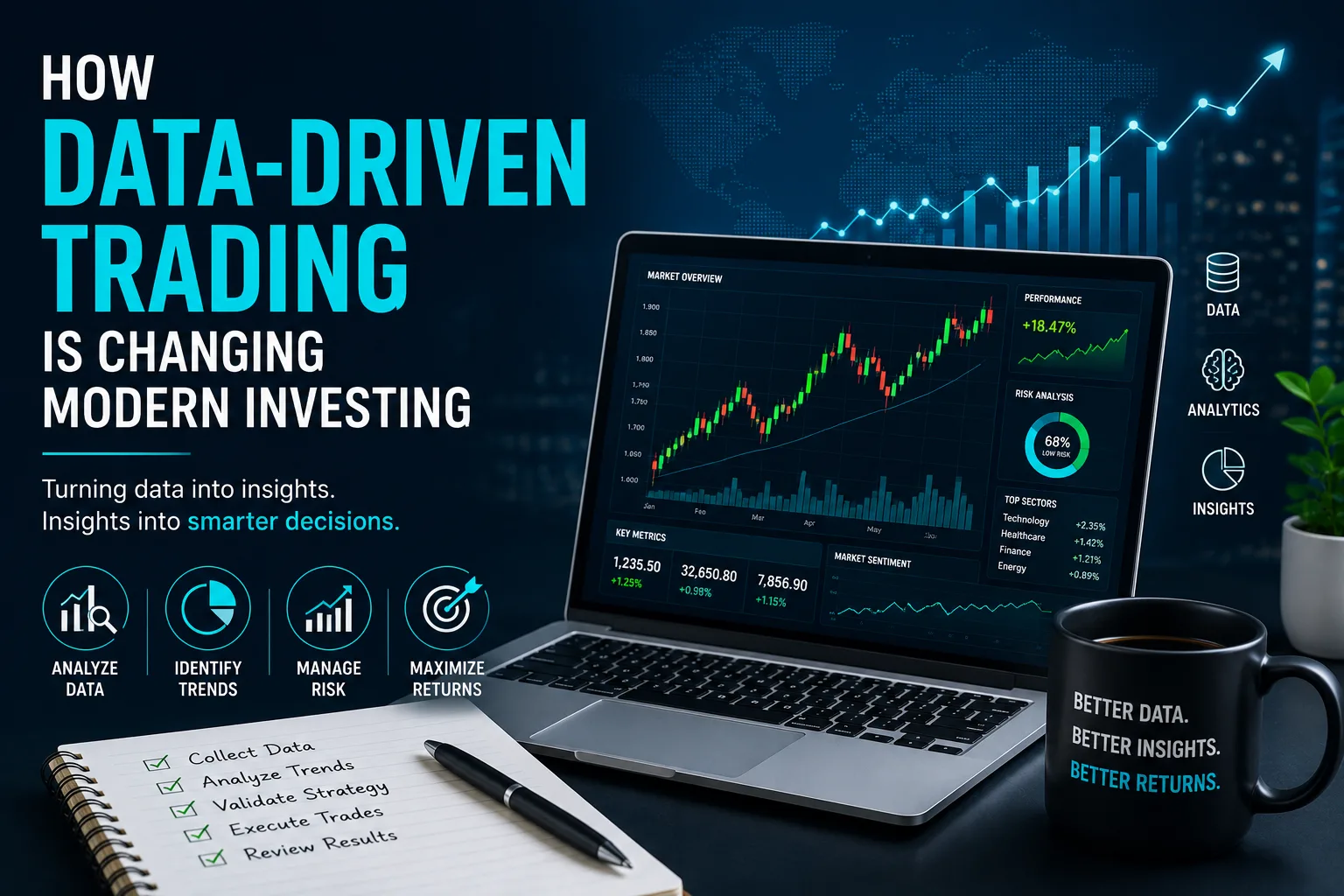
The world of investing has changed dramatically over the past decade. Investors no longer rely solely on intuition, news headlines, or market rumors to make decisions. Instead, data has become one of the most valuable tools in modern finance. From identifying market trends to managing risk, data-driven trading is helping investors make more informed and objective decisions. As technology continues to evolve, understanding the role of data in investing has become increasingly important for both beginners and experienced traders.
Introduction
Not too long ago, investing often felt like a game of opinions.
One analyst predicted a market rally. Another warned of a crash. Television experts debated stock picks, social media influencers shared "hot tips," and investors tried to make sense of it all.
The problem?
Opinions can change overnight.
Data, on the other hand, tells a story.
It may not predict the future with perfect accuracy, but it provides evidence, context, and insights that help investors make smarter decisions. That's exactly why data-driven trading has become such an important part of modern investing.
Today, successful investors aren't just asking, "What should I buy?" They're asking, "What does the data suggest?"
That shift in mindset is transforming the way people approach financial markets.
What Is Data-Driven Trading?
Data-driven trading is the process of making investment decisions based on research, statistics, market data, and analytical insights rather than emotions or speculation.
Instead of following rumors or reacting impulsively to market movements, traders use measurable information such as:
- Price trends
- Trading volume
- Earnings reports
- Economic indicators
- Sector performance
- Historical market behavior
- Risk metrics
The goal is simple: reduce guesswork and increase decision quality.
Think of it like driving with a GPS. You still make the final decision, but having accurate information makes reaching your destination much easier.
Why Investors Are Moving Toward Data
Financial markets generate enormous amounts of information every day.
Stock prices fluctuate every second. Companies release earnings reports. Governments publish economic data. Global events influence investor sentiment.
Trying to process all of this manually is almost impossible.
This is where data analysis becomes valuable.
Modern investors can use technology and research tools to identify patterns, evaluate opportunities, and understand potential risks before entering a trade.
Rather than relying on hope, they rely on evidence.
And in investing, evidence often leads to better decisions.
The Rise of Technology in Investing
Technology has made professional-grade research more accessible than ever before.
Years ago, sophisticated market analysis was primarily available to large institutions and hedge funds. Today, individual investors have access to charting platforms, stock screeners, research reports, and analytical tools that were once out of reach.
Artificial intelligence, machine learning, and advanced analytics are also playing a growing role in investment research.
These technologies can analyze large datasets, identify trends, and uncover patterns that might otherwise go unnoticed.
While technology cannot eliminate market risk, it can help investors make more informed choices.
How Data Improves Decision-Making
One of the biggest challenges investors faces is emotional decision-making.
Fear causes investors to sell too early.
Greed encourages them to chase stocks after significant price increases.
Data helps create a more objective framework.
For example, instead of buying a stock because it is trending on social media, an investor can evaluate:
- Revenue growth
- Profitability trends
- Technical indicators
- Industry performance
- Market sentiment
This approach encourages decisions based on facts rather than emotions.
And over time, consistency often matters more than occasional lucky trades.
Better Risk Management Through Research
Every investment carries risk.
The difference between successful investors and struggling investors is often how they manage that risk.
Data-driven investing helps traders evaluate potential downside before committing capital.
Research can help answer important questions:
- How volatile is the stock?
- What are the key risks facing the company?
- How has the stock performed during previous market corrections?
- Does the reward justify the risk?
These insights help investors build strategies that focus not only on potential returns but also on capital preservation.
After all, protecting capital is just as important as growing it.
Why Research Matters More Than Ever
Today's markets move quickly.
News spreads instantly. Social media influences sentiment. Algorithms execute trades in fractions of a second.
In such an environment, relying solely on opinions can be dangerous.
Research provides structure.
It allows investors to filter noise, identify meaningful opportunities, and make decisions with greater confidence.
This is why many traders are increasingly embracing research-based approaches and professional market analysis to guide their investment strategies.
The Future of Data-Driven Investing
The role of data in investing will only continue to grow.
As technology advances, investors will gain access to even more sophisticated tools for analyzing markets and evaluating opportunities.
However, one thing is unlikely to change.
Data will remain a tool, not a substitute for judgment.
Successful investors will be those who combine technology, research, and discipline with sound decision-making.
The future of investing isn't about replacing human thinking.
It's about improving it.
Conclusion
Data-driven trading is reshaping the investment landscape by helping investors make decisions based on evidence rather than emotion.
In a world where information is abundant and market conditions can change rapidly, research has become one of the most valuable assets an investor can possess.
While no strategy can eliminate uncertainty, a data-driven approach provides greater clarity, stronger risk management, and a more disciplined investment process.
As investing continues to evolve, those who learn to understand and use data effectively will likely be better positioned to navigate the opportunities and challenges of modern financial markets.
FAQs
1. What is data-driven trading?
Data-driven trading involves using market research, financial data, technical indicators, and analytical tools to make investment decisions instead of relying on speculation or emotions.
2. Why is data important in investing?
Data helps investors identify trends, evaluate opportunities, assess risks, and make more objective decisions.
3. Can beginners use data-driven trading strategies?
Yes. Beginners can start with basic research tools, company financials, and technical indicators before gradually adopting more advanced analytical methods.
4. Does data-driven trading guarantee profits?
No. No investment strategy can guarantee profits. However, data-driven trading can improve decision-making and help investors manage risk more effectively.
5. How does research improve investment performance?
Research helps investors understand market conditions, evaluate opportunities, avoid emotional decisions, and develop a structured investment approach.