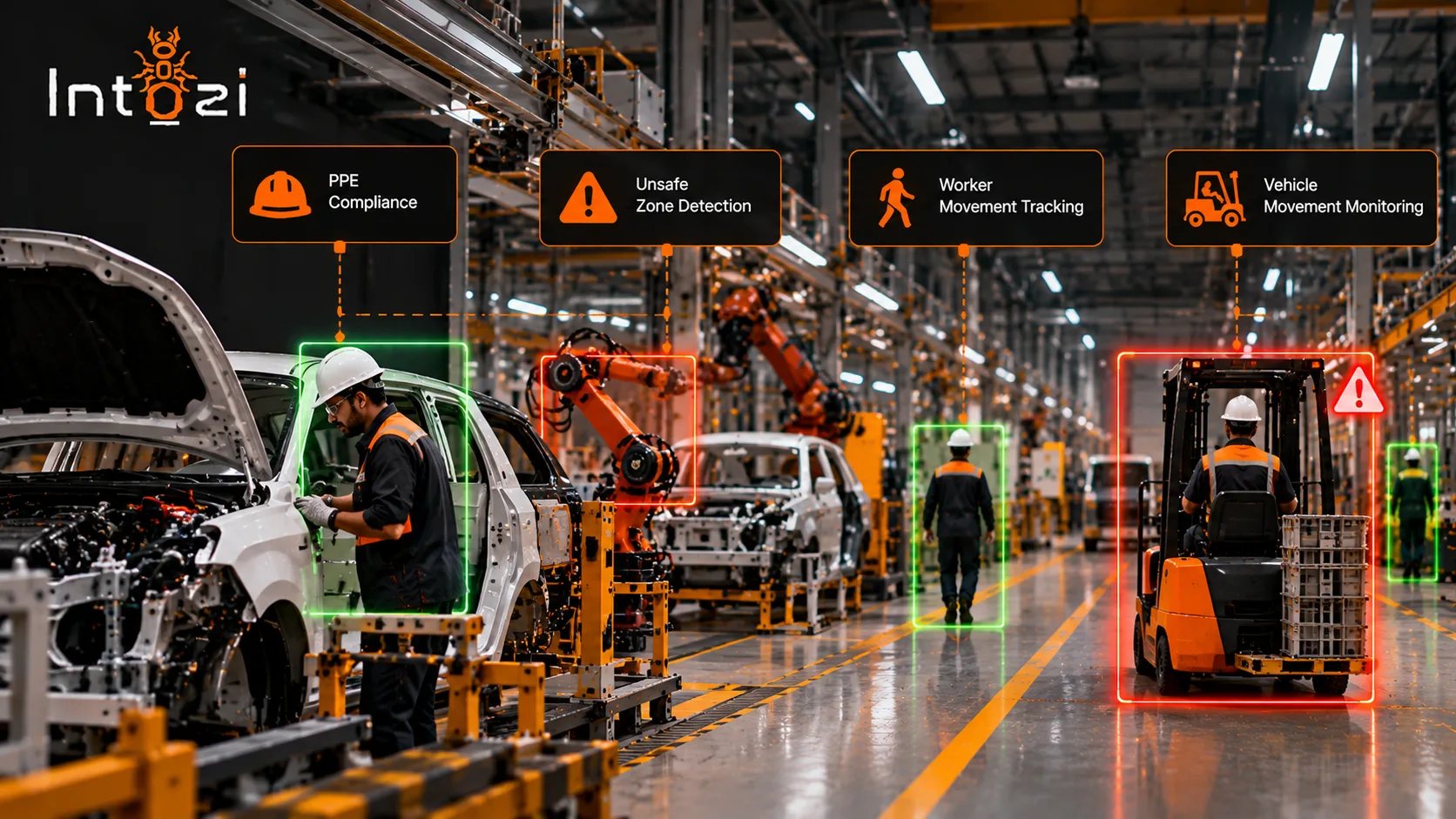
Artificial Intelligence (AI) has emerged as a transformative force across multiple sectors, and laboratory environments are no different. With the ever-growing focus on precision, safety, and streamlined processes, laboratories have recognized the benefits of utilizing AI-based computer vision systems to gain efficiencies. In a recent survey, conducted in 2024, more than 68% of laboratory personnel report incorporating AI into their work, a 14% increase from the prior year.
Research in laboratory settings is highly dependent upon accuracy, compliance with safety protocols, and timely executions. Even a minor error can lead to one of three challenges: impact the overall outcome, delay a process, or create hazards when working with potentially dangerous materials. By embracing Computer Vision for Lab Efficiency, we can automate a number of crucial processes, increase the efficiency of monitoring, and reduce dependency on manual labor. This article discusses some of the key challenges in laboratory settings, how computer vision can help, and future opportunities for smarter and safer laboratory workflows.
Key Issues in Laboratory Environments
Laboratories experience many operational, safety, and hazard-related issues. Here are some of the most significant issues where computer vision can make a difference.
1. Safety Risks
Laboratories work with hazardous materials, chemicals, and flammable liquids. If left unattended, these risks can lead to accidents. Using AI to detect a fire in laboratories can help provide an early warning and allow an immediate response to minimize damage and enhance safety.
2. Human Errors and Equipment Failure
From improperly labeling a sample to mishandling a tool, human error is still a common problem. Equipment failures cause inconsistency in results, delays that can be costly, and decrease the precision of research. Monitoring the lab operations with AI monitoring can help lessen human error through continuous monitoring and analysis.
3. PPE Monitoring
Personal Protective Equipment (PPE) is a requirement in labs that cannot be ignored. However, ensuring compliance in PPE manually can be cumbersome and prone to error. It is essential to ensure laboratory personnel follow safety protocols regarding wearing masks, gloves, and goggles for workplace safety, and computer vision can automate the enforcement of protocols.
4. Microscopic Sample Analysis
Microscopic image analysis, such as identifying a cell or chemical structure, requires precision, expertise, and accuracy. Manually looking through samples and images is time-consuming and prone to fatigue when repeating for different experiments. AI can allow the analysis of images to become quicker and more precise.
Computer Vision and Its Role in Laboratory Operations
Computer vision, supported by sophisticated AI models, provides laboratories the opportunity to move toward automation, efficiency, and real-time monitoring. Systems like YOLO11, (You Only Look Once), can be launched in any lab to integrate object detection and hazard identification into everyday practice.
Computer vision models can do the following:
- Monitor the use of lab equipment.
- Assess for hazardous spills or fire hazards.
- Manage PPE compliance.
- Automate sample classification or quality assessment.
The various capabilities of computer vision in the lab environment make it a powerful tool for the modern lab that is aiming to maintain compliance and increase productivity.
Training YOLO11 for Laboratory Applications
YOLO11 is one of the most advanced computer vision models with impressive potential for use in laboratory settings because it can provide high speed and high accuracy. Specifically, the employment of such models in laboratories follows a systematic process:
1. Data Collection
Laboratories take a myriad of images, including (but not limited to) laboratory equipment (i.e., hoods, sinks, glassware), PPE gear, sample slides – just to name a few examples.
2. Data Labeling
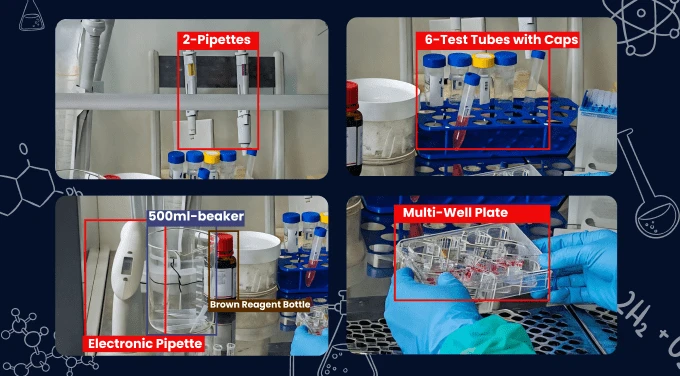
The images are then labeled with bounding boxes (the type you see around objects in photos) to recognize specific items of interest, like test tubes, chemical spills, or microscopes.
3. Model Training
YOLO11 would then be trained on each of those datasets to classify and detect laboratory scenarios.
4. Validation & Testing
The accuracy of the model is then validated and tested using separate datasets.
5. Deployment
After the model accuracy is validated, the model is ready to be combined into laboratory surveillance systems to monitor labs and provide response recommendations in real-time.
Major Applications of Computer Vision in Laboratory Settings
Training YOLO11 on datasets focused on laboratory applications could provide research and industrial laboratories with reliable ongoing monitoring, incident detection automation, and workflow improvement opportunities.
AI-based computer vision techniques are already changing how laboratories operate. Here are some of the most consequential applications:
1. Cells Identification & Classification
In medical sciences, studying microscopic imagery is essential for the detection of physicians as well as for cell studies. In the past, this required human observation processes which are time-consuming. AI-based models, for example, YOLO11, can be trained to identify and classify blood cells and report abnormalities by streamlining workflows and increasing accuracy of diagnoses.
In addition to reducing human error, automated process allows researchers to analyze bigger sets of data and provides more depth of knowledge for disease research, drug development, and clinical trials.
2. PPE Compliance Monitoring
Enforcing compliance with PPE is crucial when working with hazardous chemicals. It is feasible to create a computer vision system to automatically detect if laboratory personnel are donning compliant PPE, such as gloves, goggles, and lab coats. By sending real-time alerts, these systems can increase safety, prevent accidents, and help ensure compliance with regulations with little to no human observation.
3. Laboratory Hazard Identification
Hazard identification is the most important application of vision AI in laboratories. Computer vision-based systems can:
- Distinguish between a flammable and non-flammable chemical
- Identify spills or abnormal presence of chemicals on laboratory work surfaces
- Observe and monitor critical lab instruments for significant overheating or performance failures
In addition to any awareness the user has of the environment, the automated notification systems enable laboratory users or managers to view the hazard detection system in real-time and receive device alerts.
Future Applications of Computer Vision in Laboratories
As systems with artificial intelligence capabilities advance, laboratories will gain additional benefits:
- Automated quality control: AI systems can assess lab samples in real time to ensure standardization in research and production.
- Augmented reality (AR) assistance: Vision AI coupled with AR features can help lab technicians understand how to work with tools, carry out experiments, and comply with safety standards.
- Predictive maintenance: Computer vision can monitor laboratory instruments and predict failures prior to their occurrence, allowing greater efficiency and conserving these resources.
- Automating access control: Systems relying on AI can control entry into sensitive lab zones, ensuring that only qualified personnel have access to restricted areas.
Conclusion
Safety, precision, and efficiency are critical for laboratories—and computer vision AI can be a game-changer for each area. Computer vision can improve laboratory safety, performance, and productivity by automating sample analysis, compliance monitoring for PPE (personal protective equipment), and real-time hazard detection, significantly reducing manual errors and providing smarter workflows.
Nextbrain’s AI Video Analytics software utilizes complex computer vision models such as YOLO11. Nextbrain works with laboratories and industrial research facilities to incorporate intelligent monitoring solutions to achieve improved safety and efficiency.
As laboratories embark on a journey to implement AI-enabled vision systems, not only will compliance and risk reduce, but they can also integrate and create preparedness for a future-ready/automated research lab workspace.
Would you like to find out how AI video analytics can build smart lab workflows? Contact our experts today.