
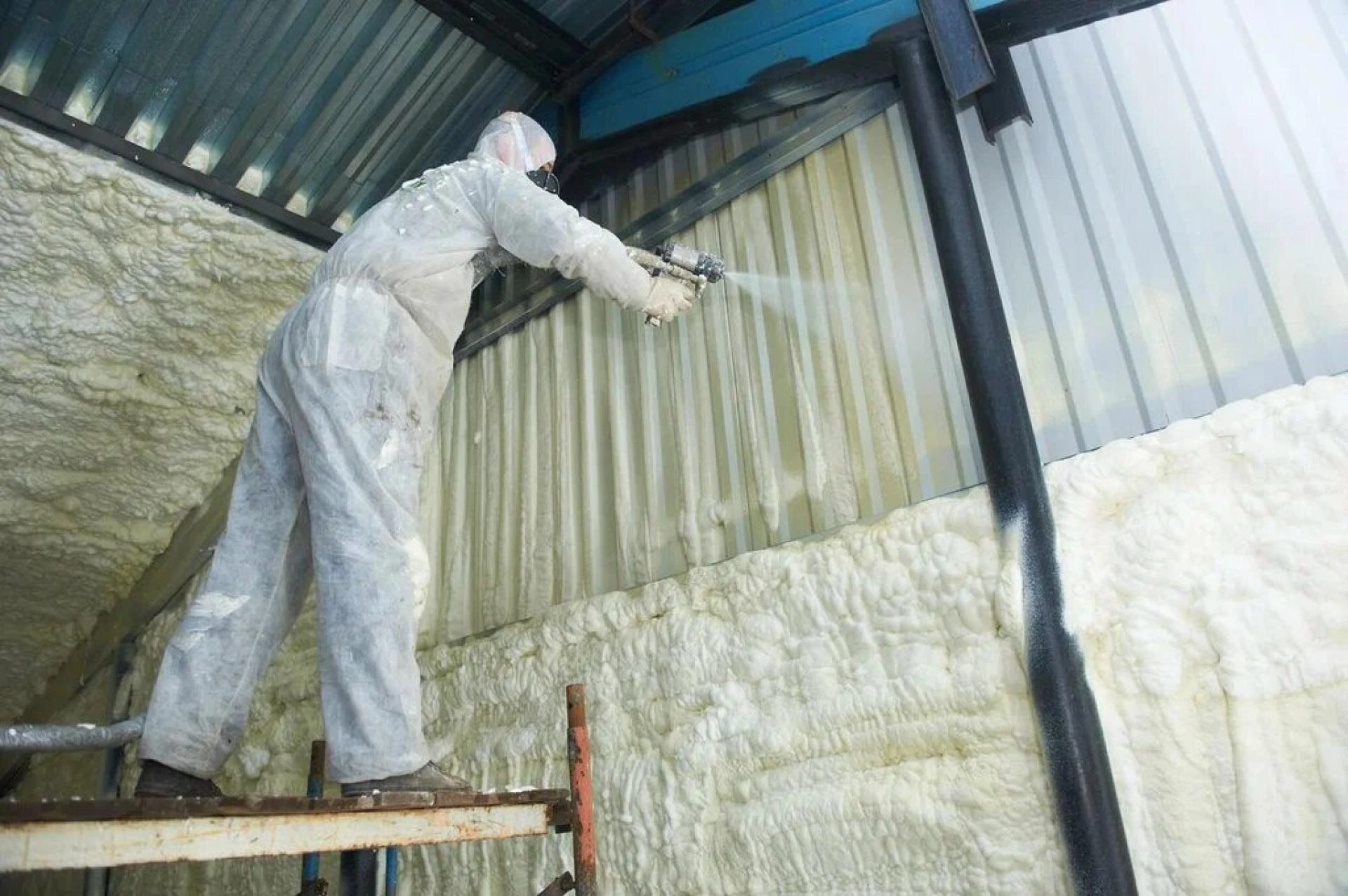
Commercial spray foam insulation keeps HVAC loads lower by creating a superior, monolithic building envelope that aggressively controls the three primary drivers of energy consumption: thermal transfer, air leakage, and moisture infiltration. Unlike traditional insulation methods that only address thermal resistance (R-value), spray foam acts as an all-in-one insulator, air barrier, and, in the case of closed-cell foam, a moisture barrier. By eliminating uncontrolled air exchange and reducing latent heat load from humidity, it drastically lessens the amount of work an HVAC system must do to maintain the building's climate, leading to significant and sustained energy savings.
For commercial buildings, where heating, ventilation, and air conditioning can account for up to 50% of total energy use, this comprehensive approach is a financial game-changer. This article will explore the specific mechanisms through which commercial spray foam insulation directly reduces HVAC loads, based on established building science and extensive experience in commercial applications.
A Three-Pronged Attack on HVAC Workload
An HVAC system's "load" is the amount of heating or cooling required to keep the building at a set temperature. Spray foam insulation systematically reduces this load by tackling its three main components.
1. Minimizing Conductive Heat Transfer
The most obvious job of insulation is to slow the conduction of heat through the building's roof and walls. This is measured in R-value. Closed-cell spray foam offers one of the highest R-values per inch of any common insulation material, typically around R-7. This is particularly important in commercial construction, especially steel-framed buildings, where insulation cavity depth is often limited. The high R-value of spray foam maximizes thermal performance in these tight spaces, effectively minimizing heat gain in the summer and heat loss in the winter.
2. Eliminating Uncontrolled Air Infiltration
This is where spray foam creates the most significant advantage in a commercial setting. Large buildings like warehouses, retail stores, and manufacturing facilities have vast surface areas with countless seams, joints, and penetrations. Industry data shows that air leakage through these gaps can be responsible for 30-40% of a building's entire heating and cooling load. Spray foam is applied as a liquid that expands to fill every single crack and crevice, creating a continuous, permanent, and airtight seal across the entire building envelope. This stops uncontrolled air exchange, which means the HVAC system no longer has to constantly fight against infiltrating outside air.
3. Reducing the Latent Load from Moisture
A huge, often overlooked, part of an air conditioner's job is not just cooling the air, but also dehumidifying it. This process of removing water vapor (the "latent load") is extremely energy-intensive. Closed-cell spray foam is a certified vapor barrier. It prevents moisture-laden outdoor air from passing through the building envelope. By stopping this infiltration, the HVAC system has far less dehumidification work to do. This is a massive benefit in humid climates and is also critical for businesses that require controlled humidity levels for their products or processes.
Creating a High-Performance Commercial Building Envelope
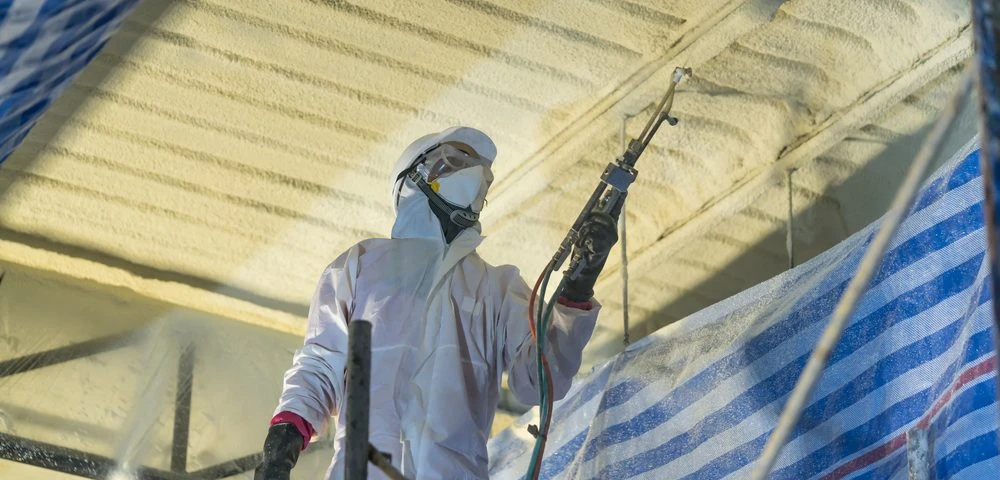
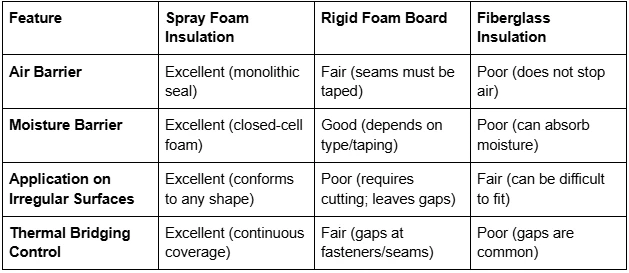
The term "monolithic" is often used to describe a spray foam barrier because it creates a single, seamless layer of protection. This is a huge advantage over other insulation systems that are made of separate boards or batts with thousands of feet of seams.
Conquering Thermal Bridging
In commercial steel buildings, the metal studs and beams act as thermal bridges, creating superhighways for heat to travel through the insulation. Because spray foam adheres directly to every surface, it covers and insulates these steel members far more effectively than rigid boards or batts, which have gaps at every connection point. This comprehensive coverage drastically reduces energy loss from thermal bridging.
Bonus Tip: For steel buildings, it's critical that the spray foam application fully encapsulates the purlins and I-beams. An experienced commercial applicator will know how to spray these complex shapes to ensure there are no hidden thermal bridges left exposed.
Comparing Commercial Insulation Systems
The Financial Case for Lower HVAC Loads
Reducing the HVAC load isn't just about efficiency; it's about significant, measurable financial returns for the business.
Opportunity for HVAC Right-Sizing
When a new commercial building is designed with a spray foam envelope, the HVAC system can be "right-sized." Because the building's heating and cooling loads are so much lower, a smaller, less expensive HVAC unit is required. The upfront capital savings from installing a smaller unit can be substantial, in some cases offsetting a large portion of the insulation cost. This is a whole-building engineering approach that smart developers and business owners use to reduce initial construction costs.
Drastically Lower Operating Costs
This is the most direct long-term benefit. A smaller HVAC unit that runs less often uses significantly less energy. For a business, this translates into lower, more predictable utility bills month after month. The energy savings over the 10-20 year lifespan of a commercial HVAC system are often enormous. The reduced runtime also means less wear and tear on the equipment, leading to lower maintenance costs and a longer service life.
Things to Consider Before Making a Decision
For commercial property owners, the decision to use spray foam involves a few key strategic considerations.
Importance of an Experienced Commercial Applicator
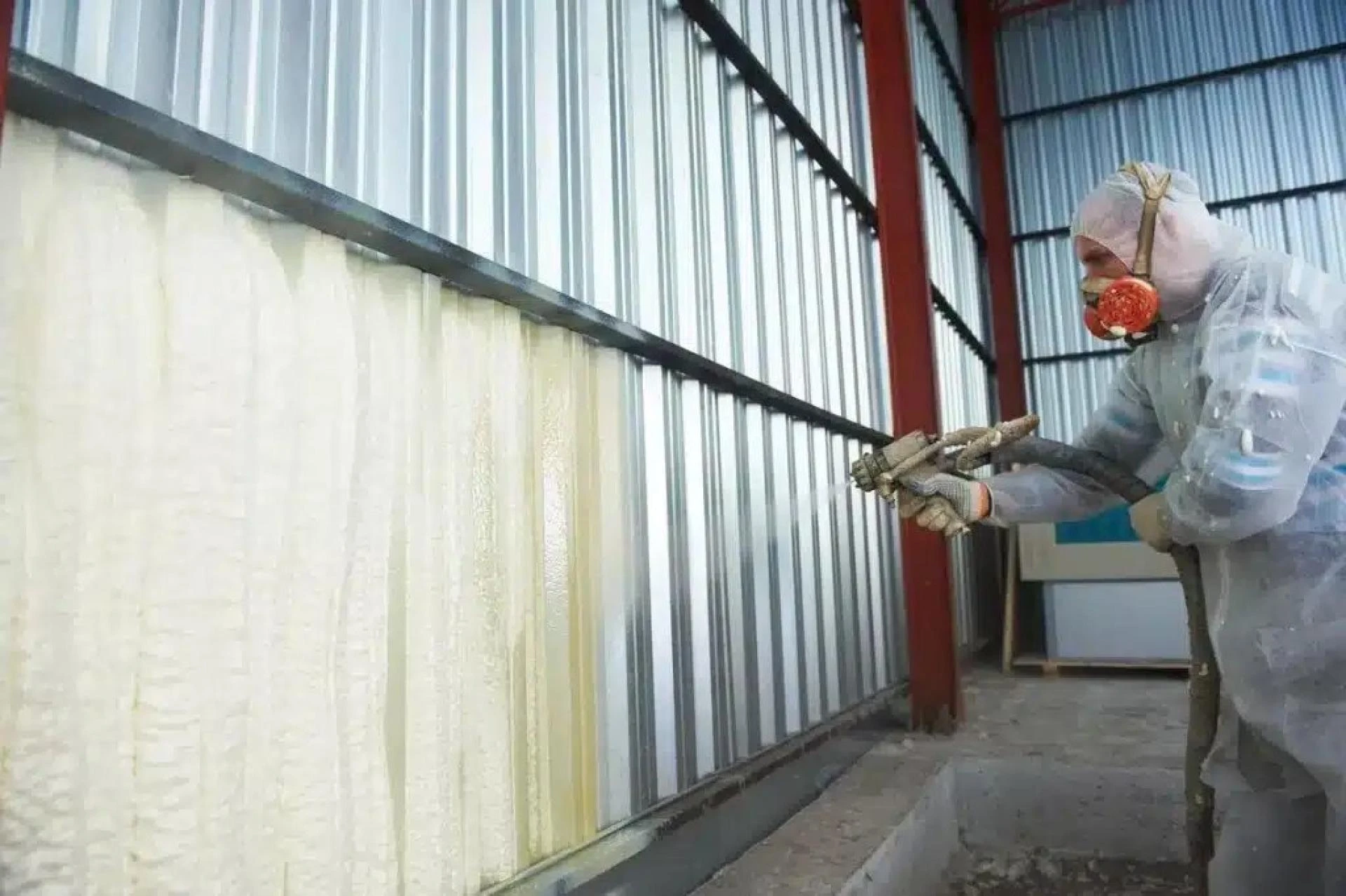
Large-scale commercial projects are far more complex than residential jobs. The logistics of site preparation, safety protocols for a large crew, and the technical skill required to apply foam consistently over tens of thousands of square feet demand a highly experienced commercial contractor.
Fire Codes and Thermal Barriers
Spray foam is plastic and is combustible. In nearly all commercial applications, it must be covered by a code-approved thermal or ignition barrier to meet fire safety regulations. This could be drywall, a cementitious coating, or a special intumescent paint. A professional commercial contractor will be an expert in these local building codes and will include the necessary fire protection in their project scope.
Bonus Tip: Ask potential contractors about their experience with different types of ignition barriers. Their knowledge of these systems is a good indicator of their commercial expertise.
Questions Business Owners Ask About Commercial Insulation
How does spray foam work on a metal building roof?
It works exceptionally well. It adheres directly to the underside of the metal panels, which not only insulates but also stops the condensation ("sweating") that is a common problem in metal buildings.
Can spray foam be used on the exterior of a commercial roof?
Yes. There are specific high-density, roofing-grade spray foam systems designed for exterior application on low-slope commercial roofs. They are often coated with a durable, reflective topcoat.
Is the upfront cost of spray foam justified for a commercial project?
When evaluated on a lifecycle cost basis, the answer is almost always yes. The combined savings from a smaller initial HVAC investment and decades of lower energy and maintenance costs typically provide a very strong return on investment.
How does spray foam affect a building's insurance rates?
In some cases, it can be beneficial. For example, the added structural strength from closed-cell foam can improve wind uplift resistance on a roof, which may be viewed favorably by insurers in storm-prone areas.
What is the typical installation time for a large warehouse?
This depends on the project size and complexity, but an experienced commercial crew can often apply thousands of square feet of foam per day. Proper project management is key to staying on schedule.
A Strategic Move for Operational Efficiency
Ultimately, choosing commercial spray foam insulation is a strategic business decision that directly impacts the bottom line. By creating a high-performance building envelope that dramatically lowers HVAC loads, it reduces upfront capital costs, slashes long-term operating expenses, and creates a more stable and productive indoor environment. For any business owner or facility manager focused on efficiency and long-term value, it is a superior solution.
Get a Commercial Building Assessment
Understanding the potential HVAC load reduction for a specific commercial property requires a professional analysis. For businesses in the Fresno area looking to cut operational costs and improve their facilities, consulting with an experienced insulation contractor is a critical step. The team at Supreme Spray Foam-Fresno has extensive experience in commercial applications and can provide a detailed project assessment. They can be reached at [email protected] or by phone at (559) 545-0800 for more information.
Reviewer: Emma Robinson contributed her knowledge from 8 years working with the spray foam industry. Her review helped shape this content with ideas grounded in what contractors and homeowners actually value.