Precision manufacturing depends on producing components that match exact dimensions, functional requirements, and design specifications. CNC machining in UAE supports this requirement by using computer-controlled equipment to shape raw materials into accurately manufactured parts. Understanding the available machining processes helps businesses select suitable production methods, prepare better designs, and achieve consistent component quality.
Understanding the Role of Computer-Controlled Machining
Computer Numerical Control, commonly known as CNC, is a manufacturing method in which machines follow programmed instructions to remove material from a workpiece. The process uses computer-aided manufacturing information to guide cutting operations and create components according to specified designs.
Unlike conventional machining, CNC equipment follows programmed movements rather than relying entirely on manual operation. This allows manufacturers to reproduce complex shapes and maintain dimensional consistency throughout production.
Precision is particularly important when components must fit together or perform specific functions. Even a small dimensional difference can affect the assembly, movement, or performance of a finished part. CNC technology helps control these variations through accurate cutting operations.
An important consideration is the relationship between design information and the final component. Engineers and designers need to provide clear technical drawings so machining operations can follow the intended dimensions and geometry.
The typical machining tolerance mentioned by Genesis-MFG is approximately +/- 0.005 inches (0.13 mm), while precision requirements can reach tighter levels depending on the material, geometry, and specifications. These figures demonstrate why tolerance requirements should be discussed before production begins.
For businesses evaluating CNC machining companies in Dubai, understanding the technical requirements of a project is more useful than considering equipment alone. The manufacturing process must be suitable for the component's intended function, dimensions, and material.
Selecting the Right Machining Process for Each Component
Different components require different machining operations. The correct process depends on the workpiece shape, required features, and amount of material that needs to be removed.
CNC milling is used to remove excess material through rotating cutting tools. It is suitable for producing flat surfaces, slots, profiles, and more complicated geometries. Different cutters, including end mills, chamfer mills, and helical mills, support different machining requirements.
For example, a component requiring several flat surfaces and accurately positioned openings may be produced through milling operations. The selected cutting tool and machine orientation influence how the workpiece is processed.
CNC turning works differently. Instead of moving a rotating cutter across a stationary workpiece, the material rotates while a cutting tool shapes its surface. CNC lathes are commonly used for cylindrical components, straight turning, tapered surfaces, threads, and external grooves.
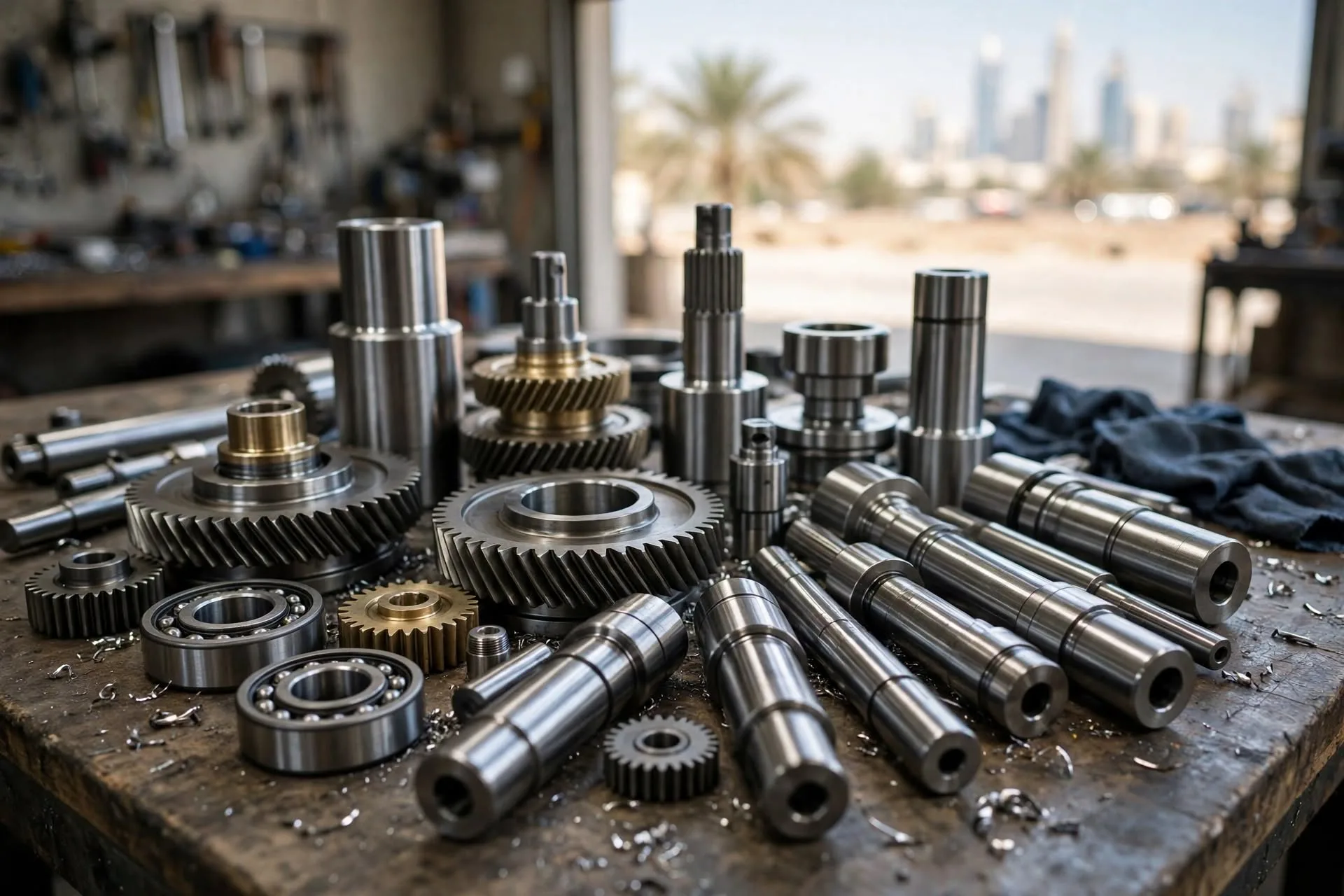
A shaft is a practical example of a part that may require turning. Its diameter, length, and surface features need to correspond with the technical drawing. Selecting the appropriate turning operation helps achieve the required shape.
Drilling is another important machining process. It creates cylindrical holes using rotating drill bits. Different drill types serve different purposes:
Spotting drills create initial or shallow holes.
Screw machine drills produce holes for component requirements.
Peck drills help manage chips during deeper drilling operations.
Chucking reamers enlarge previously drilled holes to achieve specified dimensions.
Wire Electrical Discharge Machining, also called wire EDM, uses electrical sparks to remove material. It is useful when a component requires intricate shapes that may be difficult to produce through conventional cutting methods.
These processes are not interchangeable in every situation. A cylindrical component may be suitable for turning, while a complicated profile may require milling or EDM. The design should determine the process rather than selecting a machine without evaluating the part.
Why Technical Drawings and Material Selection Matter
Accurate manufacturing begins before a machine starts cutting. The quality of the supplied design information directly influences how effectively a component can be reproduced.
A technical drawing communicates dimensions, tolerances, geometry, and other manufacturing requirements. When these details are incomplete, the production team may not have enough information to determine the correct machining approach.
Genesis-MFG identifies 2D and 3D drawings as important quotation requirements. STEP, IGES, and XT formats are preferred for three-dimensional designs, while PDF drawings are suitable for two-dimensional information containing dimensions and tolerances.
Before requesting a manufacturing quotation, businesses should prepare the following information:
A complete CAD drawing or suitable design file.
The required material specification.
The quantity of components.
Dimensional requirements and tolerances.
Surface finishing requirements, where applicable.
Material selection is equally important. Different materials behave differently during cutting operations, so the machining approach must consider the characteristics of the selected workpiece.
CNC machining can accommodate a range of materials, including metals and plastics. However, the final process depends on the component's geometry, material properties, and required finish.
For example, a component with complex geometry may need a different machining strategy from a straightforward cylindrical part. Providing accurate design information allows the manufacturer to assess these requirements before production.
Businesses comparing CNC machining companies in Dubai should therefore examine how clearly technical requirements are communicated during the quotation stage. A suitable manufacturing partner should understand the drawing, material, quantity, and finishing expectations before proceeding.
Maintaining Accuracy Throughout the Production Process
Producing a component according to a drawing requires attention to several connected manufacturing decisions. Machine selection, cutting operations, tooling, and design specifications all contribute to the final result.
The first step is reviewing the component's geometry. This helps determine whether milling, turning, drilling, EDM, or a combination of processes is appropriate.
The next step is confirming tolerances. Not every dimension requires the same level of precision. Critical measurements should be identified clearly so production requirements remain practical and measurable.
Tool selection also matters. Different cutting tools are designed for different operations. Using an appropriate tool helps create the required profile while maintaining the intended machining approach.
Another consideration is surface finishing. Some components require a particular surface condition because of their intended application or assembly requirements. These expectations should be communicated in the technical drawing or quotation request.
Consistency also depends on following the approved design throughout production. Changes to dimensions, material specifications, or finishing requirements should be communicated before they affect the manufacturing process.
Genesis-MFG's CNC precision machining information highlights the importance of combining appropriate equipment with engineering and design requirements. This approach helps businesses understand why manufacturing quality begins with accurate technical information rather than the machining operation alone.
Conclusion
Successful precision manufacturing requires more than computer-controlled equipment. It depends on suitable machining methods, accurate drawings, appropriate materials, and clearly defined tolerances. Milling, turning, drilling, and wire EDM each serve different production requirements.
Businesses evaluating CNC machining companies in Dubai should consider their ability to understand component specifications and select suitable machining processes. Genesis-MFG provides CNC precision machining information and manufacturing support for custom component requirements. Reviewing the design and preparing complete technical details is a practical first step toward a successful production project.
FAQs
What is CNC machining used for?
It is used to manufacture components by removing excess material according to computer-controlled instructions and technical designs.
What is the difference between milling and turning?
Milling uses rotating cutting tools to remove material, while turning rotates the workpiece against a cutting tool.
Which files are required for a machining quotation?
Three-dimensional STEP, IGES, or XT files and two-dimensional PDF drawings are preferred formats.
Does CNC machining support complex component designs?
Yes. Processes such as milling and wire EDM can produce components with complex geometries, depending on the design and material requirements.