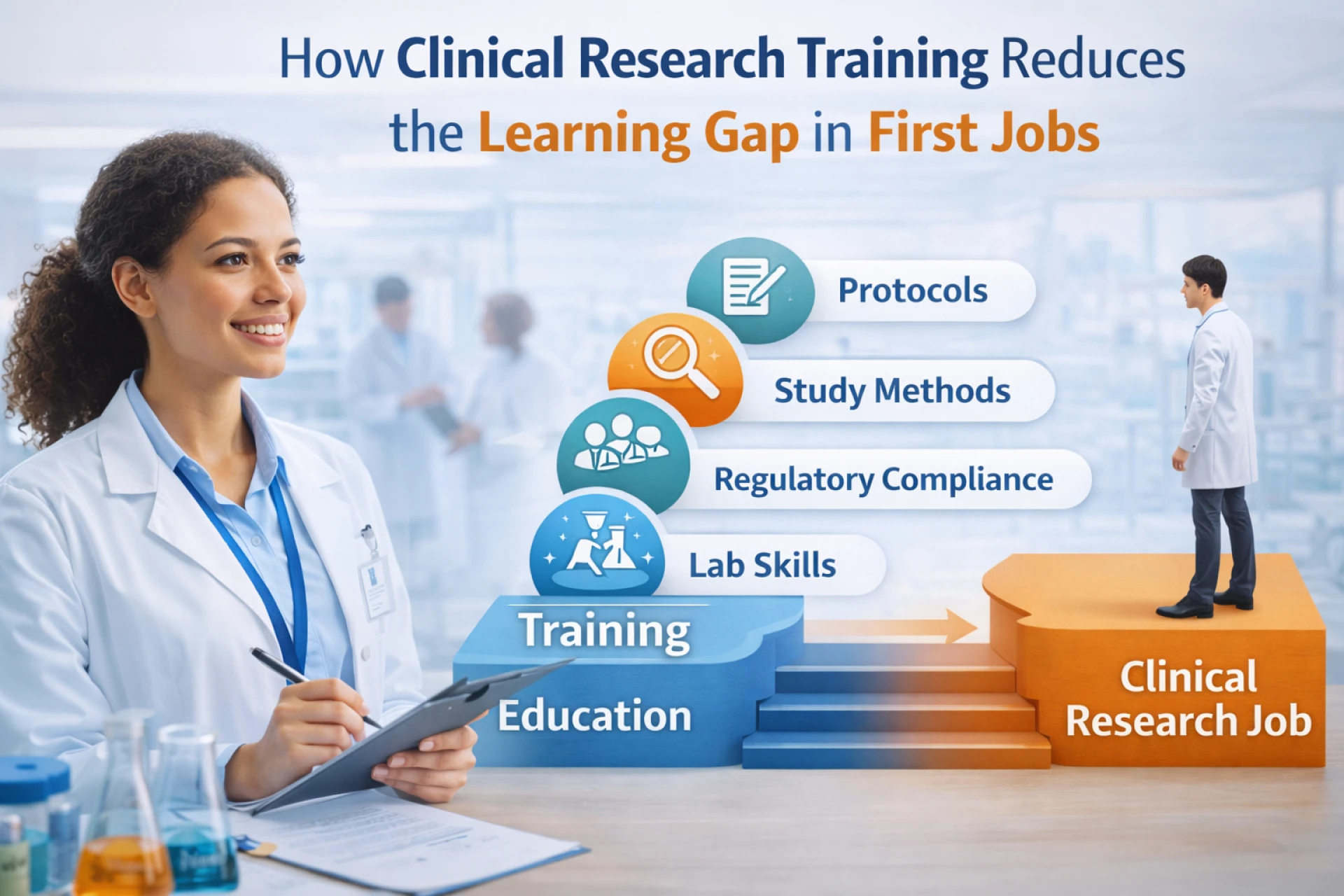
Transitioning from a university lecture hall to a professional medical environment is often described as a cultural shock while a degree in life sciences provides the raw scientific knowledge, it rarely teaches the specific, high stakes operational rules of human drug trials. This is where the learning gap becomes most apparent to bridge this divide, many aspiring professionals choose to enroll in a specialized clinical research course before they even begin applying for roles. This targeted training does not just add a line to a resume; it fundamentally shifts a students mindset from academic theory to regulatory compliance.
The learning gap exists because the industry operates on a set of rules that are entirely different from standard laboratory work or general healthcare. Here is how structured training reduces that gap and prepares a newcomer for the realities of the field.
Mastering the Language of the Industry
Every industry has its own shorthand, but in clinical research, failing to understand an acronym can lead to serious errors students who have not been trained often struggle with terms like (SOPs) standard operating procedures, (CRF) case report forms and (SAEs) serious adverse events.
A training program immerses the student in this language by the time they start their first day, they do not need someone to explain what a monitoring visit is or why source data verification is necessary they can hit the ground running because they already speak the language of their colleagues.
Understanding the Ethics of Human Trials
In a university lab, if you make a mistake on a slide, you simply start over in a clinical trial, a mistake can affect a person's life and the legal standing of a multi-billion dollar company.
Training focuses heavily on the ICH-GCP guidelines these are the international ethical and scientific quality standards for designing, conducting and reporting trials. Students learn that patient safety is the absolute priority they study the history of why these rules exist learning from past medical ethics failures which instills a sense of responsibility that a general science degree might overlook.
3. The shift to audit-ready documentation
One of the biggest parts of the learning gap is the level of detail required in documentation in most jobs, good enough is acceptable. In research, if it is not documented, it did not happen.
Clinical training teaches students the ALCOA+ principles. They learn how to fill out logs, how to correct an error using a single line and initials and how to maintain a Trial Master File. This level of precision is a skill that must be practiced; it is rarely an instinct.
Navigating Regulatory Frameworks
Clinical trials are not just scientific experiments; they are legal processes students must understand the role of regulatory bodies like the FDA (USA), EMA (Europe) or CDSCO (India) training programs break down the complex pathway of drug development.
Pre-clinical: Animal testing and lab work.
Phase I-III: Human testing for safety and efficacy.
Phase IV: Monitoring the drug after it is on the market.
Understanding this lifecycle allows a new hire to see where their specific task fits into the big picture they are not just entering data; they are contributing to a global regulatory submission.
5. Technical Proficiency with Trial Software
The modern research site is digital most newcomers have never seen an electronic data capture (EDC) system or an interactive response technology (IRT) platform. Training programs often provide simulated environments where students can practice entering data and resolving queries. This reduces the technical anxiety that many freshers feel when they sit down at a professional workstation for the first time.
When a candidate finally lands their first clinical research job, the employer’s biggest fear is the onboarding time it usually takes months to train a completely green hire. However, a candidate who has already undergone professional training significantly reduces this timeline they require less hand holding, make fewer rookie mistakes and can take on independent responsibilities much faster. This makes them a much more attractive investment for a hiring manager.
6. Managing Site-Level Relationships
A clinical trial is a team effort involving doctors, nurses, pharmacists and auditors training helps students understand the hierarchy of the site they learn how to professionally interact with a principal investigator and how to manage the expectations of the study sponsor. These soft skills are often the difference between someone who survives their first year and someone who thrives in it.
Preparing for Quality Control and Monitoring
In their first role, many people start as clinical research coordinators (CRCs) or junior monitors these roles are all about checking and double checking training programs simulate the monitoring process, where students have to find intentional errors in a mock patient file. This develops the eagle eye for detail that is required to catch missing signatures or inconsistent dates before an official government auditor finds them.
The Role of Practical Exposure
Even with the best classroom training, there is no substitute for seeing a trial in action this is why the most effective programs include a clinical research placement as the final step of the curriculum. During a placement, the student steps into a real hospital or a contract research organization (CRO).
They get to see an actual Informed Consent process they watch how biological samples are processed and shipped most importantly, they see that the rules they learned in their course are not just theory they are the daily reality of the medical world. This practical experience closes the learning gap entirely, turning a nervous graduate into a confident professional who is ready to contribute to the next generation of medicine.