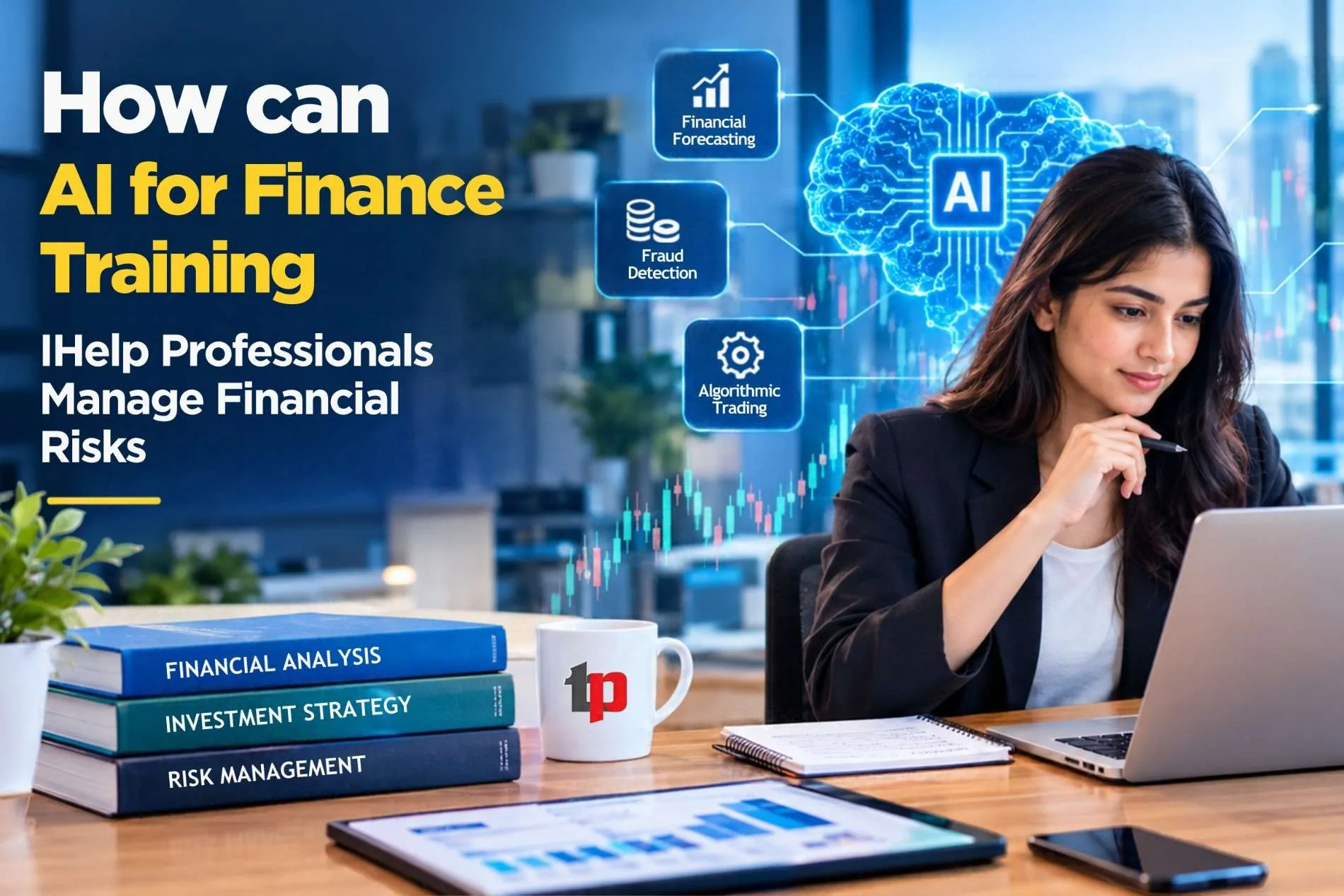
Financial decisions are rarely based on numbers alone. Businesses must understand changing market conditions, customer behaviour, payment patterns and unexpected financial challenges before making important decisions. A small mistake in financial planning can affect an organisation's operations and long-term stability. AI for Finance training helps professionals understand how artificial intelligence can support risk assessment, identify unusual patterns and improve the way financial information is evaluated.
Understanding Financial Risk in a Changing Business Environment
Every organisation faces different types of financial risks. These may include delayed payments, unexpected expenses, credit defaults, changing interest rates and market fluctuations. Managing these risks requires regular monitoring and careful analysis. AI for Finance introduces professionals to tools that can process large datasets and identify patterns that may require further attention. For example, a business may analyse historical payment behaviour to recognise customers who frequently delay payments. Such insights can help finance teams plan suitable follow-up actions.
Identifying Unusual Transactions and Potential Fraud
Financial fraud can happen through suspicious transactions, false invoices, unusual payment requests or unauthorised account activity. Checking every transaction manually becomes difficult when an organisation processes thousands of payments. AI-based monitoring systems can compare transaction patterns and flag activities that differ from normal behaviour. However, an unusual transaction does not automatically mean fraud. Finance professionals must investigate the alert, verify supporting information and follow the organisation's security procedures.
Making Credit Risk Assessment More Informed
Lending decisions require a careful understanding of a borrower's financial position and repayment capacity. Traditional assessment methods often involve reviewing income details, repayment history, existing obligations and other financial documents. An AI for Finance course can help learners understand how machine learning models analyse relevant data to support credit risk evaluation. It can also explain why data quality, transparency and fairness matter when technology is used in financial decision-making. Final lending decisions should remain subject to appropriate human review and regulatory requirements.
Improving Cash Flow Risk Management
Cash flow problems can affect even businesses that generate regular revenue. Delayed customer payments, seasonal demand and unexpected operating costs may create pressure on available funds. AI-assisted forecasting tools can examine past cash flow patterns and help estimate possible future requirements. Professionals can use these insights to prepare different financial scenarios and identify periods when additional funds may be needed. Learning through AI for Finance with certification can introduce participants to practical applications of these tools while helping them understand the importance of checking assumptions behind forecasts.
Supporting Better Financial Planning During Uncertainty
Market conditions can change because of economic developments, customer demand, supply chain issues or changes in business costs. Finance teams need to evaluate different possibilities rather than depend on a single forecast. AI tools can help compare scenarios by processing historical information and selected business assumptions. When exploring the Best AI for Finance training, learners should look for programmes that explain scenario analysis, risk indicators, forecasting limitations and practical business applications instead of focusing only on tool demonstrations.
Developing Skills Through Practical Learning
Reading about AI is useful, but understanding how to apply it requires practice. Finance professionals should learn how to prepare datasets, identify unreliable information, interpret model outputs and recognise situations where AI may produce misleading results. An Online AI for Finance training programme can provide flexibility for working professionals who want to develop these skills alongside their regular responsibilities. Practical exercises based on business situations can make technical concepts easier to understand and apply.
Maintaining Privacy, Fairness and Human Oversight
Financial information is highly sensitive. Customer records, income details, transaction histories and business accounts must be handled responsibly. Before introducing AI tools, organisations should consider data protection, access permissions and information security. AI systems may also produce biased or incorrect recommendations if their data or design is unsuitable. An AI for Finance course with certification should ideally cover responsible AI use, data privacy, transparency and the importance of human supervision. These principles help professionals use technology more carefully.
Conclusion
Financial risk management requires continuous learning, reliable information and thoughtful decisions. Artificial intelligence can support professionals by highlighting unusual activities, analysing credit patterns and helping businesses prepare for financial uncertainty. However, technology cannot replace professional judgement or responsible financial controls. Developing practical knowledge through AI for Finance training can help finance professionals understand emerging tools and become better prepared for the changing demands of modern financial management.