
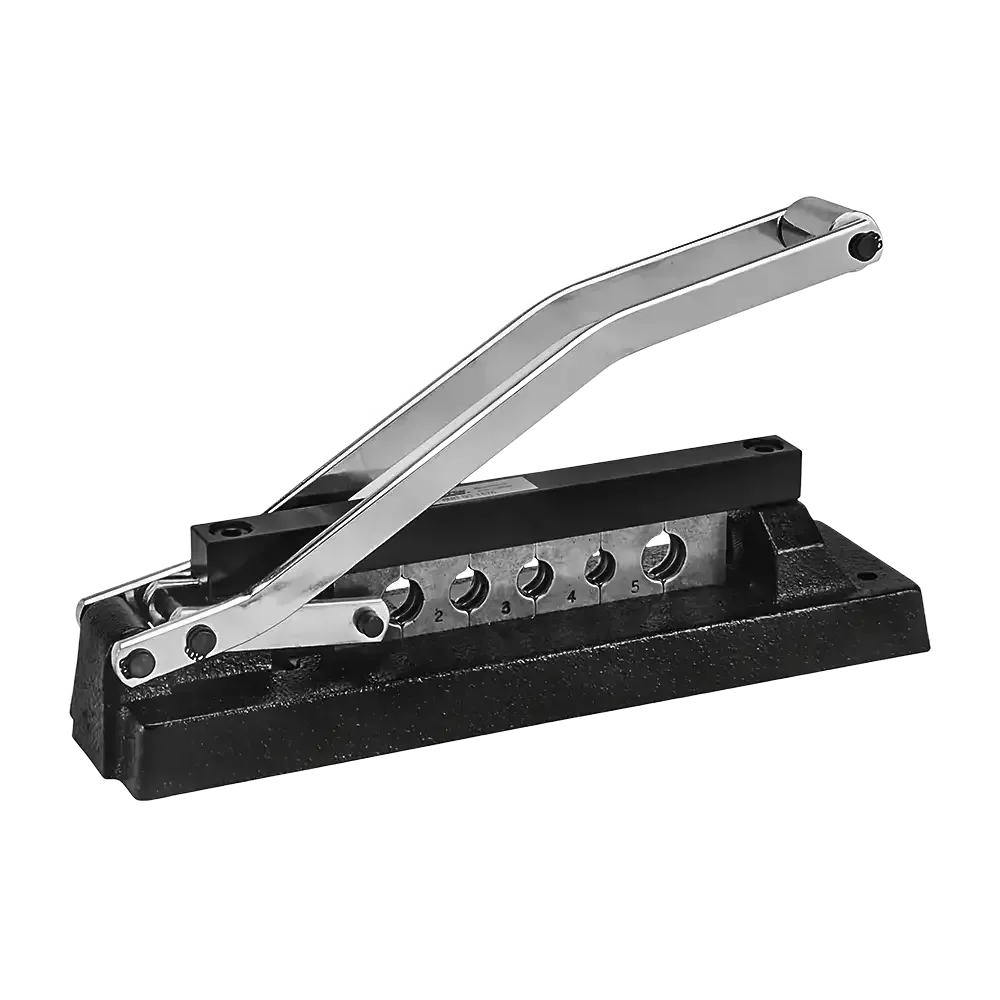
A Hose Ferrule Crimping Tool helps workshops create secure, consistent hose assemblies with less manual effort. By improving crimping accuracy, reducing rework, and speeding up repetitive jobs, the right tool can make daily operations smoother. It also helps technicians maintain dependable connections while handling different hose sizes and ferrule requirements.
Why Workshop Productivity Matters More in 2026
Workshop productivity is not simply about getting more jobs through the door. It is about completing work correctly, consistently, and without wasting time on avoidable mistakes. In 2026, workshops are dealing with tighter schedules, higher customer expectations, and pressure to keep labor costs under control. Small improvements in common tasks can make a surprisingly big difference.
Hose assembly is one of those tasks that can quietly consume hours. Measuring, positioning, crimping, checking, and sometimes redoing a hose connection all add up. A reliable Hose Ferrule Crimping Tool can take much of the uncertainty out of that process. The job becomes more repeatable, and technicians can spend less time fighting with equipment and more time completing useful workshop work.
What Does a Hose Ferrule Crimping Tool Actually Do?
A Hose Ferrule Crimping Tool is designed to compress a ferrule around a hose and fitting, creating a secure connection. The ferrule needs to be crimped properly because too little compression can create a weak connection, while excessive or uneven crimping can damage components. It is a fairly simple principle, but getting it right repeatedly by hand is not always easy.
Modern crimping equipment gives technicians better control over the process. Depending on the machine or tool being used, the operator can work with different hose diameters, ferrule sizes, and fitting configurations. Instead of relying heavily on feel and experience alone, the technician has a more controlled method for producing consistent assemblies. That consistency is where the productivity benefit really starts.

Faster Hose Assembly Means More Completed Work
Time is probably the most obvious productivity gain. When a workshop is producing or repairing multiple hydraulic, industrial, automotive, or machinery hoses, every minute matters. A manual approach can involve repeated adjustments, positioning, checking, and correcting. Those little delays might not look serious on one hose, but multiply them across dozens of assemblies and the lost time becomes pretty clear.
A dedicated hose crimping machine or ferrule crimping setup can shorten the process considerably. Once the technician knows the correct settings and assembly procedure, repetitive jobs become much easier to manage. There is less stopping and starting. The technician can move from one assembly to the next with a consistent workflow, which helps the workshop handle more work during the same shift.
Consistency Reduces Rework and Waste
Nobody likes redoing a job that should have been finished the first time. Rework takes labor, materials, and machine time, and it can also disrupt the rest of the workshop schedule. Poorly crimped hose assemblies may need to be removed and rebuilt, especially if the connection does not meet the required dimensions or fails inspection.
Using a Hose Ferrule Crimping Tool can improve repeatability from one assembly to another. When the tool is correctly selected, set up, and maintained, technicians can achieve a more uniform crimp. That does not mean the machine eliminates human error completely. It doesn’t. But it removes some of the guesswork, and that alone can reduce unnecessary corrections and material waste.
Better Accuracy Helps Protect Hose Assemblies
Productivity should never come at the expense of quality. A workshop that works quickly but produces unreliable hose assemblies is not really productive. It is just creating more problems for later. Proper crimping matters because the hose, ferrule, and fitting need to work together under the conditions they were designed for.
A good Crimping Tool helps technicians apply controlled force to the ferrule rather than relying on inconsistent manual pressure. Correct tooling and settings are still important, of course. Hose manufacturers can have specific crimp dimensions and procedures, so technicians should follow the applicable specifications rather than assuming every hose can be treated the same way. Accuracy is not just about appearance. It is about creating a connection that performs properly.
Training New Technicians Becomes Easier
Experienced technicians develop a feel for hose assembly over time. They know what looks right, what feels wrong, and when something needs another inspection. New technicians obviously do not have that experience on day one. This is where controlled equipment can make training a little less painful for everyone.
A properly configured Hose Ferrule Crimping Tool gives newer workers a defined process to follow. They can learn how to prepare the hose, select the correct ferrule and die, position the fitting, operate the machine, and inspect the finished crimp. There is still a learning curve, but the process becomes easier to teach because it is based on repeatable steps rather than just, “watch how I do it.”
Ergonomics Can Improve the Working Day
There is another productivity factor that sometimes gets ignored: technician fatigue. Repetitive manual crimping, awkward positioning, and excessive physical effort can make workers slower as the day goes on. It can also make a job uncomfortable, especially when technicians are assembling a large number of hoses.
A workshop crimping tool can reduce some of that physical effort by providing the required crimping force mechanically or hydraulically, depending on the equipment. The technician still handles the hose and components, but they are not doing all the heavy work themselves. Over a full working day, that can make a real difference. Less strain can mean better concentration and fewer avoidable mistakes.
One Tool Can Support a More Organized Workflow
Productivity is also about how work moves through a workshop. If hose assemblies are constantly being moved between different stations for measuring, pressing, checking, and correcting, the process can become messy. A dedicated crimping area gives technicians a predictable place to complete an important part of the assembly process.
This can make the workshop easier to organize. Common hose sizes, ferrules, fittings, dies, measuring equipment, and inspection tools can be kept close to the crimping station. It sounds basic, and it is, but basic organization works. When technicians are not walking across the workshop looking for the right die or fitting every few minutes, more actual production gets done.
Choosing the Right Crimping Equipment Matters
Not every Hose Ferrule Crimping Tool will suit every workshop. The correct choice depends on the type of hose assemblies being produced, the hose diameters, ferrule styles, fitting types, production volume, and required crimp specifications. A small repair workshop may have very different needs from a high-volume hydraulic hose production facility.
Workshops should also consider ease of setup, available dies, adjustment capability, machine capacity, maintenance requirements, and operator safety. Buying the biggest or most expensive machine is not automatically the smart choice. The better approach is to match the equipment to actual workshop requirements. A tool that fits the work is usually more useful than one that simply looks impressive on paper.
Maintenance Keeps Productivity From Going Backward
Even a good crimping machine will not stay productive if nobody looks after it. Dies can wear, components can become damaged, hydraulic systems can develop issues, and settings can drift if equipment is neglected. A machine that was accurate when installed can eventually produce inconsistent results if maintenance is ignored.
Regular cleaning, inspection, lubrication where required, and checking critical components should be part of the workshop routine. Operators should also watch for unusual noises, inconsistent crimp results, damaged dies, leaks, or changes in machine performance. Fixing a small issue early is generally easier than discovering it after a batch of hose assemblies has already been produced.

How Does a Hose Ferrule Crimping Tool Improve ROI?
The return on investment is not only about how quickly a machine pays for itself. Look at the bigger picture. Faster production, fewer rejected assemblies, lower material waste, reduced manual effort, and better use of technician time all contribute to the value of the equipment.
For a busy workshop, the numbers can add up faster than expected. If a crimping system saves several minutes per assembly and the workshop produces many assemblies every week, those saved minutes become meaningful labor capacity. Add fewer reworks and a smoother workflow, and the equipment can become a practical productivity investment rather than simply another machine taking up floor space.
What Should Workshops Expect in 2026?
Workshops in 2026 are likely to continue looking for ways to do more with the same resources. That does not necessarily mean replacing every manual process with automation. Sometimes the smarter move is simply improving one repetitive process that causes regular delays. Hose crimping is a good example because it combines accuracy, repetition, physical effort, and quality control.
A modern Hose Ferrule Crimping Tool can help create a more predictable hose assembly process. It can support experienced technicians while making training easier for newer workers. Most importantly, it can help the workshop produce consistent results without wasting time on unnecessary adjustments and rework. It is not a magic solution, but when properly selected and used, it can be a very useful one.
Conclusion
A productive workshop is not built from one big improvement. It usually comes from removing small problems that keep happening every day. A Hose Ferrule Crimping Tool can help by making hose assembly faster, more consistent, and less physically demanding. When the equipment matches the workshop's needs and technicians use the correct crimp specifications, the result is a smoother process with less rework. In 2026, that kind of practical efficiency matters. A reliable Crimping Tool is not just another piece of workshop equipment; it can become part of a better, more repeatable production system.