
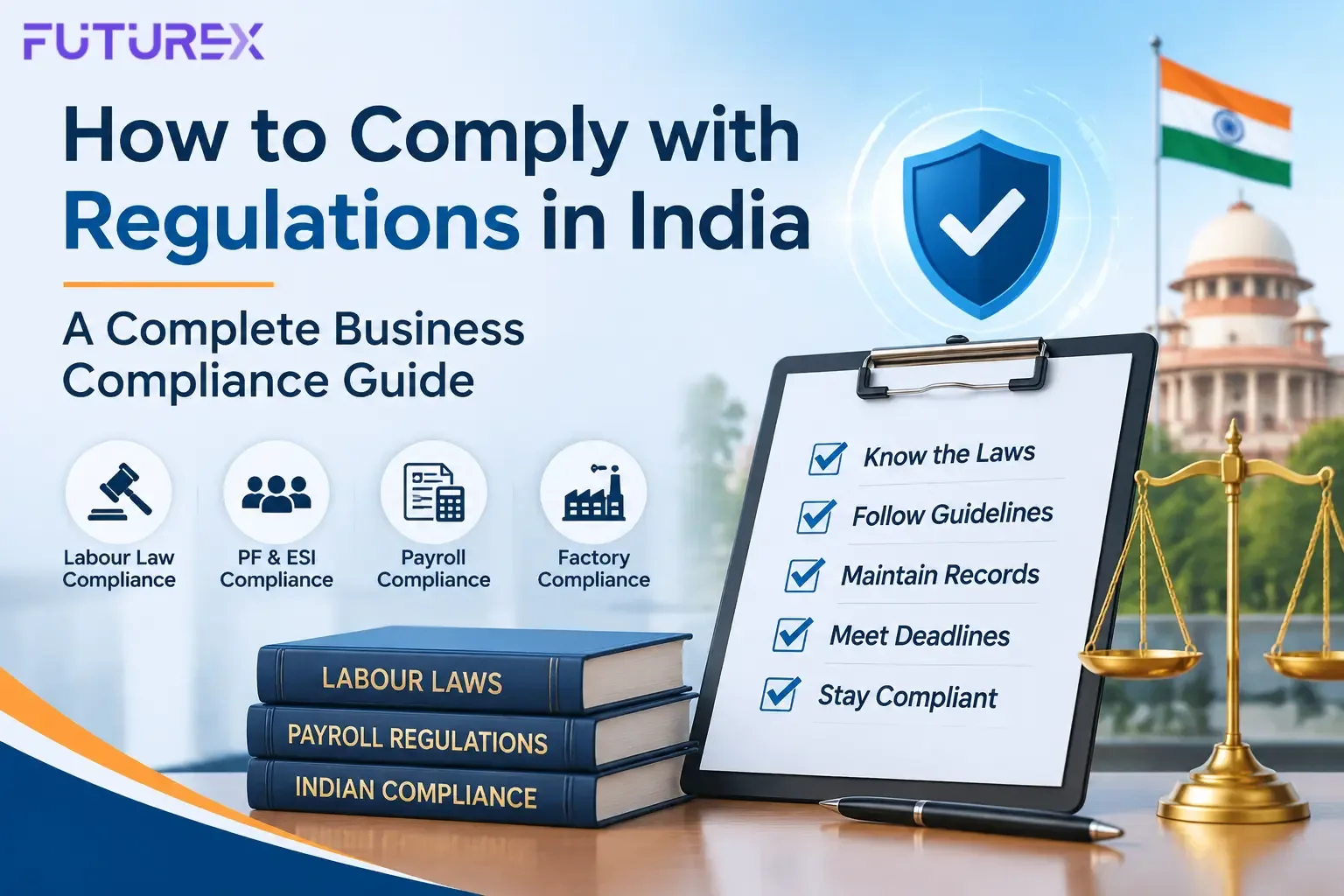
Running a business in India involves more than managing daily operations, generating revenue, and maintaining customer relationships. Every organisation must also follow various government regulations, statutory requirements, and industry-specific laws. From employee management and payroll processing to workplace safety and financial reporting, regulatory compliance plays an essential role in building a sustainable business.
For startups, small businesses, growing enterprises, and large manufacturing organisations, understanding which regulations apply can be challenging. Different laws may apply depending on the nature of business, employee strength, location, industry, and operational activities.
Failing to meet these requirements can result in financial penalties, legal complications, operational disruptions, and reputational damage. Therefore, businesses need a structured approach to identify their legal responsibilities, maintain accurate documentation, and complete statutory obligations within prescribed timelines.
This guide explains how businesses can comply with regulations in India, the major compliance areas employers should understand, and practical steps to establish an effective compliance management system.
What Does It Mean to Comply with Regulations?
To comply with regulations means following the laws, rules, guidelines, and statutory requirements established by relevant government authorities. Businesses must ensure that their operations, employment practices, financial activities, and workplace procedures meet the applicable legal standards.
Regulatory compliance is not limited to obtaining registrations or submitting government forms. It involves continuously monitoring legal requirements, maintaining accurate records, following prescribed procedures, and fulfilling responsibilities within applicable deadlines.
For Indian businesses, regulatory compliance generally covers several areas:
- Labour Law Compliance: Following applicable employment laws, wage requirements, working conditions, and employee welfare provisions.
- Payroll Compliance: Processing salaries accurately and managing statutory deductions and contributions.
- Tax Compliance: Meeting applicable income tax, TDS, GST, and other tax-related obligations.
- Social Security Compliance: Managing applicable Provident Fund (PF), Employees' State Insurance (ESI), and other employee benefit requirements.
- Factory Compliance: Following workplace safety, health, licensing, and industrial regulations.
- Corporate Compliance: Maintaining required business records, statutory filings, and governance procedures.
The specific obligations vary according to the organisation's business activities and applicable legal provisions.
Why Is Regulatory Compliance Important for Businesses?
Regulatory compliance is essential for maintaining lawful business operations and protecting organisations from avoidable risks. A systematic compliance framework also helps improve transparency, employee confidence, and operational efficiency.
Here are some important reasons businesses should prioritise regulatory compliance.
1. Avoid Legal Penalties and Financial Risks
Failure to follow applicable regulations can expose businesses to penalties, interest, legal proceedings, and other consequences. Late statutory payments, incorrect payroll deductions, missing documentation, and non-compliance with workplace requirements can create unnecessary financial liabilities.
Regular compliance reviews help organisations identify potential issues before they become serious problems.
2. Protect Employee Rights and Welfare
Employers have legal responsibilities towards their workforce. These include paying applicable wages, maintaining appropriate working conditions, providing eligible social security benefits, and following employment-related regulations.
Proper compliance practices help create a transparent and fair working environment while strengthening employee trust.
3. Improve Business Reputation
Customers, investors, business partners, and vendors often consider an organisation's governance and compliance practices when evaluating business relationships.
Maintaining accurate records, meeting statutory obligations, and following ethical business practices can strengthen organisational credibility.
4. Maintain Operational Continuity
Regulatory violations can create disruptions through inspections, notices, licence-related issues, or legal disputes.
An effective compliance management system helps businesses reduce operational uncertainty and maintain continuity.
5. Support Sustainable Business Growth
As businesses expand into new locations, hire more employees, or enter new industries, their regulatory responsibilities may increase.
A structured compliance framework helps organisations manage these additional obligations while supporting long-term growth.
Major Regulatory Compliance Requirements for Businesses in India
Indian businesses must follow different central and state-level regulations depending on their operations. Employers should understand the major compliance areas relevant to their establishments.
1. Labour Law Compliance
Labour law compliance is one of the most important responsibilities for organisations employing workers in India.
The four Labour Codes came into effect on 21 November 2025, consolidating and rationalising 29 central labour laws:
- Code on Wages, 2019
- Industrial Relations Code, 2020
- Code on Social Security, 2020
- Occupational Safety, Health and Working Conditions Code, 2020
Businesses should review the applicable provisions, rules, notifications, and state-level requirements to understand their responsibilities under the new framework.
Important areas of labour law compliance include:
- Payment of applicable minimum wages.
- Timely payment of employee salaries.
- Working hours, rest intervals, and overtime.
- Employee appointment documentation.
- Social security and employee welfare.
- Workplace health and safety.
- Grievance management and industrial relations.
- Maintenance of prescribed employment records.
Employers should regularly review their HR policies and employment procedures to ensure they remain aligned with applicable labour regulations.
Businesses dealing with multiple locations or contract workers may also need specialised support for managing labour-related registrations, documentation, and statutory obligations.
2. Payroll and Salary Compliance
Payroll compliance involves ensuring that employee salaries are calculated, processed, and documented according to applicable statutory requirements.
Payroll errors can create employee dissatisfaction and expose organisations to compliance-related problems. Therefore, businesses should establish accurate and consistent payroll procedures.
Important payroll compliance activities include:
- Calculating employee salaries and applicable allowances.
- Applying relevant minimum wage requirements.
- Managing statutory deductions and contributions.
- Calculating overtime payments wherever applicable.
- Processing salary payments within prescribed timelines.
- Preparing and distributing salary slips.
- Maintaining payroll registers and employee records.
- Managing full and final employee settlements.
- Reconciling payroll information with statutory records.
Organisations can improve these processes through professional payroll compliance services that support statutory calculations, payroll documentation, and compliance management.
3. Provident Fund (PF) Compliance
Employees' Provident Fund (EPF) is an important social security mechanism for eligible employees working in covered establishments.
Employers must understand their applicable registration, contribution, deduction, payment, and record-maintenance responsibilities.
Key PF compliance activities include:
- Maintaining accurate employee information.
- Identifying employees covered under applicable provisions.
- Calculating employer and employee contributions.
- Depositing contributions within prescribed timelines.
- Filing applicable electronic returns.
- Maintaining contribution and employee records.
- Resolving discrepancies in employee PF information.
Regular reconciliation between payroll records and PF contributions helps organisations minimise errors and maintain accurate statutory information.
4. Employees' State Insurance (ESI) Compliance
Employees' State Insurance provides eligible employees with social security benefits, including medical and other benefits under the applicable framework.
Covered employers must manage employee registration, contribution calculations, statutory payments, and relevant documentation.
Important ESI compliance activities include:
- Verifying employee eligibility.
- Registering eligible employees.
- Calculating applicable contributions.
- Depositing contributions within prescribed deadlines.
- Maintaining employee and contribution records.
- Managing relevant statutory submissions.
Businesses should regularly review changes in employee strength, wage levels, and applicable coverage requirements to maintain compliance.
5. Income Tax and TDS Compliance
Tax compliance is another important responsibility for businesses, particularly those managing employee payroll and payments to vendors or service providers.
Employers must deduct, deposit, and report tax wherever required under applicable provisions.
From 1 April 2026, the Income-tax Act, 2025 governs relevant tax obligations for transactions and payments falling within its scope. Employers should ensure their payroll and accounting systems reflect the applicable provisions and updated reporting requirements.
Important TDS-related activities include:
- Calculating taxable employee income.
- Managing salary-related TDS.
- Considering applicable employee declarations and deductions.
- Deducting tax from applicable payments.
- Depositing deducted tax within prescribed timelines.
- Filing applicable TDS statements.
- Issuing relevant tax certificates.
- Maintaining supporting financial documentation.
Accurate payroll and accounting information is essential for managing these responsibilities effectively.
6. Factory and Industrial Compliance
Manufacturing businesses have additional regulatory responsibilities relating to workplace conditions, employee safety, health, welfare, and industrial operations.
These requirements depend on the nature of the establishment and applicable central and state regulations.
Important factory compliance activities may include:
- Factory registration and licensing.
- Workplace health and safety arrangements.
- Employee welfare facilities.
- Working hours and overtime management.
- Maintenance of statutory registers.
- Employee appointment and attendance records.
- Machinery and equipment safety documentation.
- Accident reporting and applicable notifications.
- Environmental and pollution control requirements.
- Inspection preparation and statutory reporting.
Manufacturing organisations should regularly assess their compliance procedures to identify gaps and maintain appropriate documentation.
Businesses can explore professional factory compliance services to support factory-related registrations, statutory documentation, inspections, and compliance management.
How Can Businesses Ensure They Comply with Regulations?
Understanding applicable laws is only the first step. Businesses also need a practical system to manage their compliance responsibilities consistently.
The following steps can help organisations establish a structured compliance framework.
Step 1: Identify Applicable Laws and Regulations
Every business should begin by identifying the regulations relevant to its operations.
For example, a manufacturing company may have factory licensing, labour law, employee safety, payroll, and environmental obligations. A professional services company may have different requirements depending on its workforce, registrations, and business activities.
Create a list of applicable central, state, and industry-specific regulations.
Step 2: Conduct a Compliance Gap Assessment
A compliance gap assessment helps businesses identify areas where existing processes do not meet applicable requirements.
Review important areas such as:
- Employee records and appointment documentation.
- Payroll calculations and salary payments.
- PF and ESI contributions.
- Tax deductions and statutory deposits.
- Factory licences and registrations.
- Statutory registers and returns.
- Workplace safety procedures.
Document identified gaps and prioritise corrective actions according to their legal and operational importance.
Step 3: Create a Compliance Calendar
Many regulatory obligations involve recurring deadlines. Missing these deadlines can result in penalties, interest, or other legal consequences.
Businesses should maintain a compliance calendar covering applicable monthly, quarterly, half-yearly, and annual activities.
Assign responsibility for each activity and establish reminders before the relevant due dates.
Step 4: Maintain Accurate Documentation
Proper documentation is essential for demonstrating compliance during inspections, audits, and regulatory reviews.
Maintain organised records of:
- Employee appointment letters.
- Attendance and wage registers.
- Salary slips and payroll reports.
- PF and ESI contribution records.
- Tax deduction documents.
- Factory licences and registrations.
- Statutory returns and payment receipts.
- Workplace safety records.
Digital record-management systems can make documentation easier to access, review, and maintain.
Step 5: Monitor Regulatory Updates
Regulations, government notifications, wage requirements, and statutory procedures may change over time.
Businesses should monitor official government notifications and review their internal policies whenever relevant changes occur.
This is particularly important for organisations operating across multiple states, as state-specific requirements may differ.
Step 6: Conduct Regular Internal Audits
Periodic compliance audits help organisations verify whether their processes are working correctly.
Internal reviews should cover payroll accuracy, statutory payments, employee documentation, applicable licences, and filing records.
Any identified discrepancies should be documented and corrected promptly.
Step 7: Consider Professional Compliance Support
Managing multiple regulatory requirements internally can be challenging, especially for businesses with large workforces, multiple locations, or complex manufacturing operations.
Professional compliance service providers can help organisations manage selected administrative activities, maintain documentation, monitor deadlines, and improve their compliance procedures.
However, outsourcing administrative activities does not automatically transfer an employer's statutory legal responsibilities to the service provider. Businesses should maintain appropriate supervision and accountability.
Common Compliance Mistakes Businesses Should Avoid
Even organisations with established HR and finance departments can experience compliance gaps due to manual errors, outdated information, or poor coordination.
Some common mistakes include:
1. Missing statutory deadlines: Delayed payments and filings can result in avoidable penalties and interest.
2. Incorrect payroll calculations: Errors in salary, deductions, overtime, or applicable statutory contributions can create employee and legal issues.
3. Incomplete employee documentation: Missing appointment letters, employee records, or statutory registers can create difficulties during inspections.
4. Ignoring regulatory updates: Continuing with outdated procedures can result in non-compliance when applicable laws change.
5. Poor coordination between departments: HR, finance, payroll, and operations teams should share accurate information to avoid discrepancies.
6. Inadequate internal audits: Without periodic reviews, compliance gaps may remain undetected until an inspection or external audit.
Avoiding these mistakes requires clear responsibilities, organised records, updated systems, and regular monitoring.
Benefits of Outsourcing Regulatory Compliance Management
For growing organisations, managing every compliance activity internally can consume significant time and resources.
Outsourcing selected compliance functions can provide access to professional expertise and improve administrative efficiency.
Some important benefits include:
Access to Professional Expertise
Specialised service providers understand relevant compliance procedures and can assist businesses in managing applicable statutory activities.
Better Documentation Management
Structured processes help organisations maintain accurate payroll, employee, and statutory records.
Improved Deadline Monitoring
Professional support can help businesses track recurring obligations and organise timely submissions and payments.
Reduced Administrative Workload
Outsourcing routine payroll and compliance administration allows internal teams to focus on business operations, employee management, and strategic activities.
Support for Multi-Location Businesses
Organisations operating across different states may need to manage several regulatory frameworks. Professional support can help coordinate applicable requirements across locations.
How Futurex Management Solutions Supports Businesses with Compliance Management
Managing regulatory compliance requires proper planning, accurate documentation, and a clear understanding of applicable legal requirements.
Futurex Management Solutions provides professional business management services that help organisations streamline important administrative activities related to payroll, HR, accounting, and factory compliance.
Its relevant service areas include:
Payroll Compliance and Management
Futurex supports organisations with payroll administration and applicable statutory processes. These activities help businesses maintain organised salary records, manage payroll documentation, and streamline relevant compliance procedures.
Learn more about Payroll Compliance Services.
Labour Law and Contract Labour Compliance
Businesses employing contract workers may need to manage additional registrations, contractor documentation, statutory records, and applicable labour law obligations.
Futurex provides CLRA and Labour Law Compliance Services to support businesses with relevant compliance administration.
Factory Compliance Services
Manufacturing organisations can benefit from structured support for factory registrations, licensing, statutory documentation, workplace safety requirements, and inspection preparation.
Explore Factory Compliance Services to understand how professional support can help simplify industrial compliance activities.
Accounting and Bookkeeping Services
Accurate accounting records are important for financial management, documentation, and business reporting.
Futurex also provides Accounting and Bookkeeping Services to help businesses maintain organised financial records and streamline routine accounting activities.
By integrating these services where appropriate, organisations can improve coordination between HR, payroll, finance, and compliance-related functions.
Frequently Asked Questions About Regulatory Compliance
1. What does it mean to comply with regulations in India?
It means following the applicable laws, government rules, statutory requirements, and industry-specific standards established by relevant authorities. Businesses must meet their legal obligations relating to employment, payroll, taxation, workplace safety, and other operational activities.
2. What are the major compliance requirements for Indian businesses?
Major requirements may include labour law compliance, payroll compliance, PF and ESI obligations, TDS, GST, factory regulations, corporate filings, and other industry-specific requirements. Applicability depends on the business structure, workforce, activities, and location.
3. Why is regulatory compliance important for employers?
Regulatory compliance helps employers protect employee rights, reduce legal and financial risks, maintain accurate records, improve workplace practices, and support uninterrupted business operations.
4. How can small businesses maintain regulatory compliance?
Small businesses should identify applicable laws, maintain employee and financial records, follow statutory deadlines, monitor regulatory updates, and conduct periodic compliance reviews. They can also seek professional support for specialised compliance activities.
5. What is the difference between statutory compliance and regulatory compliance?
Regulatory compliance refers broadly to following applicable laws, rules, and government regulations. Statutory compliance focuses specifically on fulfilling obligations prescribed by legislation, such as employment laws, statutory contributions, and tax requirements.
6. What are the consequences of non-compliance?
Depending on the applicable law and nature of the violation, consequences may include financial penalties, interest, legal proceedings, licence-related action, operational restrictions, and reputational damage.
7. Can regulatory compliance be outsourced?
Yes. Businesses can outsource selected activities such as payroll processing, statutory documentation, labour law administration, and factory compliance support. However, organisations must retain appropriate oversight of their legal responsibilities.
8. How often should businesses review their compliance procedures?
Businesses should monitor recurring compliance obligations continuously and conduct periodic internal assessments. They should also review their procedures whenever relevant laws, government notifications, workforce conditions, or business operations change.
Conclusion
Complying with regulations is a fundamental responsibility for every organisation operating in India. From labour laws and payroll obligations to taxation, social security, and factory regulations, businesses must understand and fulfil the requirements applicable to their operations.
A proactive compliance strategy involves identifying relevant laws, maintaining accurate documentation, monitoring statutory deadlines, reviewing internal processes, and staying informed about regulatory changes.
As businesses expand, professional support can help simplify complex administrative activities and improve coordination between different departments.
With structured compliance practices and appropriate professional assistance from service providers such as Futurex Management Solutions, organisations can strengthen their compliance management systems, reduce administrative challenges, and focus on sustainable business growth.